Seafloor Spreading
What Is Seafloor Spreading?
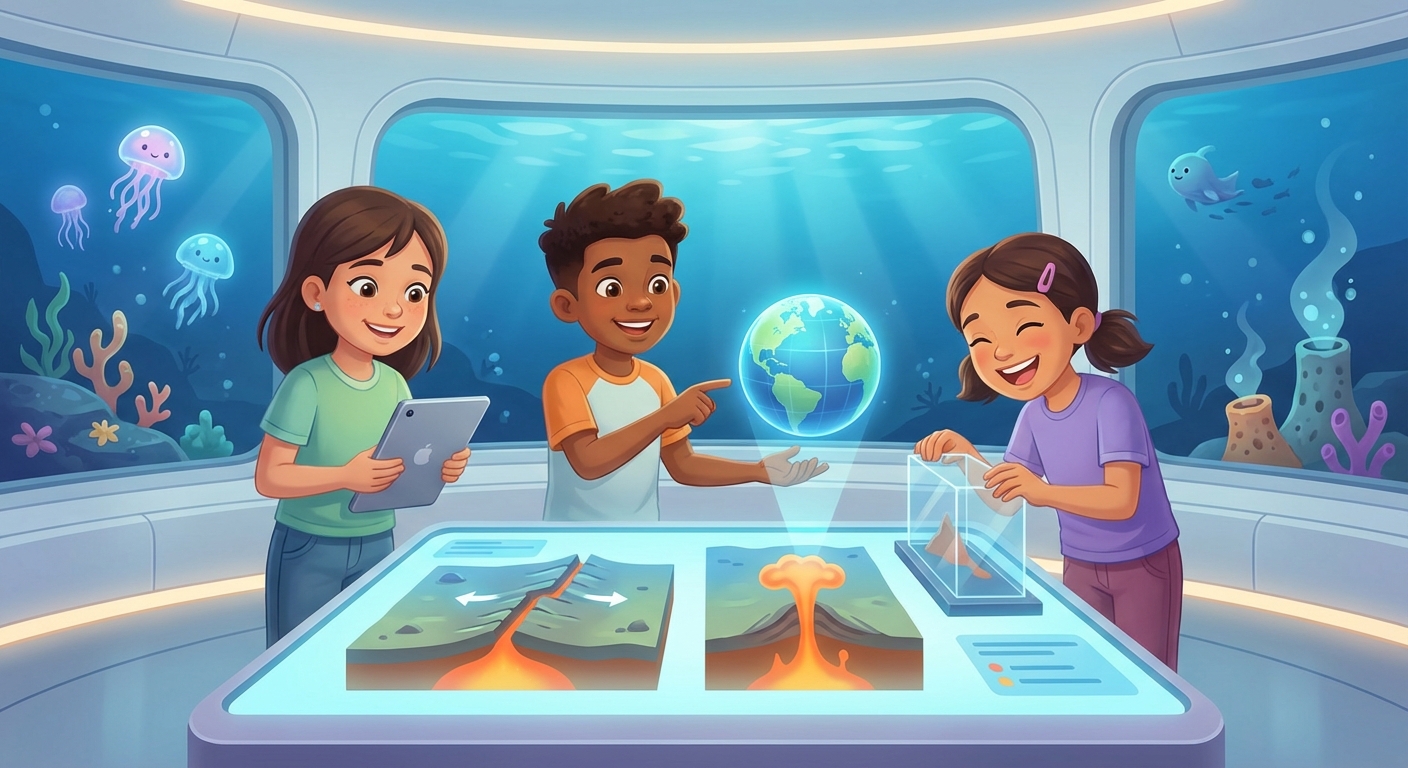
Seafloor spreading is the process that creates new ocean crust. Deep under the water, huge plates of rock move apart. When they separate, molten rock from the mantle rises up, cools, and forms fresh seafloor. Over millions of years this adds new land to the bottom of the oceans.
How It Works
- Mid‑ocean Ridge – A long underwater mountain chain marks where the plates split.
- Magma Rises – Hot, liquid rock (magma) pushes up through cracks in the Earth’s crust.
- Cooling And Solidifying – The magma touches the cold ocean water, solidifies, and becomes basalt rock.
- Push Apart – As more magma erupts, the older crust is pushed away from the ridge on both sides.
The plates move only a few centimeters each year—about as fast as a snail’s crawl—but over time the ocean floor can grow hundreds of kilometers.
Evidence Scientists Use
- Magnetic Stripes: The ocean floor shows alternating bands of magnetic polarity that match the Earth’s magnetic reversals.
- Age Patterns: Rocks closest to the ridge are youngest; those farther away are older.
- Seafloor Topography: Sonar maps reveal the continuous ridge and the smooth, younger crust near it.
Why It Matters
Seafloor spreading reshapes the planet. It creates new habitats for marine life, drives earthquakes and volcanic eruptions, and helps recycle carbon deep inside Earth. Understanding it also explains how continents drift and why the map of Earth changes over geologic time.