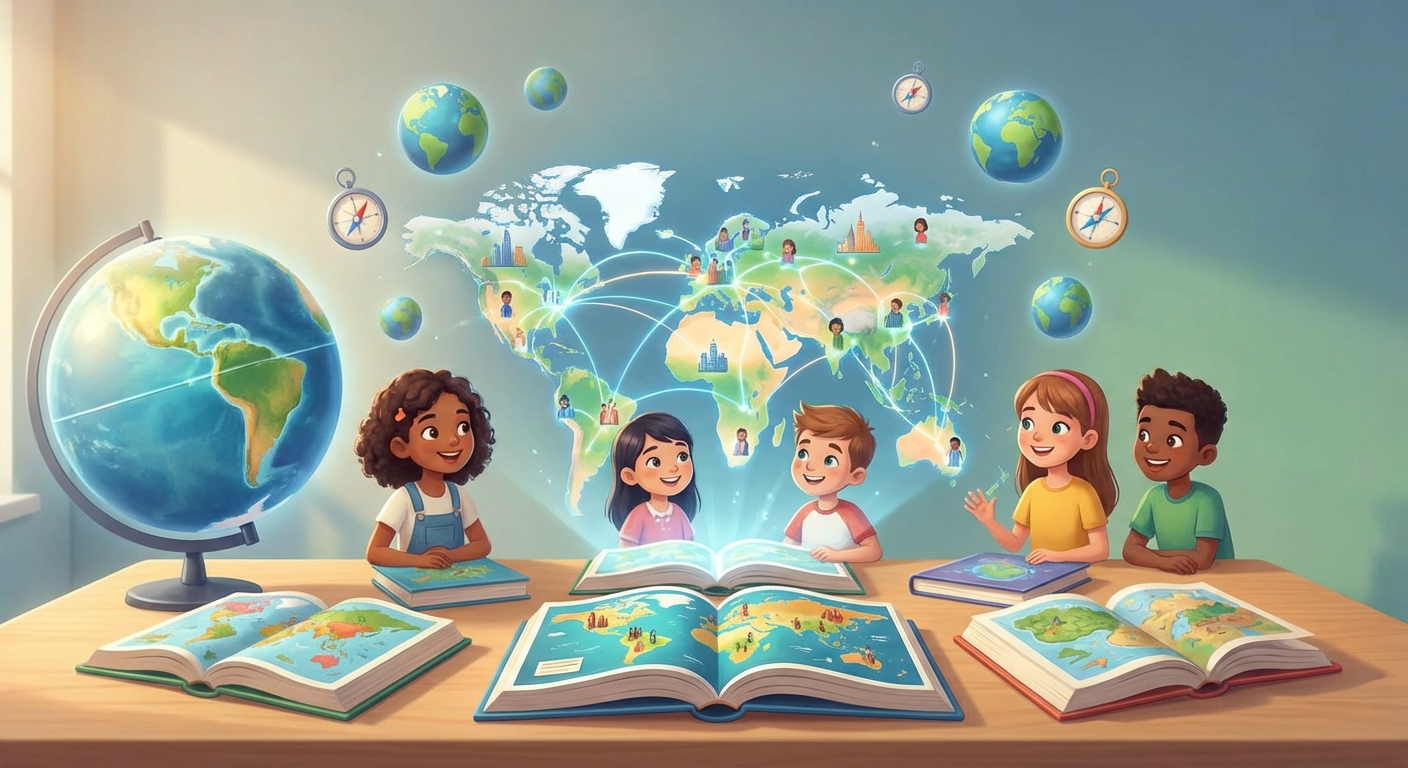
The Growing World: Understanding Population Growth 🌍
Population growth describes how the number of people changes over time.
It influences food supplies, housing, and the environment worldwide.
Learning the basics helps you see why cities expand and resources shift.
1. What Is Population Growth?
Population growth measures the increase or decrease of people in a region.
Two main numbers drive it: births per year and deaths per year.
When births exceed deaths, the population rises; the opposite causes decline.
Migration—people moving in or out—also adds or subtracts from totals.
Scientists use the “growth rate” to compare different countries’ speed.
A high growth rate often means many children are being born.
A low or negative rate can signal aging societies and fewer workers.
2. Why Does It Matter?
More people need more food, water, and energy each day.
Rapid growth can strain schools, hospitals, and transportation systems.
Urban areas may expand faster than infrastructure can keep up.
Environmental pressure increases when forests are cleared for housing.
Economists study growth to predict job markets and consumer demand.
Policymakers use data to plan housing, schools, and emergency services.
Understanding trends helps societies avoid shortages and protect ecosystems.
3. Factors Shaping Growth Today
Fertility rates drop when education and job opportunities improve for women.
Healthcare advances lower infant mortality, encouraging families to have fewer children.
Cultural traditions sometimes favor larger families, affecting regional rates.
Economic stability often leads to delayed marriage and childbearing.
The COVID‑19 pandemic temporarily reduced births in several countries.
Climate change forces people to relocate, altering local population counts.
Technology, like remote work, lets people live farther from city centers.
4. Future Challenges and Opportunities
By 2050, the UN predicts Earth will host about 9.7 billion people.
Higher populations increase demand for renewable energy and sustainable farming.
Cities must design greener buildings and efficient public transport.
Education about family planning can balance personal choice with planetary health.
Innovations such as vertical farms and lab‑grown meat could feed more mouths.
Critical thinking: If water supplies become scarce, how would you prioritize usage?
Exploring these questions prepares you to contribute to global solutions.
Mini Quiz & Simple Experiment
Quiz – Choose the correct answer.
-
What two numbers directly determine natural population change?
- A) Births and migrations
- B) Births and deaths
- C) Deaths and education
-
A country with a negative growth rate likely has:
- A) Many young people
- B) An aging population
- C) Rapid