Sleep Cycles
Why Sleep Matters
Sleep is like a daily reset button for your body and brain. While you rest, muscles repair, memory strengthens, and hormones balance. Skipping sleep can make you feel sluggish, cranky, and less able to focus in school. Getting enough good sleep helps you stay healthy, learn better, and enjoy your hobbies.
Stages of Sleep
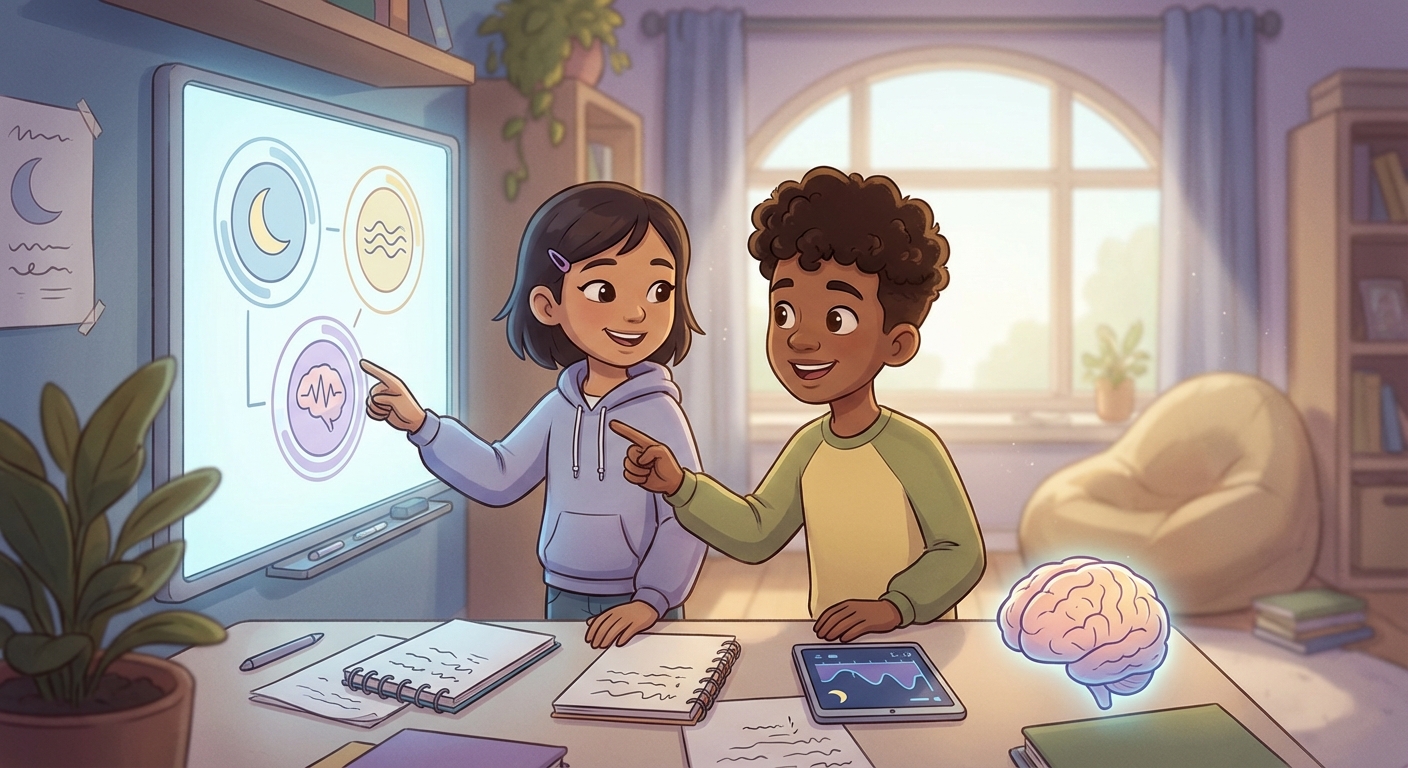
Your night is divided into several repeating cycles, each lasting about 90 minutes.
1. Light Sleep (stage 1 & 2)
- You drift off and become less aware of surroundings.
- Heart rate and breathing slow down.
- This stage prepares you for deeper sleep.
2. Deep Sleep (stage 3)
- The body does most of its physical repair.
- Growth hormone is released, which is important for growing kids.
- Waking up during deep sleep can feel disorienting.
3. REM Sleep (rapid Eye Movement)
- Brain activity spikes, and vivid dreams often happen.
- This stage helps with learning, memory, and emotional health.
- Your eyes move quickly under closed lids, and breathing becomes irregular.
A typical night includes 4–6 of these cycles. The proportion of REM sleep grows longer toward the morning, which is why you may remember dreams more vividly when you wake up.
Tips for a Good Night
- Stick To A Schedule: Go to bed and wake up at the same time every day, even on weekends.
- Create A Calm Bedroom: Dim lights, cool temperature, and quiet surroundings signal your body it’s time to rest.
- Limit Screens: Blue light from phones or tablets can delay melatonin production, the hormone that makes you sleepy. Try to turn devices off at least an hour before bedtime.
- Move Earlier: Physical activity during the day promotes deeper sleep, but avoid vigorous exercise right before bed.
- Watch What You Eat: Heavy meals, caffeine, or sugary drinks close to bedtime can keep you awake.
By understanding how sleep cycles work and following these simple habits, you give your body the best chance to grow, learn, and feel great every day. Sweet dreams!