The Cold War: Secrets, Science, and Today’s World
From 1947 to 1991, two superpowers avoided direct fighting.
Instead, they used spies, rockets, and ideas to gain power.
Understanding this era helps us see why modern politics and technology matter.
1. Why the Cold War Began
After World War II, the United States wanted free markets worldwide.
The Soviet Union favored government‑run economies and strong armies.
Both nations feared the other might spread its system.
This fear created a “balance of terror” where each side threatened nuclear retaliation.
Critical thinking: If you were a leader then, would you trust the other side’s promises?
2. Science That Shaped the Conflict
The race to build powerful weapons sparked rapid nuclear physics research.
Scientists discovered how splitting atoms releases massive energy—nuclear fission.
Rocket engineers turned that knowledge into missiles that could travel across continents.
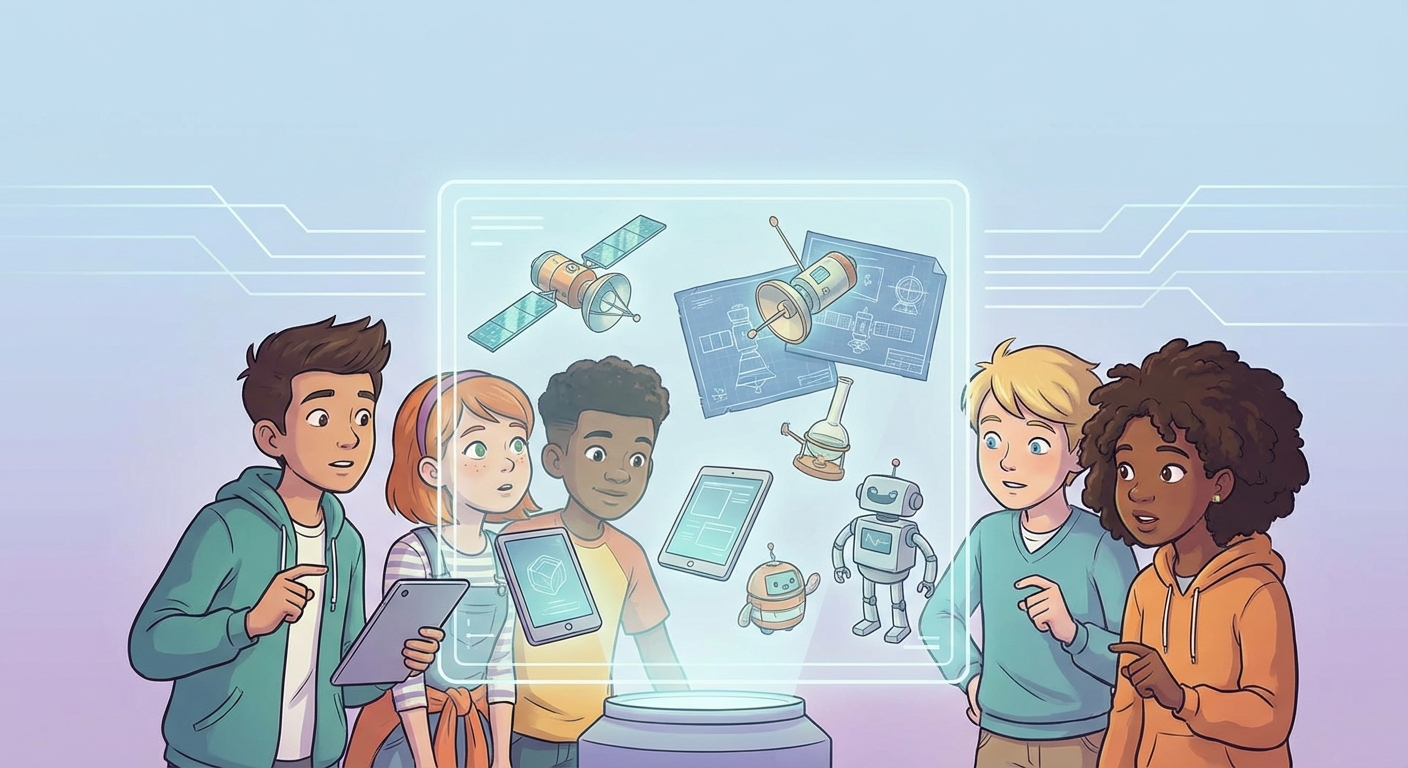
Satellite technology, like Sputnik, gave the USSR early advantage in space.
Deeper science: The same nuclear reactions power today’s nuclear power plants, providing clean electricity.
3. Real‑world Applications and Everyday Life
Cold‑War competition forced companies to improve computers for code‑breaking.
Those early computers evolved into today’s smartphones and tablets.
Air travel routes expanded because both sides needed quick diplomatic transport.
Medical imaging, such as MRI, benefited from research on particle acceleration.
Current events connection: Modern cyber‑security battles echo Cold‑War espionage, just with computers.
4. The End of the Standoff
By the late 1980s, Soviet economics weakened while reformers like Gorbachev promoted openness.
The Berlin Wall fell in 1989, symbolizing reduced division.
In 1991, the Soviet Union dissolved, ending the official Cold War.
Critical thinking: How might history change if the wall had never fallen?
Mini Quiz & Simple Experiment
Quiz (Choose One Answer):
- Which year did the Berlin Wall fall?
- A) 1979 b) 1989 c) 1999
- What technology first launched the Space Race?
- A) Apollo 11 b) Sputnik c) Voyager
Experiment – Build A Basic Compass:
- Magnetize a sewing needle by rubbing it against a magnet ten times.
- Float the needle on a small leaf placed in a bowl of water.
- Observe the needle aligning north‑south, demonstrating Earth’s magnetic field.
Science link: The Earth’s magnetic field protects us from solar radiation, just like a shield.
The Cold War mixed politics, science, and everyday inventions.
Ask yourself how today’s global tensions might inspire new technologies.
Read more about current space missions and nuclear energy breakthroughs.
Your curiosity can connect history to the exciting future ahead!