Silk Road
What Was the Silk Road?
The Silk Road was a network of trade routes that connected China with Europe, Africa, and the Middle East. It started over 2,000 years ago, during the Han Dynasty in China. Merchants used the name “Silk Road” because silk was one of the most valuable items that traveled along the route. The roads were not a single path but many trails that crossed deserts, mountains, and seas.
How Goods Traveled
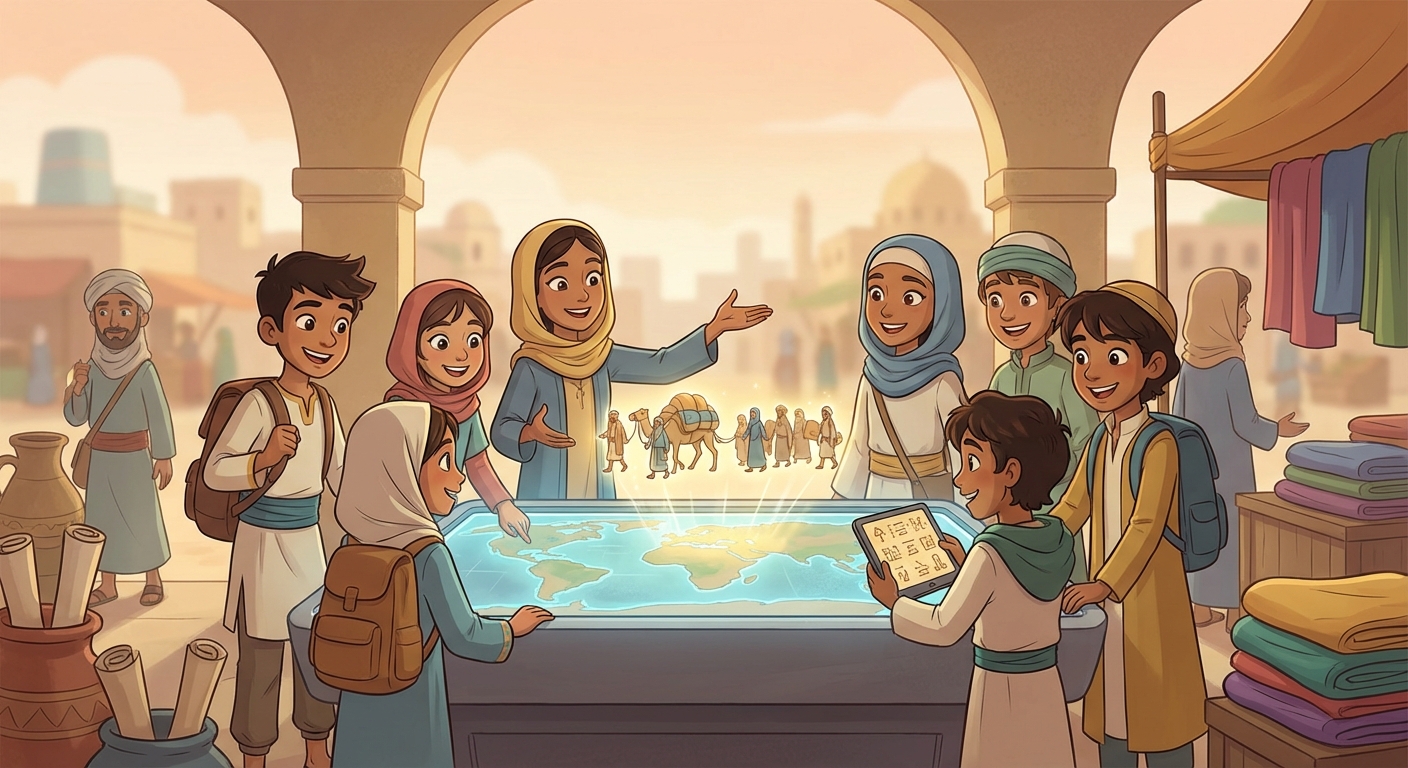
Caravans of camels, horses, and sometimes ships carried goods. Traders packed silk, spices, tea, paper, and porcelain from the East. From the West they brought glassware, wool, gold, and precious stones. The journey could take months or even years. Travelers faced sandstorms, cold mountain passes, and bandits, so they traveled in groups for safety.
People and Cultures
The Silk Road was more than a market; it was a meeting place for cultures. Merchants, explorers, monks, and diplomats shared ideas, languages, and religions. Buddhism spread from India to China, while new art styles mixed Eastern and Western designs. Food, music, and stories traveled the same paths as silk, making the world a little more connected.
Legacy Today
Even though the original routes are no longer used for trade, the Silk Road still influences us. Modern roads, railways, and internet connections follow some of the same corridors. The word “silk road” is now used for projects that aim to boost trade between Asia and Europe. Museums around the world display artifacts that once traveled the ancient routes, reminding us how trade can bring people together.
The Silk Road shows how curiosity, bravery, and cooperation can link distant lands and create a shared history that lasts for centuries.