Photosynthesis: The Ultimate Solar Power Plant
Imagine a solar panel that’s alive, self-healing, and super-efficient! It exists, and it’s called a leaf. We call the amazing process it uses photosynthesis.
What’s the Big Deal About Solar Power?
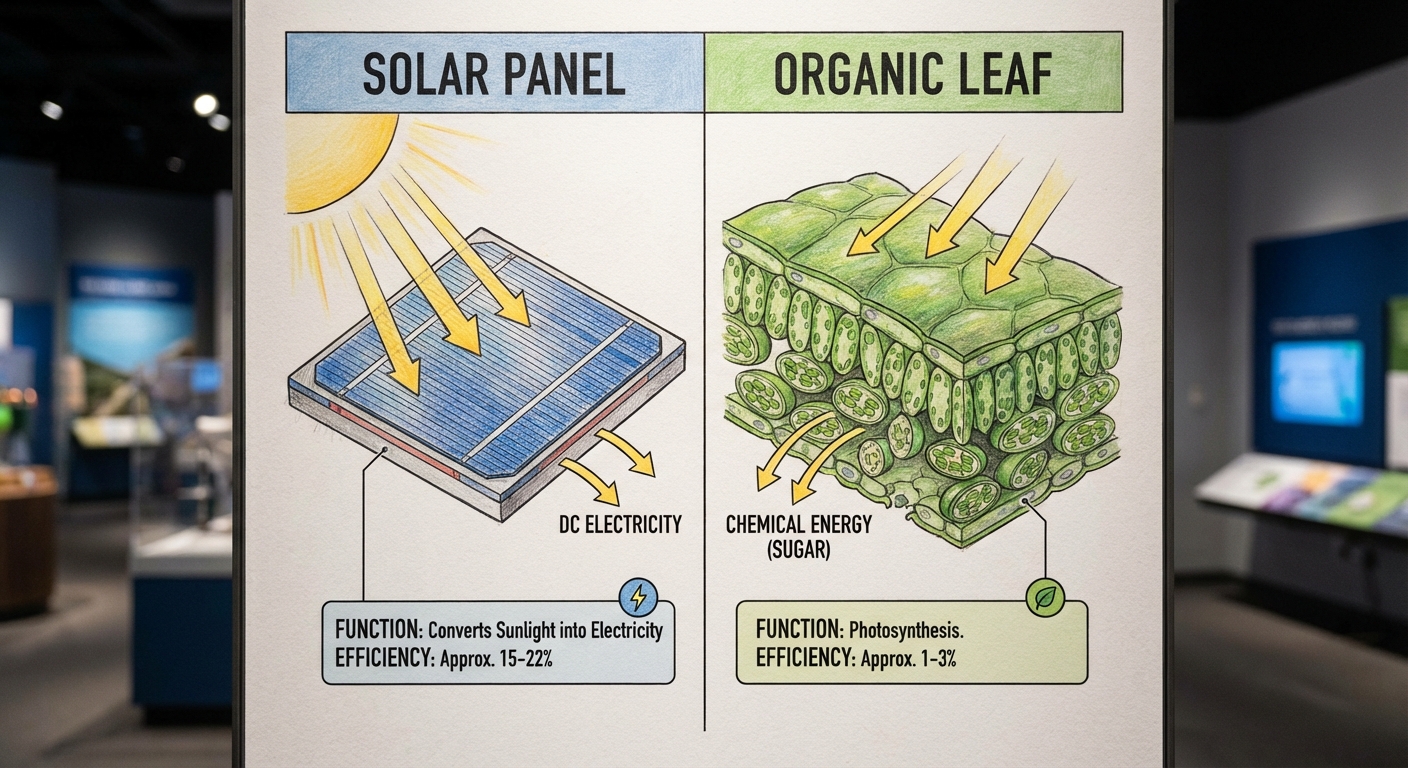
The sun sends light and warmth our way. Solar panels convert some of that light into electricity, while plants use sunlight to build sugars through photosynthesis. These systems do different jobs, so comparing them can reveal both useful similarities and important differences.

Photosynthesis: Nature’s Solar Panel
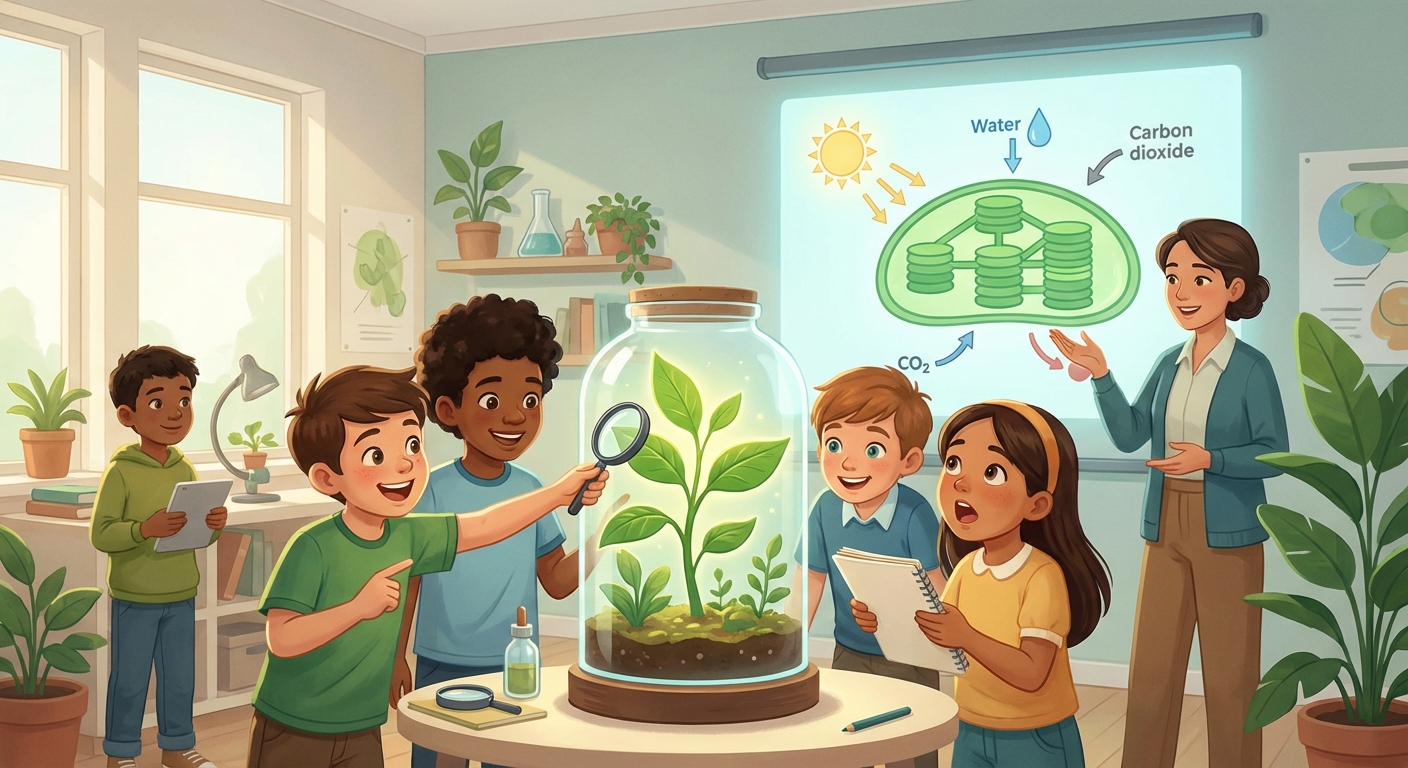
Photosynthesis is how plants make their own food using sunlight. Think of it like a recipe. You take a few simple ingredients, add some energy, and BAM, you’ve got something delicious.
Here’s the photosynthesis recipe:
- Ingredients: Carbon dioxide (CO2) from the air, water from the ground
- Energy: Sunlight
- Result: Sugar (food for the plant), oxygen (which we breathe!)
It’s basically CO2 + Water + Light = Sugar + Oxygen.
Plants don’t “eat” soil like we eat food. Soil is more like a vitamin supplement for plants. The real energy comes from the sun, transformed into sugar through this fantastic process. We, in turn, eat the plants or animals that eat plants, getting the sun’s energy second-hand.
Leaf Tech: Smarter Than Our Tech
Many commercial solar panels convert around 20% of incoming sunlight into electricity. Plants usually store only a few percent of incoming solar energy as chemical energy, but they also build complex materials, reproduce, and repair parts of the organism.
But it doesn’t stop there. Some plants can adjust leaf positions to manage sunlight, and plants can grow new tissue when parts are damaged. In autumn, many trees break down chlorophyll and recover useful nutrients before dropping their leaves. Other pigments then become easier to see, creating yellow, orange, and red colors.
It’s a common misconception that photosynthesis only happens during the day. While it’s true that sunlight is needed, some plants have clever ways of storing carbon dioxide at night, so they can continue making sugar when the sun comes up. Also, not all plants photosynthesize at the same rate. Different species have different adaptations based on where they live.
Photosynthesis and You
Photosynthesis isn’t just some science term. It’s vital to our survival.
First, it provides us with food. Every piece of fruit, every vegetable, every grain we eat can be traced back to photosynthesis. Second, it gives us the air we breathe. Plants release oxygen as a byproduct of photosynthesis, and that oxygen is what keeps us alive! Finally, photosynthesis helps combat climate change. Plants are natural “carbon scrubbers,” sucking up CO2, a major greenhouse gas, from the atmosphere.

Deforestation, or cutting down forests, reduces the number of plants that can absorb CO2. Reforestation, or planting new trees, helps to increase the amount of CO2 absorbed.
It’s a big misconception that plants “eat” soil for energy. They don’t! They get their energy from sunlight through photosynthesis. Soil provides essential nutrients, but the sun is the real power source.
Photosynthesis produces most of the oxygen added to Earth’s atmosphere. Solar panels are usually more efficient at turning sunlight into usable energy, while plants are remarkable chemical factories. Studying both can inspire better ways to capture and store energy.
Conclusion
Photosynthesis is way more than a school lesson, it’s the foundation of life on Earth. By understanding how it works, we can make smarter choices about how we treat our planet. We can support reforestation efforts, reduce our carbon footprint, and appreciate the amazing power of plants!
Key Takeaways:
- Photosynthesis is how plants make their food using sunlight, water, and carbon dioxide.
- Leaves and solar panels both use sunlight, but they convert and store energy in different ways.
- Photosynthesis provides us with food, air, and helps fight climate change.
- We can help photosynthesis by planting trees and reducing our carbon footprint.