
Calculus: The Math of Change (And Why It Matters to Your Future)
Ever ridden a roller coaster and wondered how engineers design those crazy loops and drops without sending you flying off into space? The secret is calculus, the math of change. But how do you calculate change that happens instantly? Let’s find out.
Limits: Zooming In on the Answer
Think about the speedometer in a car. It tells you how fast you’re going right now. But how does it do that? Is it measuring how far you go over an hour, then dividing by 60 to get miles per minute, then again to get miles per second? No way. That would be your average speed. Your actual speed changes all the time as you accelerate or slow down.

Instead, the speedometer estimates your speed by measuring tiny changes in the wheel’s rotation, using some clever engineering to approximate your speed at a specific moment. It’s essentially calculating your speed over a very short period of time. This “getting closer and closer” idea is what “limits” are all about in calculus.
Imagine a graph showing your car’s speed over time. The closer we zoom in on a specific point in time, the more the curve looks like a straight line. A limit is the value the function (your speed) approaches as we get infinitely close to that point in time. It’s like saying, “As we get closer and closer to this moment, the speed gets closer and closer to this number.” We get so close that, for all practical purposes, that’s your instantaneous speed.
Derivatives: Finding the Slope of Change
Limits help us understand something called a derivative. A derivative is simply the slope of a curve at a specific point. But why is that useful?
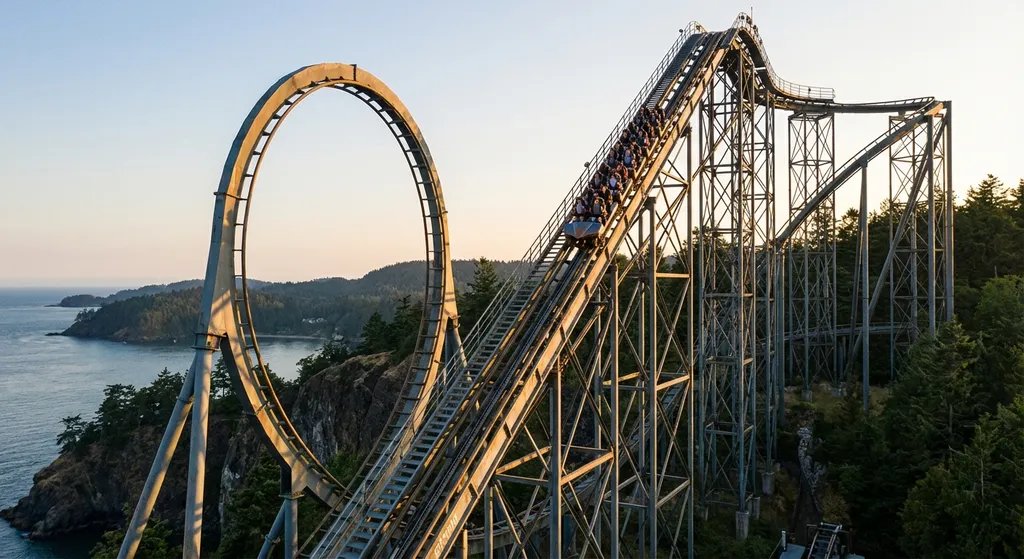
Back to the roller coaster. The derivative, or slope, of the track at any point tells engineers how quickly the coaster is changing direction. This is incredibly important for calculating the G-force riders experience, which needs to be within safe and thrilling limits. Too much G-force, and you’ll black out. Too little, and the ride isn’t exciting. Derivatives are used to find the perfect balance. They tell us the rate of change.
The derivative isn’t just about slopes of lines, though; it’s about the rate at which anything changes. For example, consider a smartphone camera. Autofocus works by adjusting the lens until the image is as sharp as possible. How does the phone know when it’s reached maximum sharpness? It uses derivatives. The camera measures the change in contrast as it adjusts the lens. When the change in contrast (the derivative) is zero, it means it’s found the point of maximum sharpness.
Calculus in the Real World
Calculus isn’t stuck in textbooks, it’s behind tons of cool technology.
- Climate Change: Scientists use calculus to model how the Earth’s temperature is changing over time, helping them predict future climate scenarios. They examine the rate of temperature increase or the melting of ice caps.
- Sports: Coaches and athletes use calculus to optimize performance. They might analyze the trajectory of a ball or the speed of a runner to find ways to improve efficiency and speed.
- GPS: That little dot on your phone showing you where you are? Calculus is essential to its calculations. GPS satellites send signals, and your phone uses calculus to determine your precise location based on the time it takes those signals to arrive.
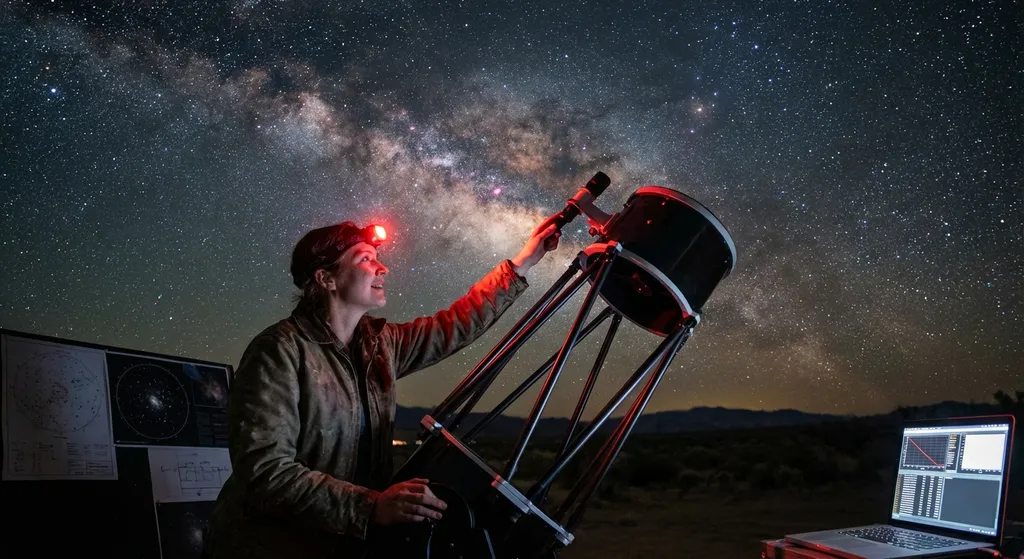
- Predicting Planets: Calculus was used to predict the existence and location of Neptune before anyone had even seen it through a telescope! Scientists noticed Uranus wasn’t quite behaving as expected. Using calculus, they predicted another planet’s gravitational pull was affecting Uranus. They pointed their telescopes where calculus told them to look, and there it was!
Calculus might seem intimidating, but it’s a powerful tool for understanding and predicting change. It’s not just for math geniuses. Anyone can learn the basics and see how it applies to the world around them.
Key Takeaways:
- Calculus is the math of change.
- Limits help us understand what happens as we get closer and closer to a specific value.
- Derivatives tell us the rate of change, or the slope of a curve at a point.
- Calculus is used in countless real-world applications, from roller coaster design to climate change modeling.