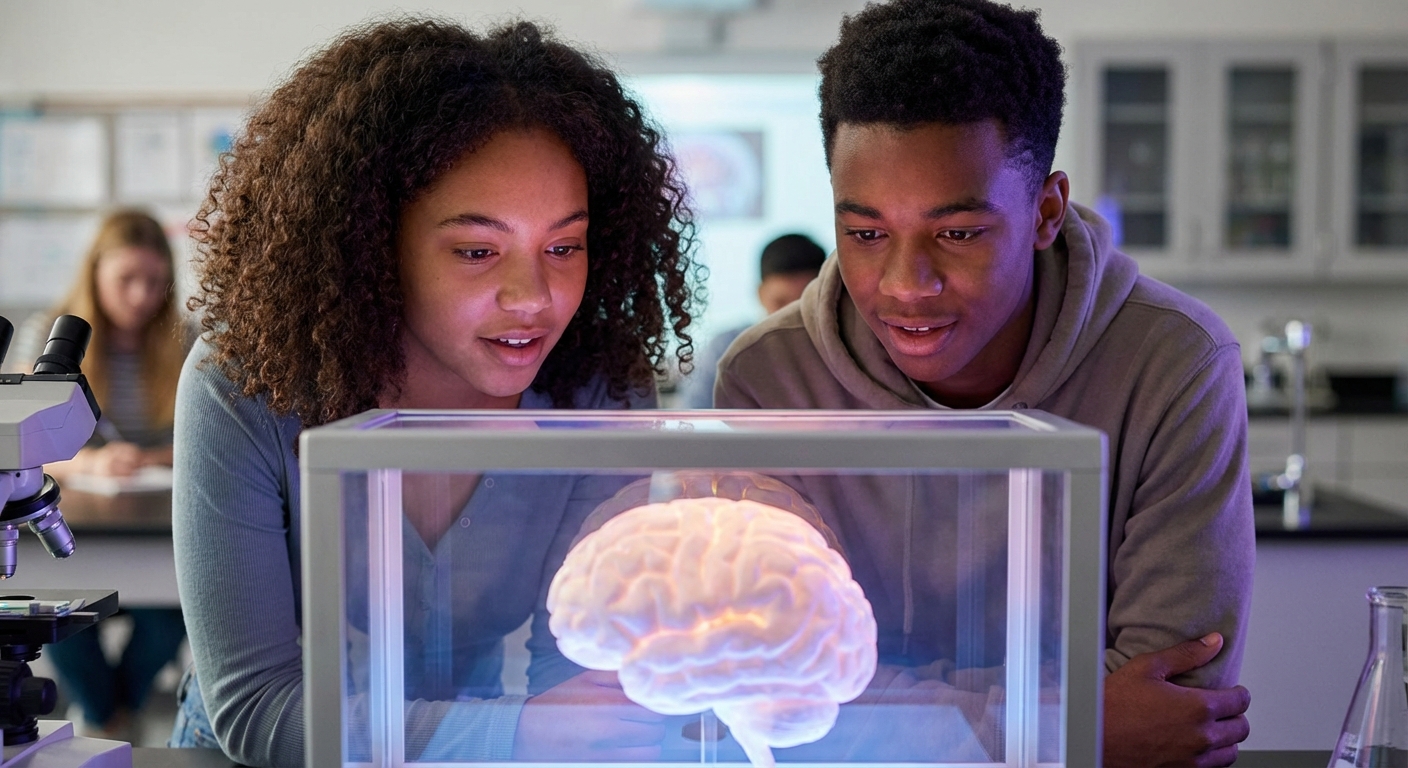
Neuroscience
What Is Neuroscience?
Neuroscience is the study of the nervous system – the network of cells that lets us think, feel, move, and sense the world. It includes everything from the tiny nerve fibers that run through our skin to the massive brain that sits in our skull. Scientists who work in this field are called neuroscientists. They ask questions like:
- How do brain cells (neurons) talk to each other?
- Why do we remember some things and forget others?
- What goes wrong in disorders such as epilepsy or depression?
By answering these questions, neuroscientists help us understand how we learn, how emotions are created, and how to treat brain‑related illnesses.
How the Brain Works
Neurons: The Brain’s Messengers
A neuron is a special type of cell that sends electrical signals. Each neuron has three main parts:
- Dendrites – branch‑like extensions that receive signals from other neurons.
- Cell Body – contains the nucleus and processes the incoming information.
- Axon – a long cable that carries the signal away to other neurons or muscles.
When a neuron receives enough input, it fires an Action Potential, a brief electrical pulse that travels down the axon. At the end of the axon are tiny gaps called Synapses. Here, chemicals called Neurotransmitters are released, crossing the gap to start a new signal in the next neuron.
Brain Regions and Their Jobs
- Cerebral Cortex – the outer layer, responsible for thinking, planning, and language. Different sections handle sight, hearing, touch, and movement.
- Limbic System – includes the hippocampus (memory) and amygdala (emotion). This area helps us form memories and react to feelings.
- Brainstem – controls basic life functions such as breathing, heart rate, and sleep cycles.
These regions work together like a well‑coordinated orchestra, allowing us to solve problems, enjoy music, or sprint across a field.
Exploring the Mind
Neuroscience isn’t just about anatomy; it also explores how we experience the world.
Learning and Plasticity
The brain is Plastic, meaning it can change its connections throughout life. When you practice a skill—like playing the guitar or solving math problems—neurons that fire together strengthen their links. This process, called Synaptic Plasticity, is the basis of learning and memory.
Brain Imaging
To see the brain in action, scientists use tools such as MRI (magnetic resonance imaging) and EEG (electroencephalogram). MRI creates detailed pictures of brain structures, while EEG records the brain’s electrical activity. These methods let researchers observe how different tasks light up specific brain areas.
Ethical Questions
As we learn more, we face new dilemmas. Should we use brain‑enhancing drugs to boost exam performance? How do we protect privacy when brain data could reveal thoughts or emotions? Discussing these questions helps ensure that scientific progress benefits everyone responsibly.
Neuroscience shows us that the brain is a dynamic, adaptable organ that shapes who we are. By studying its cells, circuits, and behavior, we gain tools to improve education, treat disease, and understand the mysteries of the human mind.