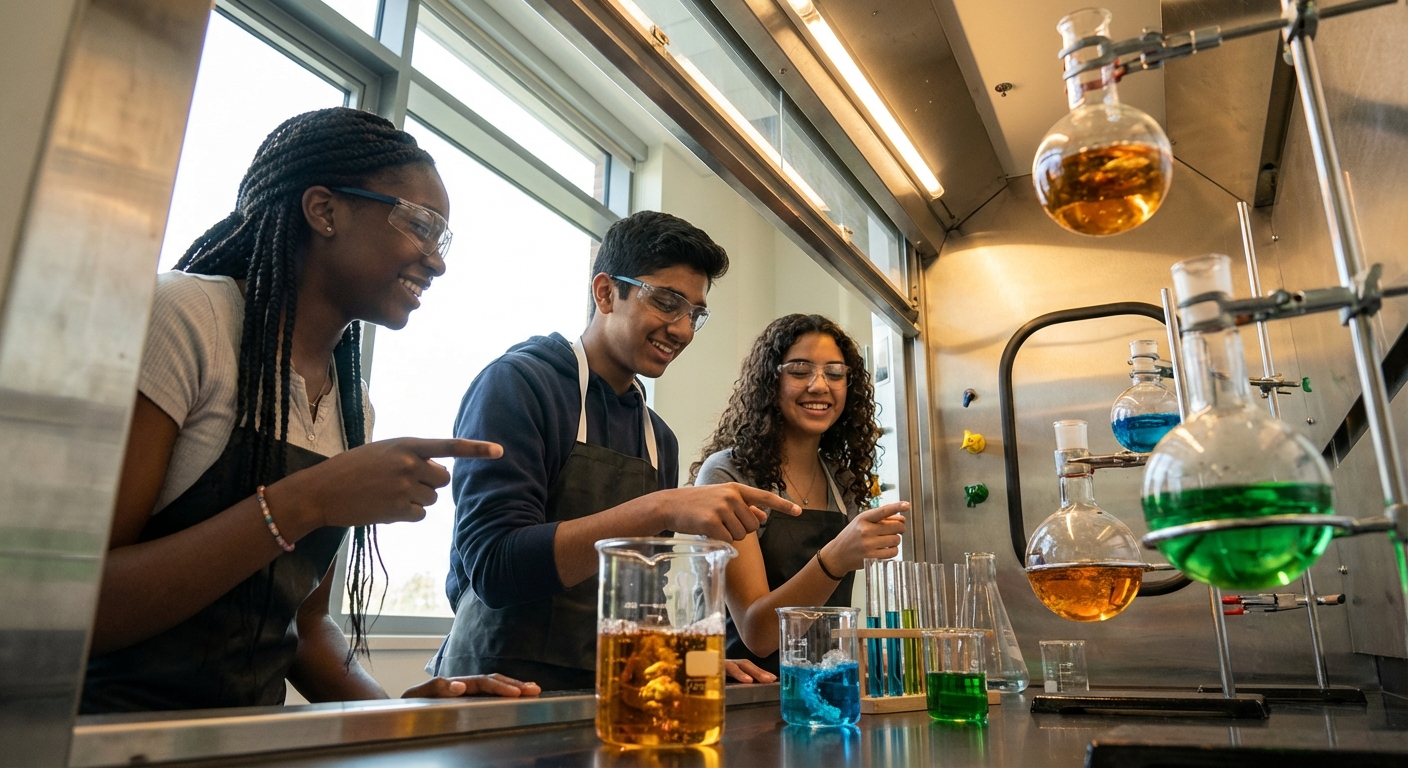
The Dynamic World of Organic Chemistry 🌿
Organic chemistry explores carbon‑based molecules, the backbone of life, materials, and modern technology.
Understanding how atoms bond, rearrange, and interact equips teenagers to interpret scientific headlines critically.
1. Foundations: Carbon’s Unique Versatility
Carbon’s tetravalent nature allows it to form single, double, and triple bonds, creating limitless structural possibilities.
These bonds generate stable chains, rings, and three‑dimensional frameworks that define organic compounds.
Hybridization—sp³, sp², and sp—explains bond angles, influencing molecular shape and reactivity.
2. Functional Groups: The Chemical “alphabet”
Functional groups act as molecular letters, dictating physical properties, polarity, and biological activity.
Alcohols, carbonyls, amines, and halides each confer characteristic reactions, enabling chemists to predict behavior.
Isomers—structural, geometric, and optical—illustrate how identical formulas yield distinct functions, a concept crucial in drug design.
3. Reaction Mechanisms: Step‑by‑step Transformations
Mechanistic analysis dissects reactions into elementary steps, revealing electron flow via curved‑arrow notation.
Nucleophilic substitution, electrophilic addition, and radical polymerization exemplify core pathways taught in high‑school labs.
Recent research on photoredox catalysis demonstrates how light can replace harsh reagents, advancing sustainable synthesis.
4. Perspectives and Careers: from Lab Bench to Global Impact
Chemist’s View: Synthetic organic chemists design molecules that become life‑saving pharmaceuticals, agricultural protectants, or high‑performance polymers.
Environmental View: Green chemists evaluate reaction atom‑economy, seeking biodegradable alternatives to petroleum‑derived plastics.
Medical View: Medicinal chemists employ structure‑activity relationships to optimize drug efficacy while minimizing side effects.
Career avenues include research scientist, process engineer, quality control analyst, patent attorney, and science educator.
Organic Chemistry Quiz
Organic chemistry intertwines theory, experimentation, and societal relevance, offering endless avenues for curious minds.
By probing molecular structures, you join a global community shaping medicines, sustainable materials
- Which functional group is responsible for the characteristic smell of many fruits?
a) aldehyde ✓ b) amine c) ether d) nitro