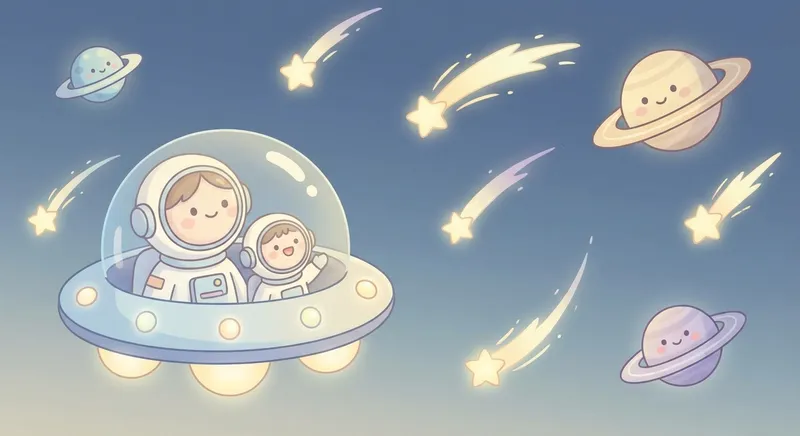
🌟 Shooting Stars in the Night Sky
Look up! The sky is dark and full of tiny lights. Sometimes a Shooting Star flashes across the sky. It is fast, bright, and fun to watch!
1. What Is a Shooting Star?
A shooting star is a little rock from space.
- It falls Fast, Fast, Fast.
- It makes a Whoosh sound in our imagination.
- It glows Bright, Bright, Bright like a tiny flashlight.
2. How Many Shooting Stars?
Let’s count together:
1️⃣ One shooting star zooms by.
2️⃣ Two shooting stars streak across.
3️⃣ Three shooting stars sparkle and fade.
You can count more if you see them!
3. Feelings When We See One
When a shooting star flies, we feel:
- Wow! – surprise
- Happy! – smiley
- Dreamy! – we think of wishes
We say, “Wow, wow, wow!” and we feel a warm Twinkle inside.
Simple Activity: Star Drawing
- Take a piece of paper and crayons.
- Draw a dark night sky (color it blue or black).
- Add Five bright stars (use yellow or white).
- Draw a Whoosh Line for a shooting star.
- Say “whoosh!” as you draw the line.
You are a little space explorer! Keep looking up, counting, and feeling the magic of shooting stars. The night sky is full of wonders—just waiting for you to discover. 🌙✨.
Continue the adventure
Download Surprise Button for iPad
A simple, safe way for kids to explore the internet. With one tap, they discover something new — a fun fact, a science experiment, a story, or a place in the world they never would've searched for.
Download on the App StoreYour child explores safely on Surprise Button App
How Volcanoes Form
From Magma to Mountain
Volcanoes grow where tectonic plates collide or drift apart. Heat melts rock into light, buoyant magma that rises, cools, and hardens near the surface, building the cone layer by layer.
Know exactly what to talk about tonight