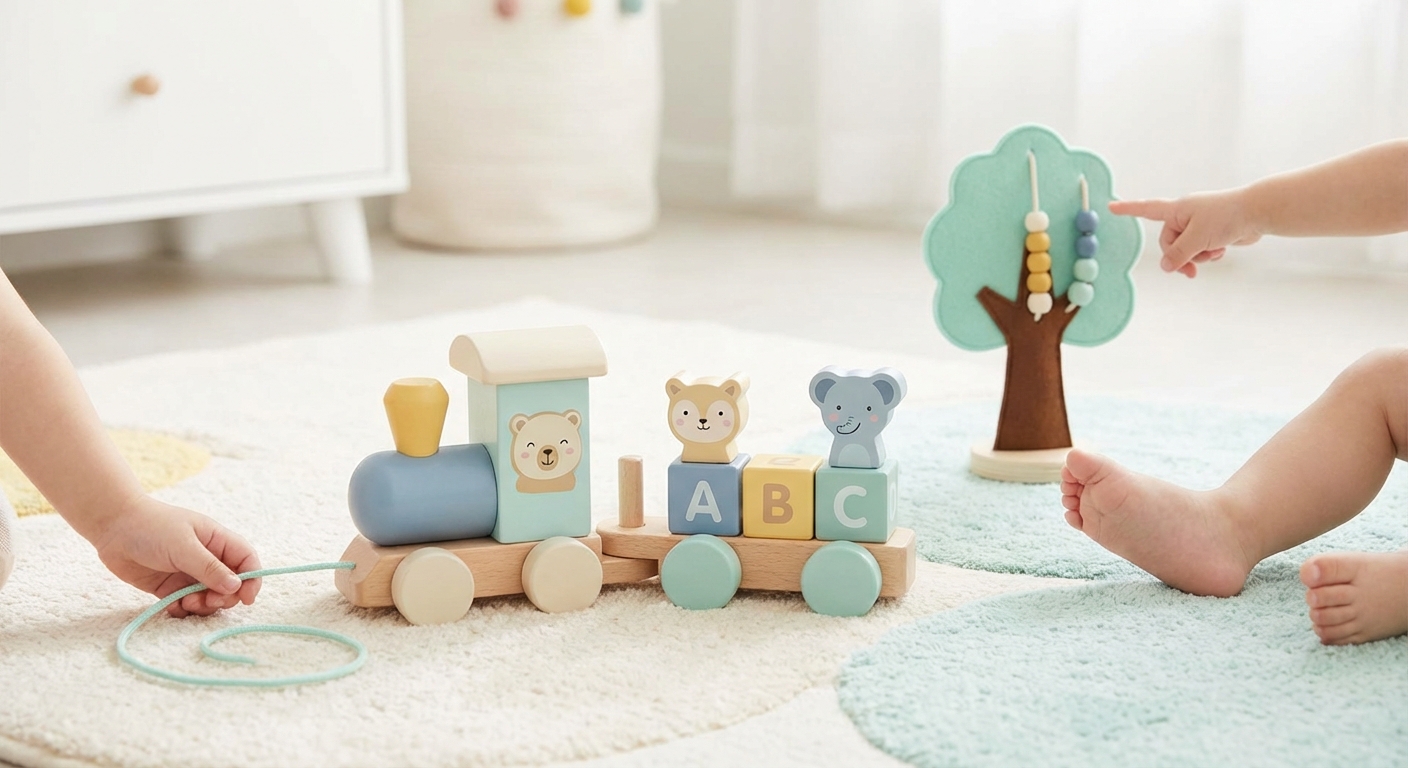
🎈 Pull‑toy Fun!
Pull toys are toys that you hold and Pull. They go click‑click or ding‑ding as they move. Let’s learn about them together!
1. Colorful Pull Friends
- Red Rabbit hops on wheels. Pull, pull, pull and it says “hop‑hop!”
- Blue Bear rolls slow. Pull, pull, pull and it makes a soft “vroom”.
- Yellow Duck waddles fast. Pull, pull, pull and it quacks “quack‑quack!”
We can see Red, Blue, Yellow and feel happy when they move.
2. Counting Pulls
Let’s count the pulls:
1️⃣ Pull once – the rabbit hops.
2️⃣ Pull twice – the bear rolls.
3️⃣ Pull three times – the duck waddles.
Keep pulling 1, 2, 3 and watch the toys go!
3. Feelings & Sounds
When the toy moves, we feel Joy.
If the toy stops, we feel a little Sad, so we pull again and hear Click‑click or Ding‑ding.
Simple Activity – Pull‑toy Race
- Line up a red rabbit, a blue bear, and a yellow duck.
- Hold the string of one toy.
- Say “Pull, pull, pull!” three times.
- Watch which toy goes the farthest.
- Cheer “Yay!” for the winner and try again.
Pull toys are bright, make sounds, and help us count. Keep pulling, keep smiling, and explore more toys that go click‑click and ding‑ding. Happy pulling! 🚂
Continue the adventure
Download Surprise Button for iPad
A simple, safe way for kids to explore the internet. With one tap, they discover something new — a fun fact, a science experiment, a story, or a place in the world they never would've searched for.
Download on the App StoreYour child explores safely on Surprise Button App
How Volcanoes Form
From Magma to Mountain
Volcanoes grow where tectonic plates collide or drift apart. Heat melts rock into light, buoyant magma that rises, cools, and hardens near the surface, building the cone layer by layer.
Know exactly what to talk about tonight