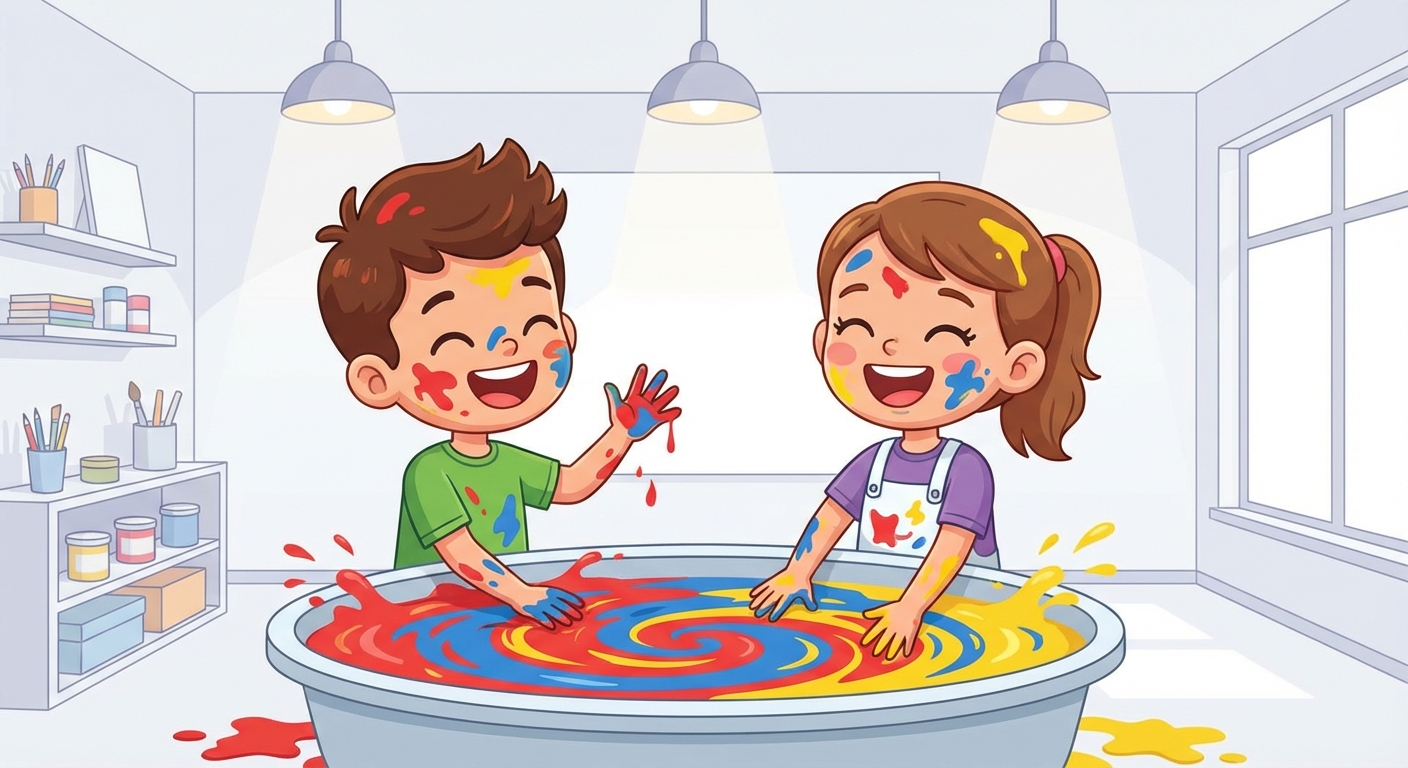
🎨 Magic of Color Mixing
Colors are like little friends that love to play together. When we mix them, they make brand‑new colors! Let’s discover how this works in a fun and easy way.
1. The Three Primary Colors
- Red, Blue, and Yellow are the “starter” colors.
- You can’t make them by mixing other colors; they are the building blocks for everything else.
2. Mixing Two Colors
| Mix + | Result |
|---|---|
| Red + Blue | Purple |
| Red + Yellow | Orange |
| Blue + Yellow | Green |
When you stir two colors together, they share their “color pieces” and create a new shade. It’s like mixing two flavors of ice‑cream!
3. Making Lots of Shades
- Add A Little White → the color becomes lighter (a “tint”).
- Add A Little Black → the color becomes darker (a “shade”).
- Keep adding tiny drops and you can make many different colors, just like a rainbow.
4. Playful Paint Ideas
- Paint A Sun: Mix yellow with a tiny bit of orange to get a warm, sunny hue.
- Create A Monster: Blend green and purple, then add a splash of pink for a silly creature.
- Rainbow Trail: Use a strip of paper, dip one end in red, then slowly add blue and yellow as you move along. Watch the colors change!
Did You Know? 🤔
The word “Magenta” comes from a beautiful pink‑purple flower called the magenta plant. Artists discovered the color by mixing red and blue!
Now you’re a color‑mixing explorer! Grab some paints, crayons, or colored water and try these tricks. Every new blend is a surprise waiting to be discovered. Keep mixing, keep creating, and let your imagination paint the world!