🌍 Discovering Map Symbols
Introduction
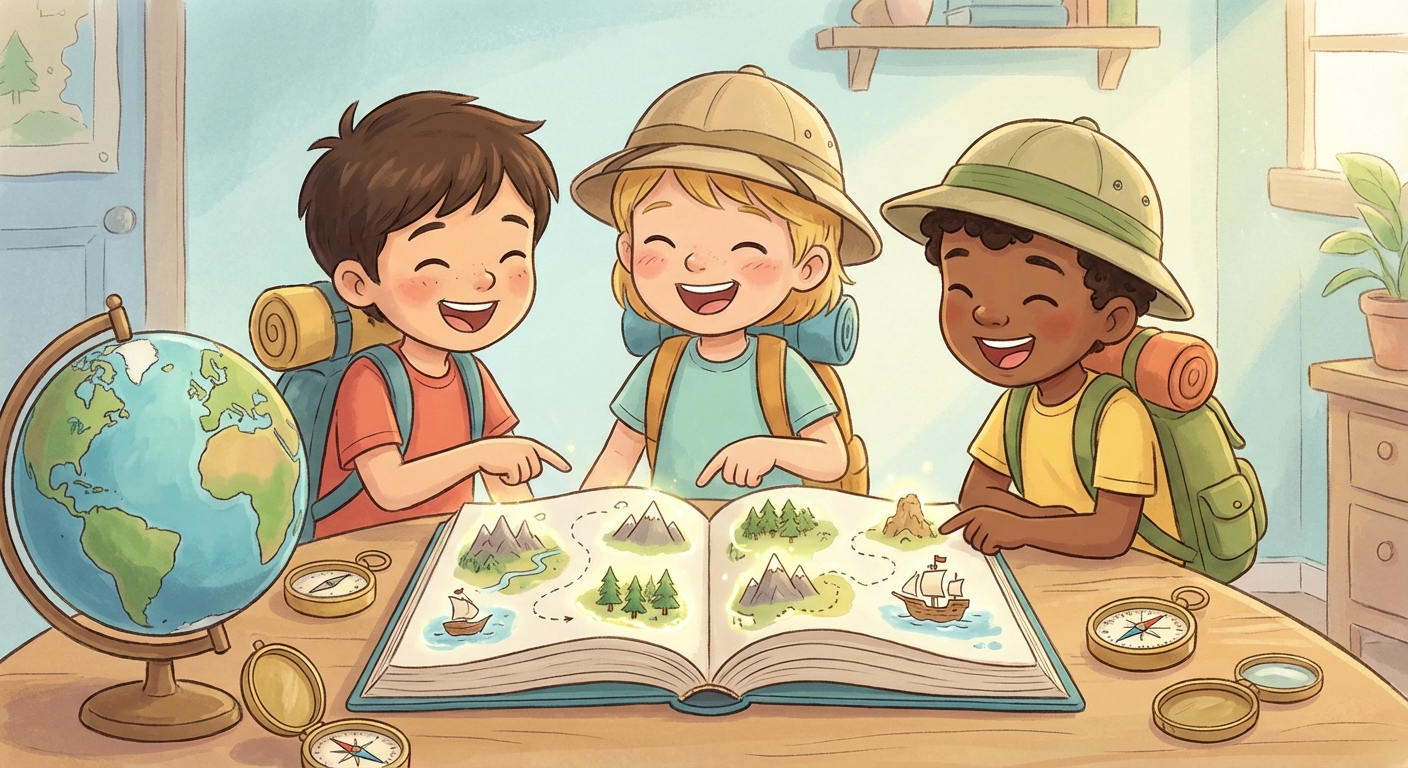
Maps are pictures that help us find places. Just like a treasure map, they use tiny pictures called Symbols. These symbols tell us what is on the land—like trees, houses, or rivers!
1. What a Symbol Looks Like
- A Tree picture means a forest.
- A Blue Line shows a river or a stream.
- A Little House tells us where people live.
Think of symbols as secret codes. When you learn the code, the map becomes easy to read!
2. Why We Use Symbols
A real picture of every tree would make a map huge and heavy. Symbols are small, so the whole world can fit on one paper. They also help us see the same thing on many different maps, no matter where we are.
3. How to Read a Simple Map
- Look at the Legend (the key) usually found in a corner.
- Find the picture you see on the map.
- Match it to the word in the legend.
Now you know that the blue squiggle is a river and the brown square is a mountain!
4. Use Your Imagination
Pretend the map is a game board. The tree symbols are forests where friendly animals live. The house symbols are villages where you can meet new friends. What adventure will you have next?
Did You Know?
🦕 Some ancient maps used a Dragon symbol to show dangerous places! Today we use simple pictures, but the idea of symbols is very old.
Conclusion
Maps are like puzzles, and symbols are the pieces. Grab a map, find the legend, and start exploring your world. Who knows what hidden treasures you’ll discover? 🌟