🛡️ Vikings: Brave Sea Travelers
Long ago, people called Vikings lived near cold seas. They rode fast boats, wore sturdy clothes, and loved adventure. Let’s learn about their world!
1. Where Vikings Lived
Vikings came from places we now call Norway, Sweden, and Denmark. These lands have tall mountains, deep forests, and long, icy coasts. They built small homes called Longhouses where families ate, slept, and told stories.
2. Their Amazing Ships
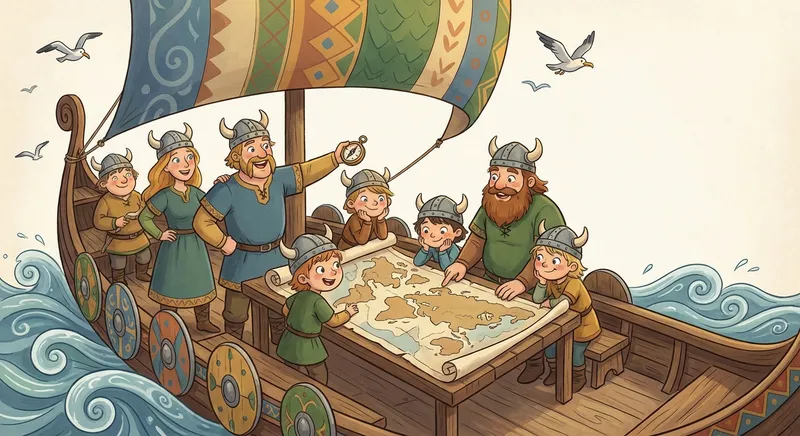
Vikings made long, thin boats called Longships. The ships could glide over calm water and cut through big waves. Because the boats were light, Vikings could row with strong arms or use a sail when the wind blew. This let them travel far—sometimes all the way to a place called America, long before Columbus!
3. Daily Life and Tools
- Clothes: Vikings wore woolen tunics and fur coats to stay warm.
- Food: They ate fish, meat, berries, and bread made from grain.
- Tools: They used strong iron axes and hammers for building and making things.
4. Why They Traveled
Vikings looked for new places to trade, find food, and meet other people. They liked to share their goods—like wool, wood, and jewelry—and bring back new treasures.
Did You Know?
A Viking child could learn to read runes (old letters) by the age of 6, and they loved telling stories about brave heroes and mighty dragons! 🐉
Vikings were curious explorers who loved the sea and their families. You can be an explorer too—read books, draw maps, or imagine your own adventure on a wooden ship. The world is full of stories waiting for you to discover!