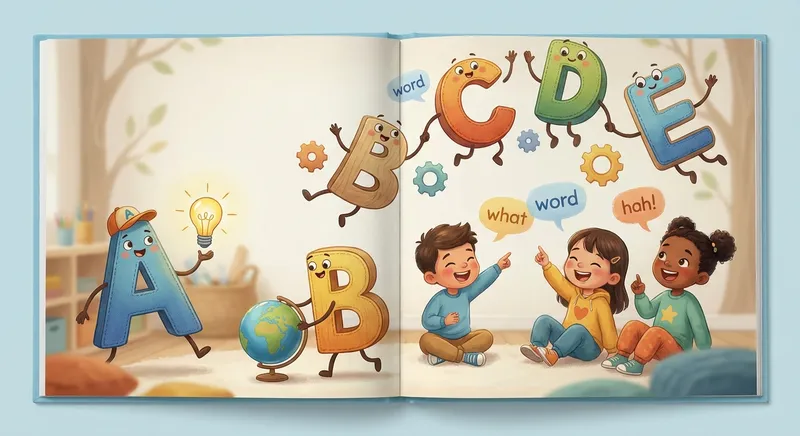
🎉 Capital Letters: Big Letters for Big Ideas!
Hello, young readers! Today we will learn about Capital Letters. They are the big, tall letters that help our writing look neat and tell us where a sentence begins.
1. What Is a Capital Letter?
- A capital letter is the Big version of a letter.
- It looks taller than the small (lower‑case) letters you use every day.
- Example: A is the capital of A, B of B, and C of C.
2. Where Do We Use Capital Letters?
- At The Start Of A Sentence – “Sunshine is warm.”
- For Names – “My friend Lily likes cats.”
- For Places – “We visited Parkland.”
- For Days And Months – “Today is Monday, and it is June.”
3. How to Spot a Capital Letter
Look for a letter that is Higher than the others and often Bigger. In a line of writing, the first letter will usually be a capital. If you see a name, the first letter of that name will be a capital too.
4. Make Your Own Capital Letters
Grab a crayon and draw a big letter on a piece of paper. Then draw the same letter small underneath it. See how the big one stands tall? You can turn any word into a “title” by writing the first letter big and the rest small.
Did You Know? 🤔
The first capital letter ever used in a book was the letter “I” in the ancient Roman poem The Aeneid. It was used to show the start of a new line, just like we do today!
Now you know why capital letters are important. Try finding them in your favorite storybook or write a short sentence with a capital at the start. Keep exploring, and let your big letters lead the way! 🌟