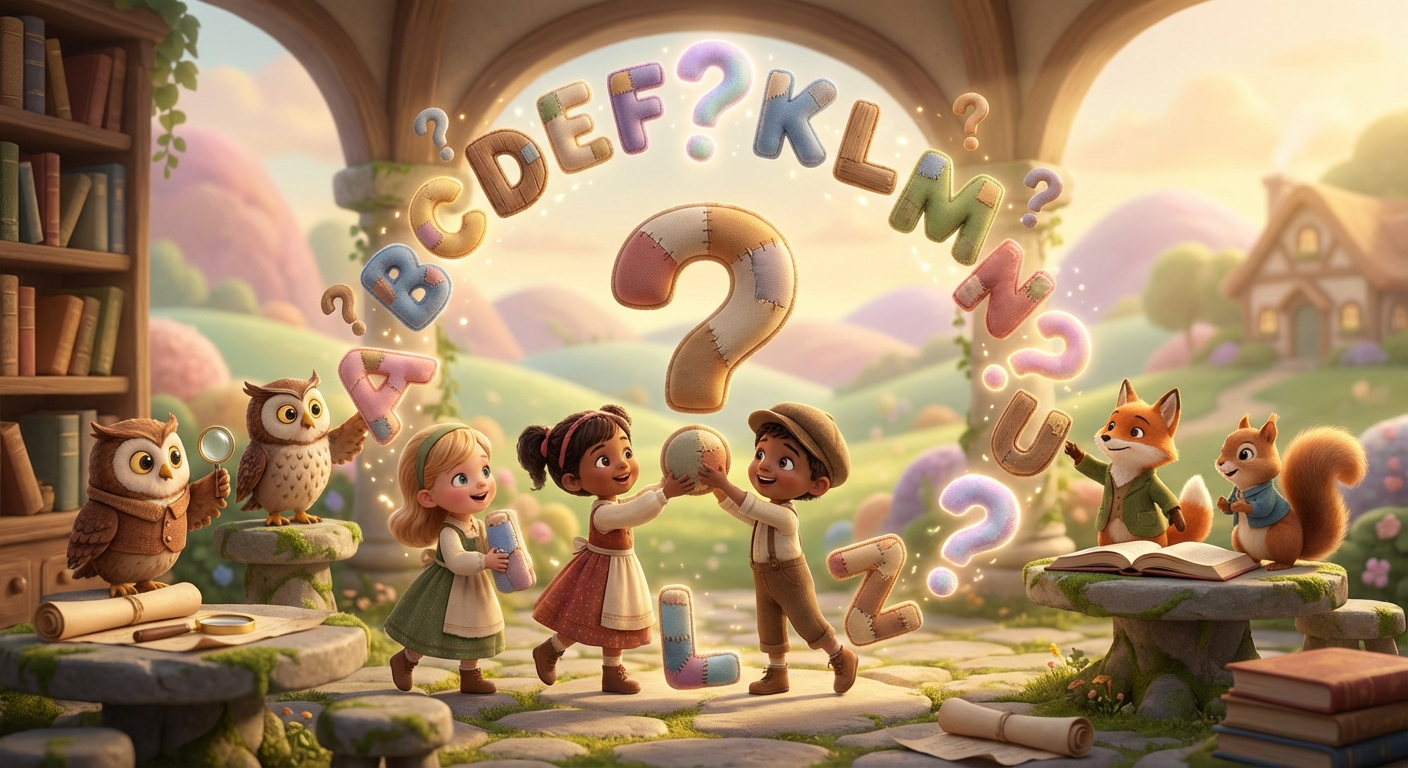
🎈 Let’s Discover Question Words!
Hello, little explorers! 🌟 Today we’re going to learn about Question Words—the special words that help us ask about the world around us.
1. What Are Question Words?
Question words are tiny “magic keys” that open the door to answers. When you use them, you can find out who, what, when, where, why, or how something happened.
2. The 5 W’s and 1 H
| Word | What It Asks | Example |
|---|---|---|
| Who | Person | Who is your best friend? |
| What | Thing or idea | What is your favorite snack? |
| When | Time | When do you go to school? |
| Where | Place | Where is the park? |
| Why | Reason | Why do cats purr? |
| How | Way or method | How do you tie your shoes? |
Think of them as a superhero team—each one has a special power!
3. How to Use Question Words
- Start With The Word (who, what, …).
- Add A Verb (like “is,” “do,” “can”).
- Finish With The Rest of your sentence.
Example: Why + do + birds + sing? → Why Do Birds Sing?
Practice by turning statements into questions. “The dog is brown.” → “What color is the dog?”
4. Play Time: Question Word Hunt
Grab a picture book and point to a page. Ask yourself:
- Who is in the picture?
- What are they doing?
- When might this be happening?
Write down the answers or draw a tiny picture for each question. It’s a fun detective game!
Did You Know?
The English question words who, what, when, where, why, and how have histories that stretch back hundreds of years. Languages change slowly as people use them. 🌍