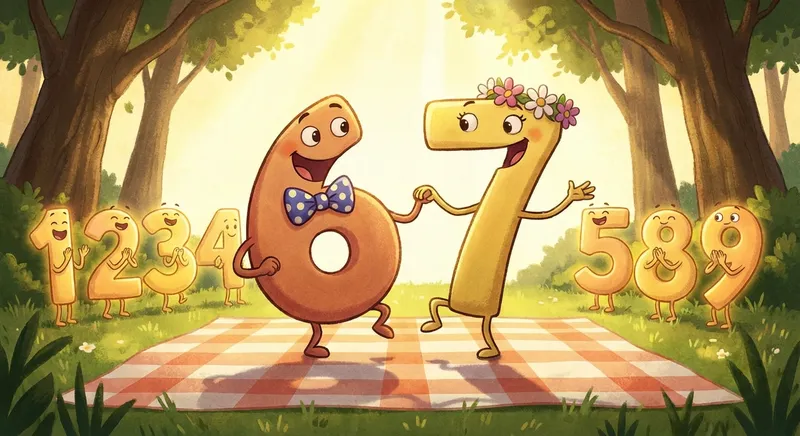
🎉 Near Doubles: A Magic Math Trick!
Hey there, little mathematician! 🎈 Today we’ll discover a special secret called Near Doubles. It helps you add numbers faster and have more fun with math.
1. What Are Doubles?
A double is when you add a number to itself.
- 3 + 3 = 6
- 5 + 5 = 10
Think of it like two identical twins holding hands.
2. Near Doubles – Almost Twins!
A near double is when the numbers are One Apart.
- 4 + 5 = 9 (double of 4 is 8, we’re just one more)
- 7 + 8 = 15 (double of 7 is 14, we add one extra)
It’s like having twins with a tiny difference—one wears a red hat!
3. How to Use Near Doubles
- Find The Smaller Number.
- Double It.
- Add One More (if the numbers are one apart).
Example: 6 + 7
- Double the 6 → 12
- Add one → 13
You’ve solved it quickly!
4. Play with Near Doubles
- Roll Two Dice. Add the numbers using the near‑double trick.
- Count Your Snacks. If you have 3 apples and 4 bananas, think “double 3 is 6, plus one = 7.”
You’ll see how fast you can count!
Did You Know? 🤔
The number 10 is a perfect double of 5. That’s why we often use “five‑five” to count fingers on both hands!