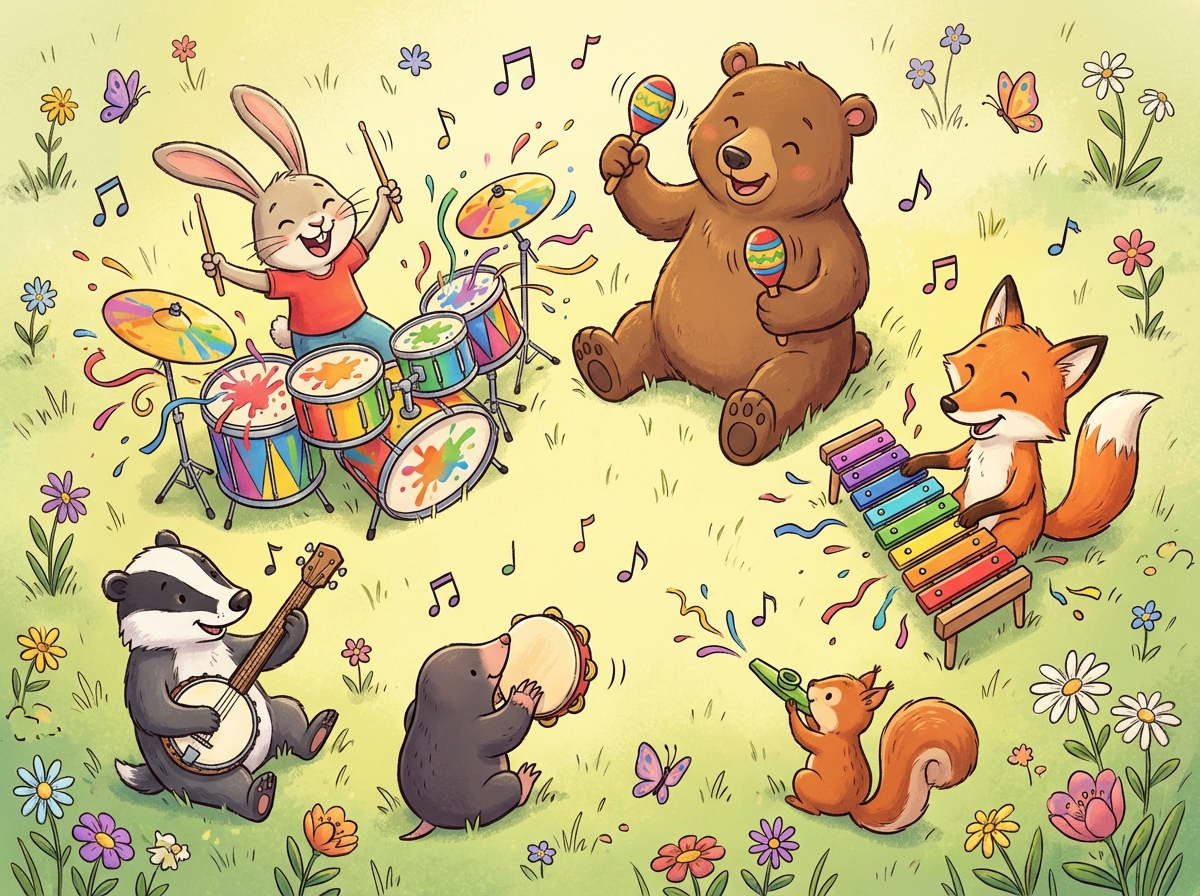
🎶 Percussion: the Beat Makers of Music
Percussion instruments are the ones that make beats and bangs in songs. They help music feel lively and give us a rhythm to tap our feet to!
1. What Is Percussion?
Percussion means any instrument you Hit, Shake, Or Tap. When you strike a drum, tap a triangle, or shake a maraca, you are playing percussion. These sounds can be loud like a thunderclap or soft like a gentle tap.
2. Types of Percussion Instruments
| Kind | Example | How It Sounds |
|---|---|---|
| Drums | Snare drum, bass drum | Deep “boom” and “pop” |
| Shakers | Maracas, egg shaker | Rattle‑rattle, like rain |
| Cymbals | Crash cymbal | Shiny “shhh” |
| Tuned Percussion | Xylophone, glockenspiel | Bright notes you can play a melody on |
3. How to Play Percussion
- Hold the instrument gently.
- Tap with your hand, stick, or a little mallet.
- Listen to the sound and feel the beat.
- Move your body to the rhythm – try marching or clapping along!
4. Why We Love Percussion
Percussion adds excitement. It can make a song feel Happy, Scary, or Peaceful. When you hear a drum roll, your heart might start to beat faster, just like the music!
Did You Know? 🤔
The Taiko Drum from Japan can be as big as a small car! Drummers sometimes use special sticks called bachi to make powerful, echoing beats that can be heard far away.
Conclusion – Let’s Explore!
Now you know the magic of percussion. Find a drum, a spoon, or even a pot in your kitchen and make your own rhythm. Keep listening, keep tapping, and let the beat guide your imagination! 🎵