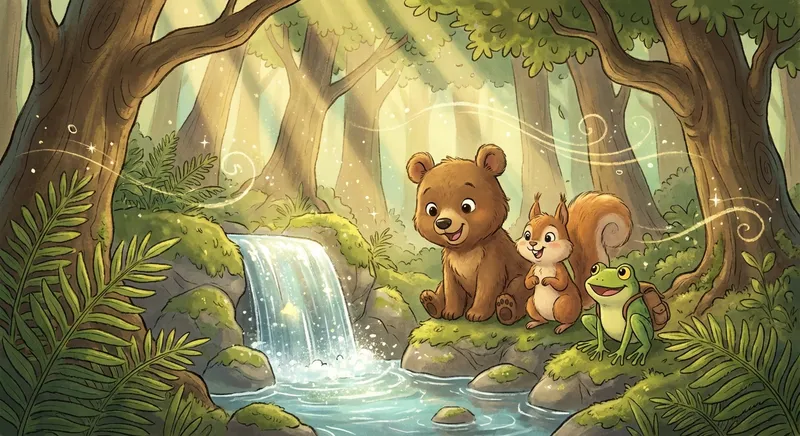
🌊 Waterfalls: Nature’s Splashy Wonders
Waterfalls are places where water falls down a steep rock like a big, sparkling slide. They make a loud roar and a cool mist that feels fresh on your face.
1. What Is a Waterfall?
A waterfall happens when a river or stream meets a cliff or a rock that is higher than the land below. The water can’t go through the rock, so it Drops down and makes a splash!
2. How Do Waterfalls Form?
- Rain And Snow melt into water and fill rivers.
- The river flows until it finds a Hard Rock that is harder than the softer rock behind it.
- The softer rock erodes (wears away) faster, making a step.
- The water then Falls over that step, creating a waterfall.
3. Animals That Love Waterfalls
- Fish swim up and down the river, sometimes jumping over the falling water.
- Birds like to perch on the rocks and sing while the water sings back.
- Bugs love the mist because it keeps them cool.
4. Imagine Your Own Waterfall
Close your eyes and picture a tall, white curtain of water. Imagine stepping on a smooth stone and feeling the spray on your cheeks. What colors would the rocks be? Maybe green moss, bright red leaves, or sparkling blue pebbles!
Did You Know? 🤔
The tallest waterfall in the world, Angel Falls in Venezuela, is 3,212 Feet tall—taller than a 300‑story building!
Waterfalls are amazing gifts from nature. Next time you visit a park or watch a video, listen to the roar, feel the mist, and think about how water makes its own slide. Keep exploring, ask questions, and maybe one day you’ll discover a hidden waterfall of your own! 🌟