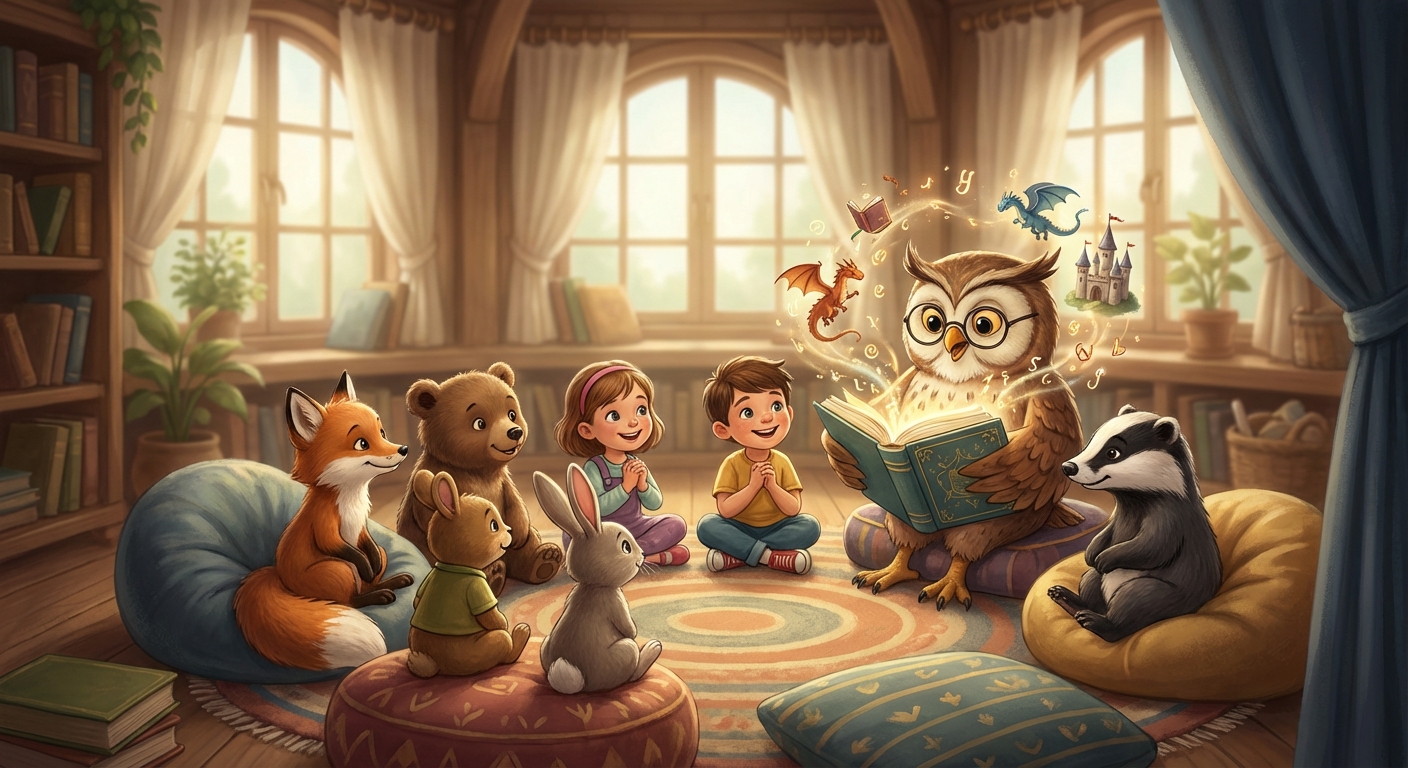
📚 Fun Ways to Read Better!
Reading is like opening a treasure chest. Inside are new friends, exciting places, and cool ideas. Let’s learn a few simple tricks that make reading easy and fun!
1. Look and Say
What to do:
- Look at each word.
- Say the sounds you hear.
Why it helps:
Your ears and mouth work together, so the word sticks in your brain like a sticky note.
2. Picture Clues
What to do:
- Look at the pictures on the page.
- Guess what the words might mean from the pictures.
Why it helps:
Pictures are like helpers that show the story’s meaning, just like a map shows the way.
3. Talk About It
What to do:
- After you read a sentence, tell a grown‑up or a friend what happened.
- Ask questions like “Why did the bunny hop?”
Why it helps:
Talking makes the story live in your mind, and asking questions is like being a detective.
4. Rhyme Time (optional)
What to do:
- Find words that sound the same, like “cat” and “hat.”
- Clap your hands when you hear a rhyme.
Why it helps:
Rhyme is a music game for words, and music helps memory.
Did You Know? 🤔
Children who read a little every day are exposed to many new words, which helps them learn and grow their vocabulary! For example, reading just one picture book a day can expose a child to thousands of words each month. That’s like learning the names of all the animals in a big zoo.
Now you have four friendly reading tricks. Try them the next time you open a book, and watch the story come alive. Keep exploring, keep asking “what’s this?”, and let every page be a new adventure! 🌟