🦕 Discovering Fossils
Fossils are the old bones, shells, or footprints that animals and plants left behind a very long time ago. They help us learn about creatures that lived before we were born.
1. What Is a Fossil?
A fossil is a piece of something that used to be alive. It can be a Bone, a Shell, or even a Track in the mud that turned to stone. Imagine a puzzle piece from the past that tells a story.
2. How Do Fossils Form?
- An animal dies and its body sinks into soft mud or sand.
- Over many years, the mud hardens into rock.
- The hard rock protects the bone or shell, turning it into a fossil.
It’s like burying a toy in sand and then letting the sand become rock – the toy stays safe inside.
3. Why Do Scientists Love Fossils?
Scientists called Paleontologists study fossils to find out:
- What the animal looked like.
- What it ate.
- How it moved.
They compare fossils to animals we see today, like saying a dinosaur’s foot is like a big, heavy boot.
4. Imagine Finding a Fossil!
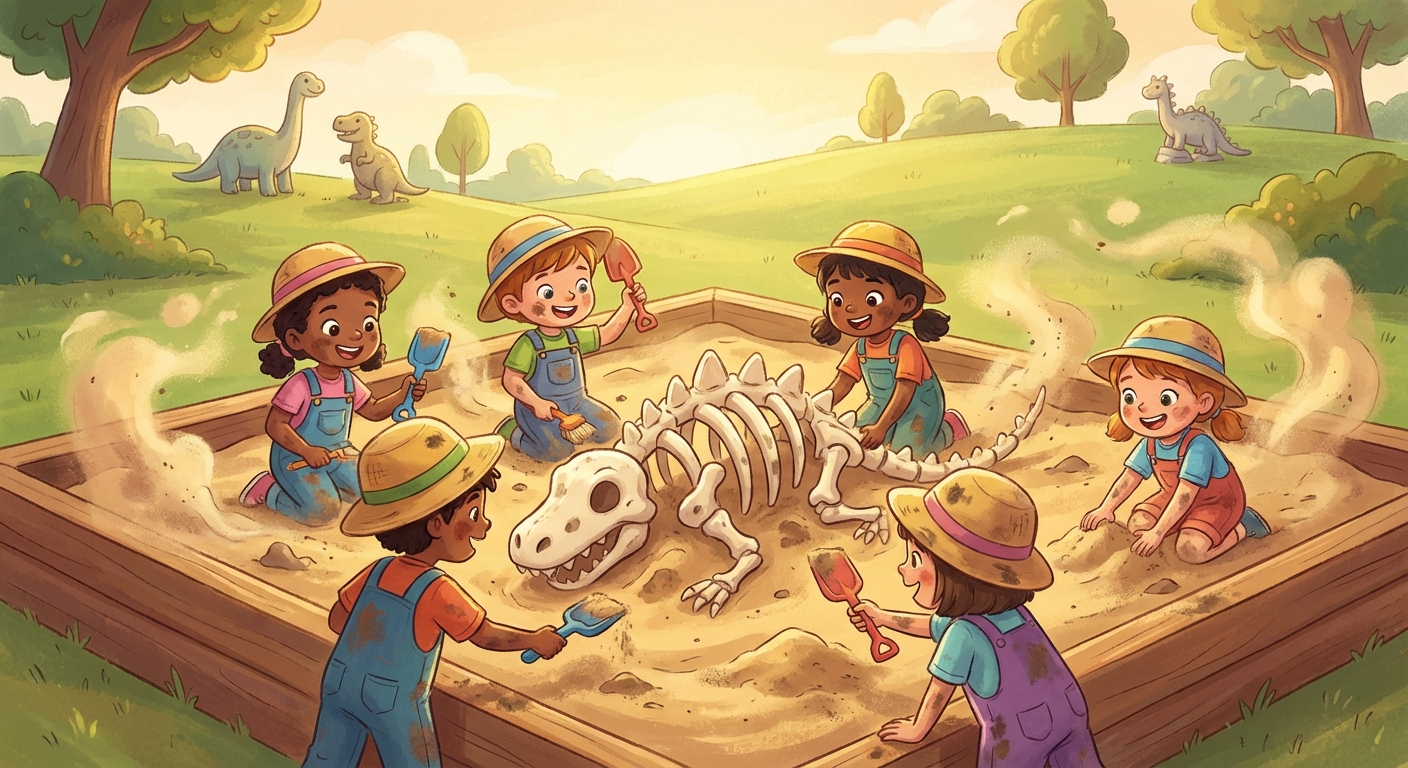
Close your eyes: you are digging in a quiet forest, and click—you find a smooth, gray stone with a shape inside. Could it be a dinosaur tooth? A tiny seashell from a long‑ago ocean? Your imagination can travel back millions of years!
Did You Know?
The largest dinosaur fossil ever found is a Titanosaur bone that is longer than a school bus! 🚍
Conclusion – Go Explore!
Fossils are nature’s treasure boxes. Next time you walk on a beach or in a park, look carefully at the rocks. You might be standing on a secret from the past. Grab a grown‑up, pick up a small shovel, and start your own fossil adventure! 🌟