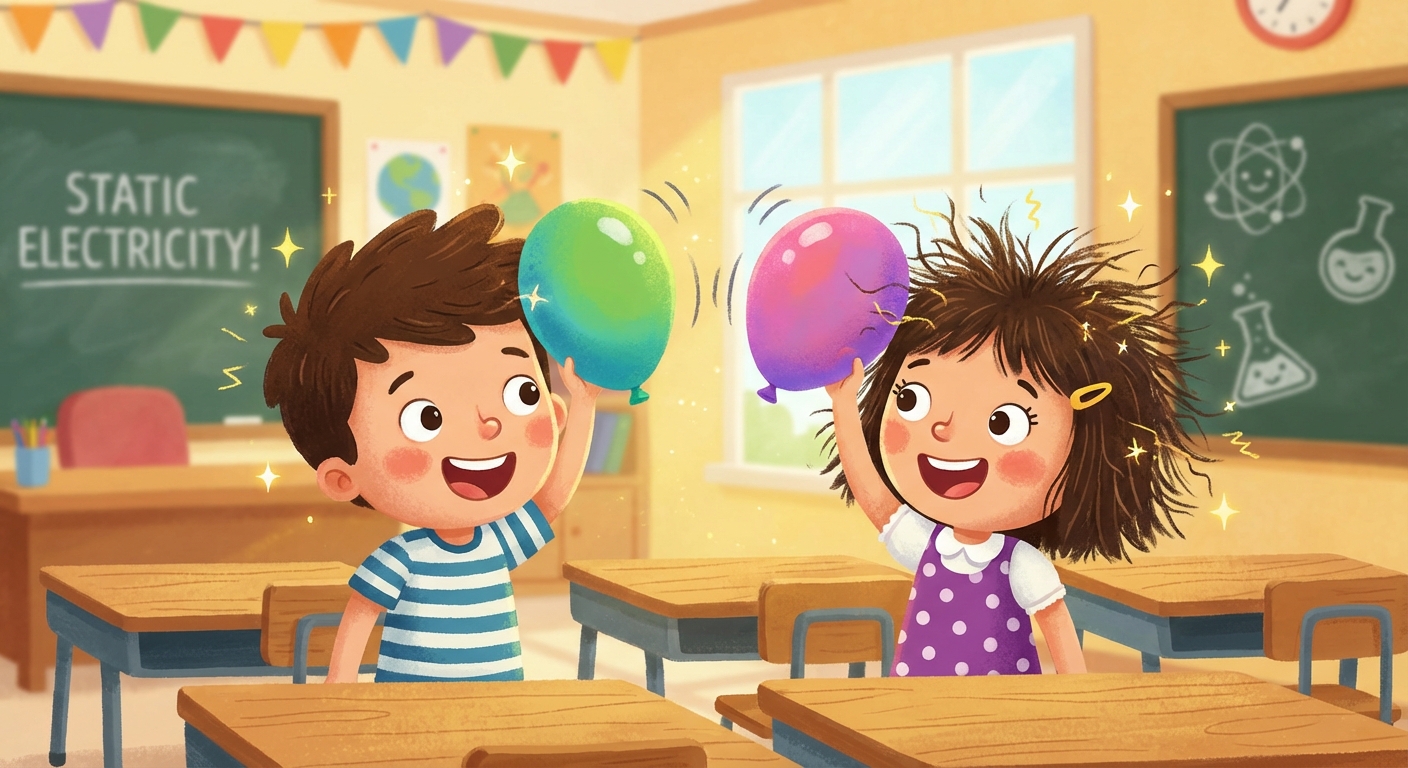
Static Electricity
What Is Static Electricity?
Static electricity is a tiny electric charge that stays on the surface of things. It can make your hair stand up or make a balloon stick to the wall. You can feel it when you get a little “zap” after touching a doorknob.
How Does It Happen?
When two objects rub together, tiny pieces called electrons move from one object to the other. The object that loses electrons becomes positively charged, and the one that gains electrons becomes negatively charged. Opposite charges like to stick together, while the same charges push away.
Fun Experiments You Can Try
- Balloon And Hair: Rub a balloon on your dry hair for a few seconds. Watch the balloon pull your hair toward it.
- Paper Dance: Sprinkle tiny pieces of paper on a table. Rub a plastic comb on a wool sweater, then hold the comb above the paper. The paper will jump up and stick to the comb.
- Static Spark: Touch a metal doorknob after walking on a carpet. You might feel a tiny spark— that’s static electricity letting go of its charge.
These simple tricks show how static electricity works and let you explore safely at home. Have fun discovering the invisible forces around you!