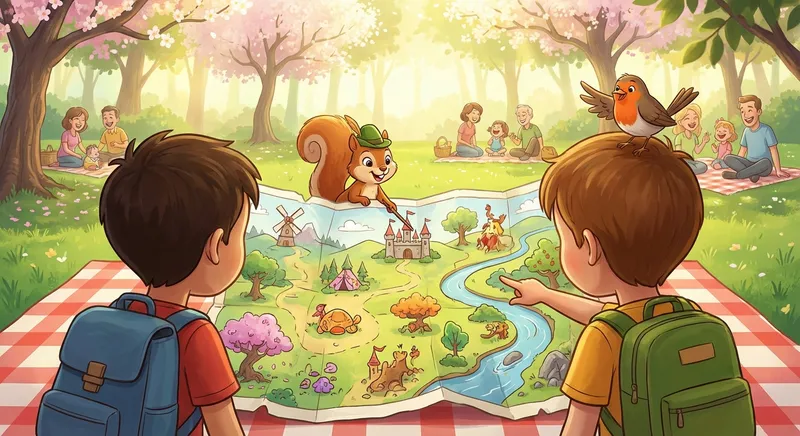
🗺️ Exploring Maps and Directions
Maps are pictures that show places. They help us find where things are and how to get there. Let’s discover how maps work and why they are useful!
1. What Is a Map?
A map is a small drawing of a big area.
- Zoomed‑in: It makes a big place look small so we can see it all at once.
- Symbols: Tiny pictures (like a tree for a park) tell us what is where.
2. How to Read a Map
- Look For The Legend – it explains the symbols.
- Find Your Spot – see where you are on the map.
- Follow The Lines – roads or paths show where you can go.
3. Directions: North, South, East, West
Imagine you are standing in the middle of a big circle.
- North is up.
- South is down.
- East is right.
- West is left.
You can use a compass (a simple arrow that always points north) to know which way to turn.
4. Make Your Own Map
Grab a piece of paper and draw your bedroom.
- Put a square for the bed, a circle for the rug, and a line for the door.
- Add a legend: “□ = bed, ○ = rug, — = door.”
Now you have a map of your own room!
Did You Know?
The first maps were drawn on caves more than 20,000 years ago! Early people used charcoal to show rivers and mountains. 🌍
Maps are like treasure clues that help us explore our world. Grab a map, look around, and see where it leads you. Who knows what adventure you’ll find next? Happy mapping!