🎉 Let’s Play with Simple Coding!
Coding is a way to tell computers what to do. It’s like giving a robot a set of easy instructions. You can make games, draw pictures, or even talk to a friendly computer friend!
1. What Is Coding?
- Coding = Instructions – Just like you follow a recipe to bake a cake, a computer follows code to finish a task.
- Words And Symbols – We use simple words like Move, Turn, and Repeat plus tiny symbols (like
>or=) that the computer understands.
2. How Does It Work?
- Step By Step – The computer does one step, then the next, just like lining up blocks.
- Loops – If you want something to happen many times, you tell the computer to Repeat it.
- If‑then – This is a little decision. “If it’s sunny, then draw a sun; otherwise draw a cloud.”
3. Play with Code (try It!)
- Draw A Square – Tell the computer:
- Move forward 4 steps
- Turn right
- Repeat 4 times
- Make A Dance – Use “repeat” to make a character jump, spin, and clap over and over.
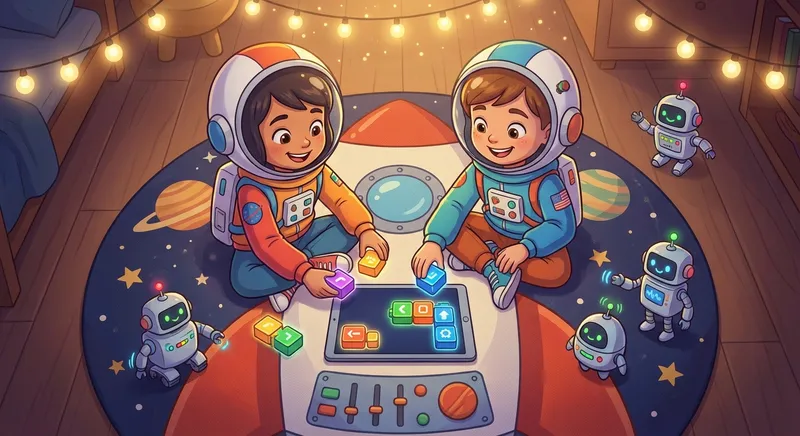
You can use block‑based apps (like ScratchJr) where you drag colorful blocks to build your code. No typing needed!
4. Why Coding Is Like a Puzzle
- Pieces Fit Together – Each block of code is a puzzle piece. When they fit, something cool appears on the screen.
- Fix Mistakes – If a piece is in the wrong place, the picture looks odd. Moving it fixes the picture, just like fixing a code error.
Did You Know? 🤔
The word “robot” comes from a Czech word that means “Work”. The first real robot was built in 1954, and it could only follow simple coded instructions!