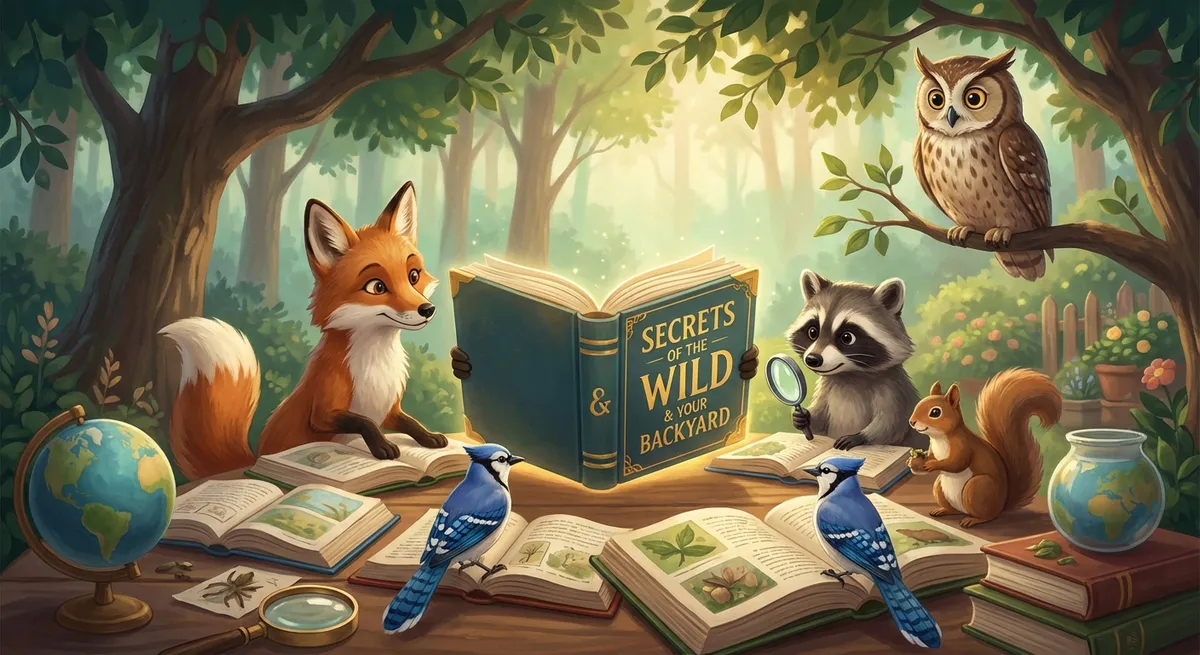
How Animals Behave: Secrets of the Wild and Your Backyard
Every animal—from the tiniest ant to the biggest whale—has its own way of living, finding food, staying safe, and making friends. Understanding Animal Behavior helps us see why a squirrel gathers nuts, why birds fly south in winter, and why cats purr. Let’s explore the fascinating habits that keep the animal kingdom moving!
1. Instinct Vs. Learning
| Term | What It Means | Example |
|---|---|---|
| Instinct (noun) | A built‑in behavior that an animal is born with; it doesn’t have to be taught. | A sea turtle hatchling instinctively moves toward the ocean’s light. |
| Learning (noun) | Changes in behavior that happen because the animal experiences something new. | A dog learns to sit when you say “sit” and give it a treat. |
Cause And Effect:
- Cause: A baby chick sees its mother peck at food.
- Effect: The chick learns to peck, improving its chances of getting food later.
Did You Know? Some insects, like honeybees, can communicate the direction of food using a “waggle dance”—an instinctual movement that tells others where to fly.
2. Finding Food: Foraging & Hunting
Animals use different tricks to locate meals:
- Foraging – Searching for scattered food (e.g., squirrels gathering nuts).
- Hunting – Actively chasing prey (e.g., cheetahs sprinting after antelopes).
Why It Matters:
- If a squirrel forgets to store nuts before winter, it may Starve (cause) → the squirrel might die (effect).
- A cheetah’s speed (cause) lets it catch fast prey (effect), giving it the energy to raise cubs.
Vocabulary Boost:
- Carnivore – An animal that eats meat.
- Herbivore – An animal that eats plants.
- Omnivore – Eats both meat and plants (like bears).
3. Staying Safe: Camouflage & Warning Colors
Animals have evolved clever ways to avoid danger:
- Camouflage – Blending in with the surroundings. A snowshoe hare turns white in winter to hide in the snow.
- Aposematic Coloration – Bright, warning colors that say “I’m poisonous!” (think of the vivid orange of a poison‑dart frog).
Cause And Effect:
- Cause: A moth’s wings match the bark of a tree.
- Effect: Birds can’t see it, so the moth survives longer.
Did You Know? The Mimic Octopus can change its skin texture and color to look like a lionfish, a poisonous creature, tricking predators into staying away.
4. Social Life: Packs, Colonies, and Territories
Many animals live in groups, which brings benefits and challenges.
- Pack – A family group that hunts together (e.g., wolves).
- Colony – A large community sharing a space (e.g., penguins on a rocky shore).
- Territory – An area an animal defends to keep food and mates (e.g., a male robin sings to mark his spot).
Cause And Effect:
- Cause: A lion pride works together to bring down a big zebra.
- Effect: More food for each member, helping cubs grow strong.
Vocabulary Boost:
- Territory (noun) – A region an animal claims and protects.
- Dominance (noun) – The rank or power an animal has in a group.
Animal Behavior Quiz
Experiment: Backyard Observation
- Pick a spot in your garden or a nearby park.
- Watch quietly for 10 minutes and write down every animal you see.
- Note what each animal is doing – looking for food, hiding, or talking to friends.
- Share your notes with a family member and talk about the behaviors you observed.
Now you’re ready to spot animal behavior wherever you go!