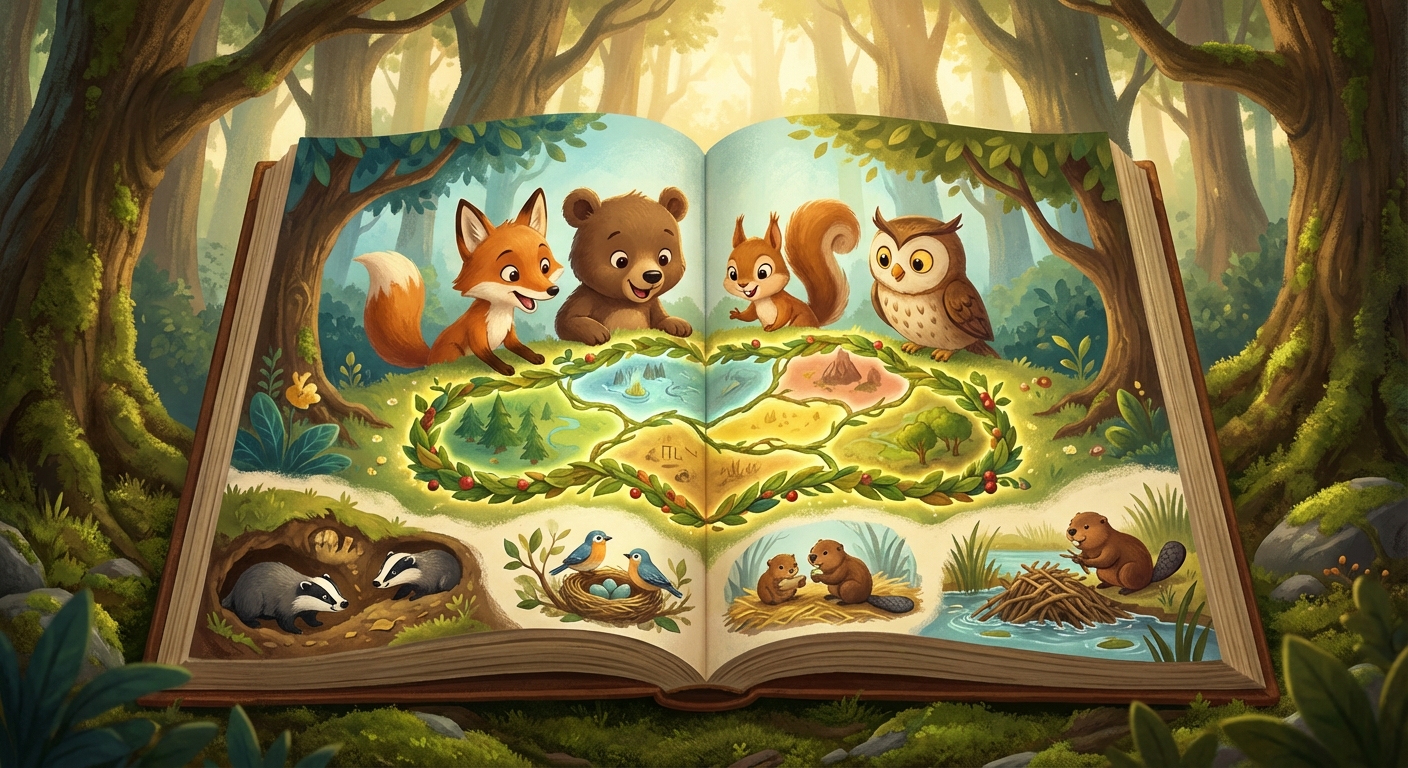
Animal Territories: Who Lives Where and Why?
Every animal has a special place it calls “home,” and many of them defend that space fiercely. This area is called a Territory – a region that an animal uses for food, shelter, and raising its young. Understanding territories helps us see how animals survive, how they interact, and why they sometimes clash. Let’s explore the secret maps hidden in forests, deserts, and oceans!
1. Why Do Animals Need a Territory?
Cause And Effect – When an animal has a safe spot with plenty of Resources (food, water, nesting sites), it can stay healthy and raise strong babies. If the area is taken over by another creature, the original owner may lose food and become weaker.
Example: A male red‑fox marks a stretch of meadow with his scent. The scent tells other foxes, “This is my spot!” If a rival fox tries to move in, the scent‑marked fox will chase it away to protect his food supply.
Key Vocabulary
- Territory – a defined area that an animal defends.
- Resource – anything an animal needs to live, such as food, water, or shelter.
- Scent Marking – leaving a smell (often from urine or glands) to signal ownership.
2. Different Ways Animals Guard Their Land
| Animal | Method of Defense | What It Protects |
|---|---|---|
| Lions | Roaring, patrolling, and scent marking | Pride’s hunting ground |
| Birds (E.g., Robins) | Singing loudly from a high perch | Nesting trees and nearby insects |
| Beavers | Building dams and lodges | Water flow and food trees |
| Sea Turtles | Returning to the same beach to lay eggs | Safe nesting sand |
Did You Know? A single wolf can travel long distances in a night while patrolling its pack’s territory! 🌙
3. When Territories Overlap
Sometimes the edges of two territories meet. This can lead to Boundary Disputes—just like when two kids want the same swing at recess.
- Cause: Limited food or nesting sites.
- Effect: Animals may display warning signals (growls, feather fluffing, color changes). If the conflict continues, a fight can happen, but many animals settle the dispute with a show of strength instead of a battle.
Example: Two male bobcats might stare at each other from opposite sides of a ridge. After a tense standoff, one may retreat, allowing both to keep their own hunting grounds.
4. Mini Experiment: “make Your Own Territory Map”
Materials
- A sheet of paper (A4)
- Colored pencils or crayons
- Small stickers (animals, trees, water drops)
Steps
- Choose an animal you like (e.g., squirrel, frog, or eagle).
- Draw a simple map of its habitat (forest, pond, sky).
- Mark the area the animal would need for food, shelter, and safety. Use different colors for each need.
- Add stickers to show where the animal might leave scent marks or build a nest.
- Talk with a friend or adult: What would happen if another animal tried to move into your map?
What You’ll Learn – By visualizing space, you’ll see why size, shape, and resources matter for a territory.
Quick Quiz
-
What Is A “Resource” For An Animal?
a) A toy
b) Food, water, or shelter
c) A video game -
How Do Birds Often Defend Their Territory?
a) By building dams
b) By singing loudly
c) By digging holes -
True Or False: All animals fight physically when another enters their territory.
Answers: 1️⃣ b, 2️⃣ b, 3️⃣ False (many use sounds, displays, or scent marking instead of fighting).
🌟 Well done! You’ve discovered how animals protect their homes.