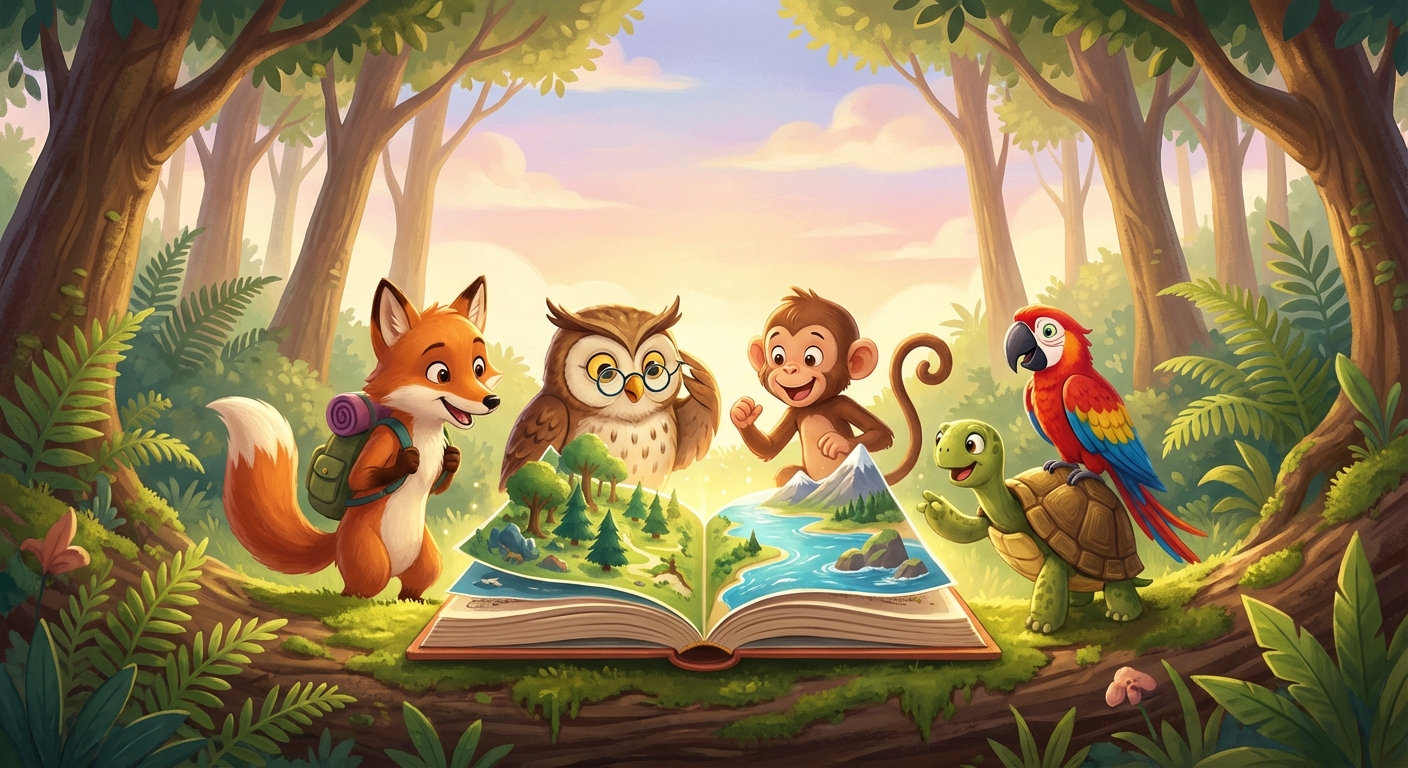
Animal Biodiversity
Have you ever wondered why the jungle is full of colorful birds, why the ocean teems with strange fish, and why your backyard has many different bugs? All of these living creatures are part of Biodiversity—the variety of life on Earth. In this adventure we’ll explore what biodiversity means, why it matters, and how you can become a young scientist who helps protect it.
1. What Is Biodiversity?
-
Biodiversity = Bio (life) + Diversity (variety).
-
It includes three levels:
- Genetic Diversity – the different DNA instructions inside the same species (e.g., many kinds of dogs).
- Species Diversity – the many different kinds of animals, like lions, turtles, and butterflies.
- Ecosystem Diversity – the variety of places where animals live, such as forests, deserts, coral reefs, and ponds.
Word Spotlight – Ecosystem: A community of plants, animals, and tiny organisms that interact with each other and their environment (air, water, soil).
Why It Matters
- Food Web: Every animal is a link in a food chain. If one link disappears, the whole chain can break.
- Medicine: Many medicines come from animal compounds; the more species we have, the more chances to discover new cures.
- Stability: Diverse ecosystems recover faster from storms, fires, or disease.
2. Amazing Animal Examples
| Habitat | Cool Animal | How It Helps the Ecosystem |
|---|---|---|
| Rainforest | Poison Dart Frog 🐸 | Eats insects that could damage plants. |
| Coral Reef | Parrotfish 🐠 | Scrapes algae off coral, keeping reefs clean. |
| Savanna | Elephant 🐘 | Moves fallen trees, creating pathways for other animals. |
| Pond | Dragonfly 🐉 | Catches mosquitoes, controlling pests. |
Did You Know? Animal pollinators—including wild bees, managed honeybees, flies, butterflies, birds, and bats—help many food crops reproduce. Losing pollinators would reduce the supply and variety of many fruits, nuts, and vegetables.
3. Cause and Effect: What Happens When Biodiversity Drops?
- Habitat Loss (cutting down forests, draining wetlands) → animals lose homes → fewer species survive.
- Pollution (plastic, chemicals) → sick animals → lower reproduction rates → possible Extinction (the permanent loss of a species).
- Invasive Species (plants or animals introduced from other places) → they out‑compete native species for food and space.
Word Spotlight – Extinction: When the last individual of a species dies, the species no longer exists anywhere on Earth.
Effect Chain Example:
Deforestation → Monkeys lose trees to live in → Fewer monkeys → Less seed dispersal → Fewer new trees grow → The forest becomes smaller.
4. Mini Scientist Experiment: Backyard Biodiversity Count
What You Need:
- A notebook
- A magnifying glass
- A small container (optional)
Steps:
- Choose a safe outdoor spot (garden, park, or schoolyard).
- Spend 10 minutes quietly observing. Write down every different animal you see or hear—bugs, birds, squirrels, etc.
- Count how many Species (different kinds) you found.
- Repeat the same spot on another day or in a different season. Compare the numbers.
What To Think About:
- Did you see more species on a sunny day, or after it rained?