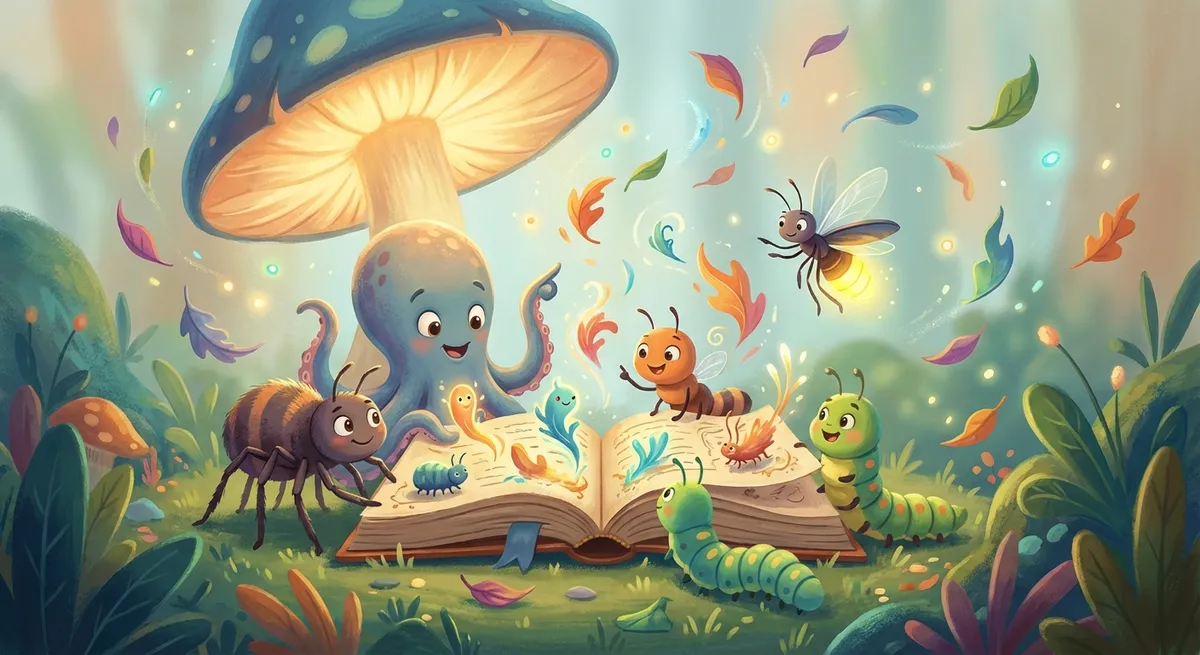
Invertebrates
What Are Invertebrates?
Invertebrates are animals that do Not have a backbone.
Because they lack a spine, they use other body parts to stay upright and move around.
They can be as tiny as a water flea or as big as a giant squid.
All insects, worms, jellyfish, and many sea creatures belong to this group.
Types of Invertebrates
- Insects – Bees, ants, and butterflies have six legs and three body parts (head, thorax, abdomen).
- Arachnids – Spiders and scorpions have eight legs and no wings.
- Mollusks – Snails, clams, and octopuses have soft bodies; some carry shells for protection.
- Crustaceans – Crabs, lobsters, and shrimp live in water and have hard, jointed shells.
- Worms – Earthworms help soil stay healthy, while flatworms live in ponds and streams.
- Jellyfish – These float in the ocean and have a bell‑shaped body that pulses to move.
Why Invertebrates Matter
- Pollination – Bees carry pollen from flower to flower, helping plants make fruit and seeds.
- Soil Health – Earthworms dig tunnels and mix organic matter, making soil rich for gardens.
- Food Chain – Small sea creatures are meals for bigger fish, which in turn feed larger animals.
- Pest Control – Spiders catch insects that might bite us or damage crops.
- Water Quality – Tiny water fleas thrive only in clean ponds, so they tell us when water is healthy.
Every invertebrate plays a part in keeping nature working smoothly. When we protect them, we protect the whole environment. Simple actions—like planting a flower for bees or leaving a leaf pile for worms—can help these amazing animals thrive.