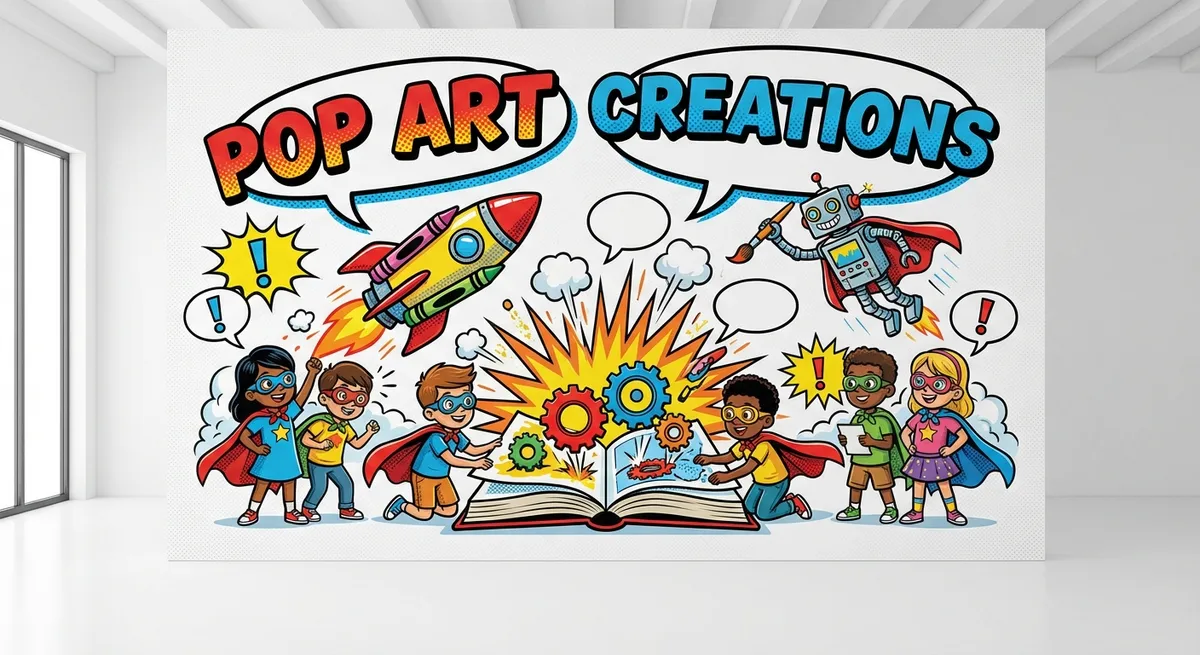
Pop Art: Colorful Creations That Jump off the Page!
Imagine a world where everyday objects—like a can of soup, a comic‑book hero, or a bright‑red shoe—become the stars of a painting. That’s Pop Art, a fun and bold style that turned ordinary things into eye‑catching masterpieces. In this guide you’ll learn new words, meet famous artists, discover why Pop Art mattered, and even try a quick experiment at home!
1. What Is Pop Art?
Pop is short for popular—things that many people see and love. In the 1950s‑1960s, artists began copying images from Mass Media (newspapers, TV, advertisements) and everyday products. They used bright colors, sharp lines, and Repetition (showing the same picture over and over) to make art that felt lively and Accessible (easy for anyone to enjoy).
Complex word spotlight:
- Commercial – related to buying and selling; in Pop Art, commercial images like ads become art.
- Iconic – something that is instantly recognizable and represents a whole idea (think of the golden arches of a fast‑food restaurant).
2. Famous Pop Artists (and Their Signature Works)
| Artist | Famous Piece | What Makes It Pop? |
|---|---|---|
| Andy Warhol | Campbell’s Soup Cans (1962) | Repeated 32 soup cans, turning a grocery item into a gallery treasure. |
| Roy Lichtenstein | Whaam! (1963) | Uses comic‑book “dots” (called Benday Dots) and speech balloons like “WHAAM!” |
| Keith Haring | Radiant Baby (1982) | Simple, bold lines that look like street‑art graffiti. |
| Claudia Luna (contemporary) | Pixel Pizza (2021) | Turns a slice of pizza into a pixel‑style digital artwork. |
Did You Know? Andy Warhol loved soup so much that he once said, “I think everybody should be a millionaire, and the only way to become a millionaire is to have a great product and sell it over and over again.” That’s why he painted the same soup can many times!
3. How Pop Art Changed the World (cause & Effect)
| Cause (What Happened) | Effect (What Changed) |
|---|---|
| Artists used Advertising images in their work. | Art became Democratic—people felt it was “for them,” not just for museums. |
| The rise of television and magazines gave artists new pictures to copy. | Consumer Culture (buying things) was celebrated and also questioned in art. |
| Repetition of everyday items made viewers see them in a new way. | Everyday Objects gained Symbolic power— a simple soda bottle could comment on society. |
So, by borrowing from the world of shopping and media, Pop Art helped art move out of quiet galleries and into the bustling streets, classrooms, and even your bedroom wall!
4. Pop Art in Everyday Life
- Album Covers – Think of the bright, comic‑style cover of The Beatles’ Sgt. Pepper (though not pure Pop Art, it’s inspired).
- T‑shirts – Many shirts feature Andy Warhol’s famous Marilyn Monroe face.
- Posters & Stickers – You’ll see bold, flat colors and repeated patterns on school lockers.
If you ever spot a picture that looks like a cartoon version of a soda can, a superhero, or a famous face with bright blocks.