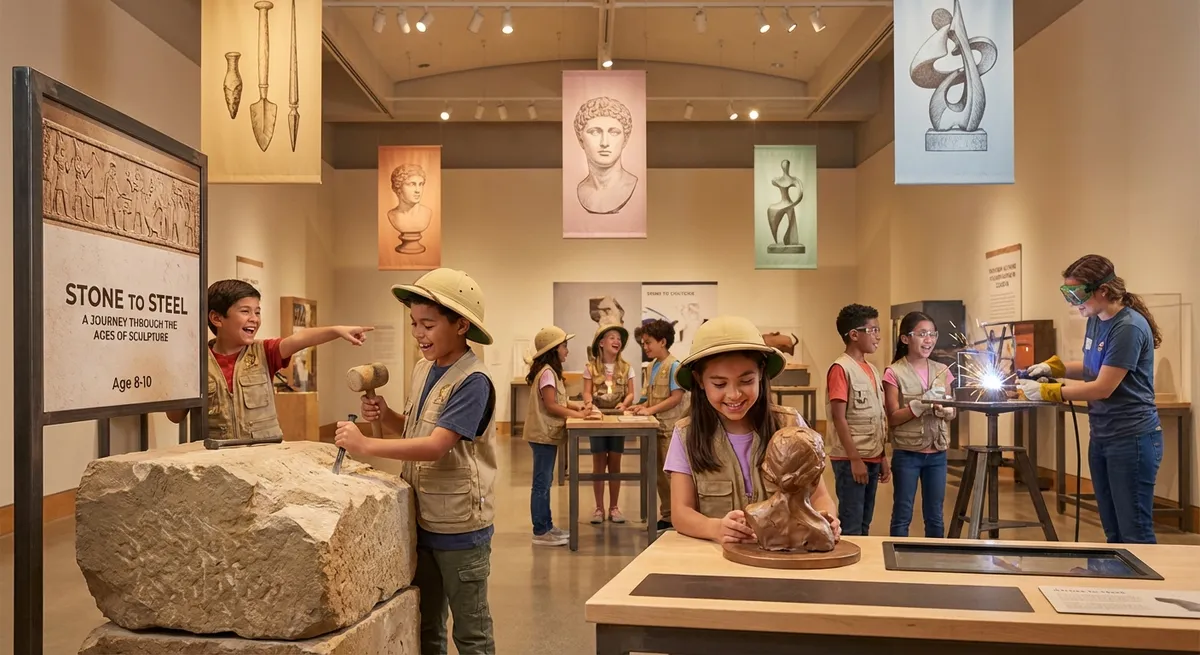
From Stone to Steel: A Journey Through the Ages of Sculpture
Sculpture is art that you can Touch, Walk Around, and even Climb On (if the artist allowed it!). From giant stone statues that guarded ancient temples to tiny metal figures that spin on a desk, sculptors have used many different Materials and Techniques over thousands of years. Let’s travel through time and discover how people have shaped—literally—our world with sculpture.
1. Ancient Beginnings: Stone, Clay, and Wood
What It Looks Like – Think of the massive limestone heads of Egyptian pharaohs or the tiny clay figurines from the Neolithic period.
How It Was Made – Early artists chiseled stone with hard tools, pressed clay into molds, or carved wood with knives.
Cause & Effect – In ancient Egypt, sculptors created statues of gods and kings to Honor them and to help the spirit (or ka) live forever. The need to Preserve Power and Religion drove the invention of smooth, polished stone faces that still look alive today.
Did You Know? The Great Sphinx of Giza is about 66 feet long—longer than a school bus!
New Word: Patina – a thin, colored layer that forms on metal or stone over time, giving it an “aged” look.
2. Classical Greece & Rome: Perfect Forms
What It Looks Like – Marble statues of gods, athletes, and heroes, often shown in realistic poses.
How It Was Made – Greek sculptors used Chisels and Rasps to carve marble, then polished it until it shone like a mirror. The Romans borrowed this style and added Bas‑relief—a shallow carving that looks a bit like a picture popping out of a wall.
Cause & Effect – The Greeks believed in ideal beauty: the more perfect a body looked, the more divine the person seemed. This belief made sculptors study human anatomy (bones, muscles) so their works could look lifelike.
Did You Know? The famous statue “Venus de Milo” is missing both arms, yet it’s still one of the most admired sculptures in the world.
New Word: Bas‑relief – a low, slightly raised carving that creates a picture on a flat surface.
3. Middle Ages & Renaissance: from Faith to Freedom
What It Looks Like – Gothic cathedrals filled with stone angels, and later, Renaissance masters like Michelangelo sculpting the David from a single block of marble.
How It Was Made – Medieval artists focused on religious themes, often carving Pilasters (flat columns) and intricate Gargoyles that served as water spouts. During the Renaissance, artists studied Perspective and human emotion, making sculptures that seemed to breathe.
Cause & Effect – The rise of churches created a huge demand for statues that told biblical stories. Later, the rediscovery of ancient Greek ideas (the Renaissance) inspired artists to explore human potential and scientific observation, leading to more realistic and expressive works.
Did You Know? Michelangelo was only 26 when he started carving David, and he finished it in four years!
New Word: Perspective – the way objects appear smaller as they get farther away, creating depth.
4. Modern & Contemporary: New Materials, New Ideas
What It Looks Like – Abstract metal pieces, kinetic sculptures that move, and even Recycled sculptures made from bottle caps or old toys.
How It’s Made – Artists now weld metal, pour