Dream‑world Art: an Introduction to Surrealism
Have you ever wondered why some paintings look like they came straight from a dream? Surrealism is the art movement that lets artists turn the impossible into pictures we can see. In this guide you’ll learn new words, meet famous surrealists, discover why the style began, and even try a tiny “dream‑lab” experiment yourself!
1. What Is Surrealism?
Surrealism (from the French word surréaliste, meaning “beyond reality”) is a style that mixes reality with the imagination.
- Subconscious – the part of your mind that works behind the scenes, full of feelings and ideas you don’t always notice.
- Juxtaposition – placing two very different things side by side to create surprise or new meaning.
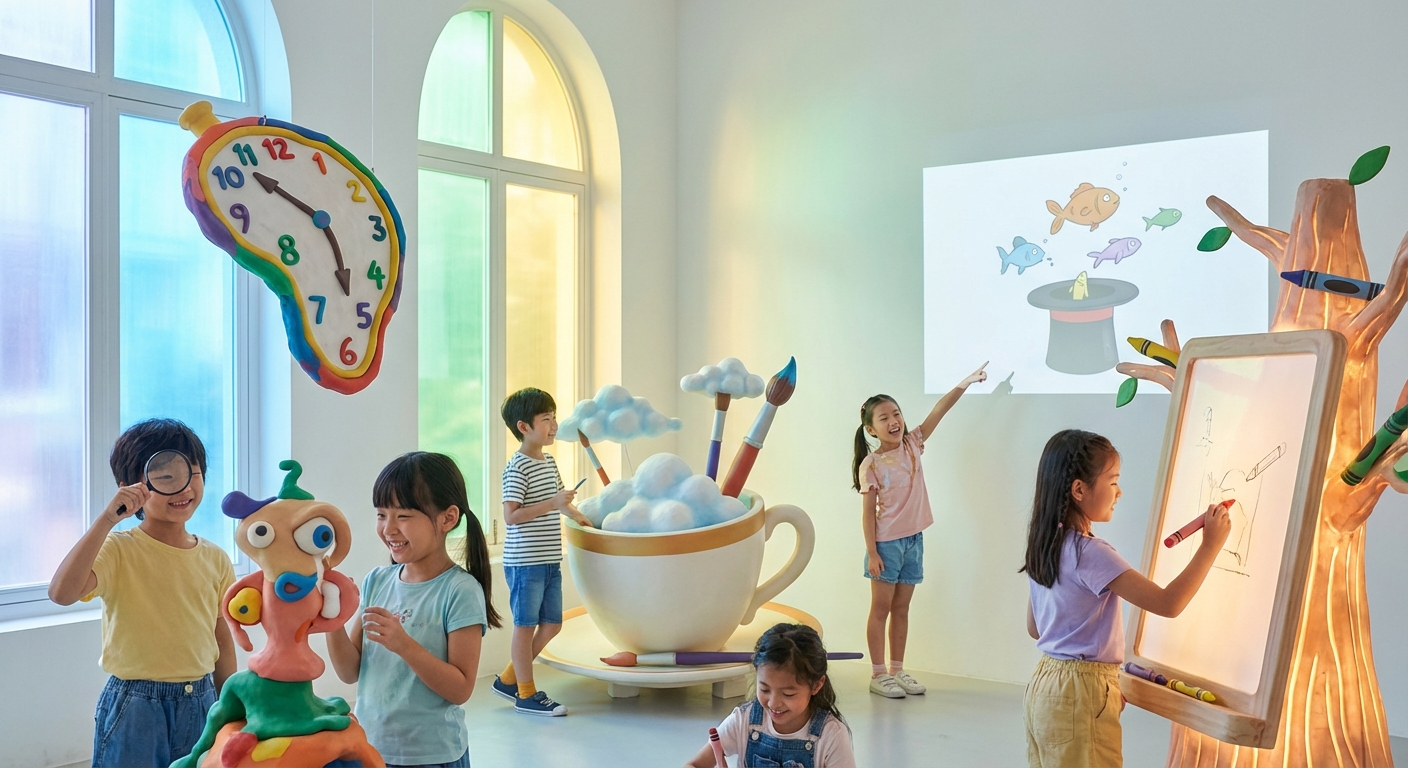
Imagine a clock that’s melting over a tree branch or a fish swimming in the sky. Those odd pairings are the hallmark of surrealist art.
2. Famous Surrealist Artists
| Artist | One Amazing Work | What Makes It Surreal? |
|---|---|---|
| Salvador Dalí | The Persistence of Memory (1931) | Soft, drooping clocks that look like melted cheese, showing how time can feel “stretchy” in a dream. |
| René Magritte | The Son of Man (1964) – a man with an apple covering his face | The ordinary (a man in a suit) is hidden by something impossible (a floating apple). |
| Max Ernst | The Elephant Celebes (1921) | An elephant with a mechanical body, mixing animal and machine to spark curiosity. |
These artists loved to surprise viewers and make them ask, “What does this really mean?”
3. How Surrealism Began – Cause & Effect
- Cause: After World War I, many people felt confused and wanted to break free from old rules.
- Effect: A group of writers and painters formed the Avant‑garde (a French term for “new and daring”) movement called Surrealism.
- Cause: They were inspired by the ideas of Sigmund Freud, who talked about the Subconscious and dreams.
- Effect: Artists started painting scenes that looked like their own night‑time adventures, hoping to show the hidden world inside our heads.
Did you know? Writer André Breton published the first Manifesto of Surrealism in 1924. It described Surrealism as a way to explore thought beyond ordinary control by reason.
4. Spotting Surrealism in Everyday Life
You don’t have to go to a museum to see surrealism—look around!
- Dream‑like Photos on Instagram where people float above clouds.
- Strange Book Covers that mix animals with objects (a cat with a teacup for a head).
- Cartoon Movies where characters change size or shape for comedic effect.
When you notice a weird combination, ask yourself: What feeling does this create? That’s the surrealist spark!
Mini Quiz & Experiment
Quiz (circle the right answer)
-
Which Word Means “Placing Two Very Different Things Together”?
- A) Subconscious
- B) Juxtaposition ✅
- C) Avant‑garde
-
Who Painted The Persistence Of Memory With Melting Clocks?
- A) René Magritte
- B) Salvador Dalí ✅
- C) Max Ernst
-
What Inspired Surrealist Artists To Paint Dream-Like Scenes?
- A) Sigmund Freud’s ideas about the subconscious ✅
- B) Photographs of nature
- C) Ancient Greek sculptures
Experiment: Make Your Own Surrealist Art
- Close your eyes and think of a random object (like a banana).
- Now think of a completely different setting (like outer space).
- Draw the object in that setting—a banana floating among stars!
- Add one more surprise element (maybe the banana has wings).
What To Observe: How did combining unexpected things make you feel? Did it spark new ideas?
Wrap‑up
Surrealism teaches us that art doesn’t have to follow rules. By mixing dreams with reality, surrealist artists opened a door to imagination that still inspires creators today. Next time you see something strange or impossible in art, ask yourself: “What is this making me feel?” That’s the surrealist magic at work!