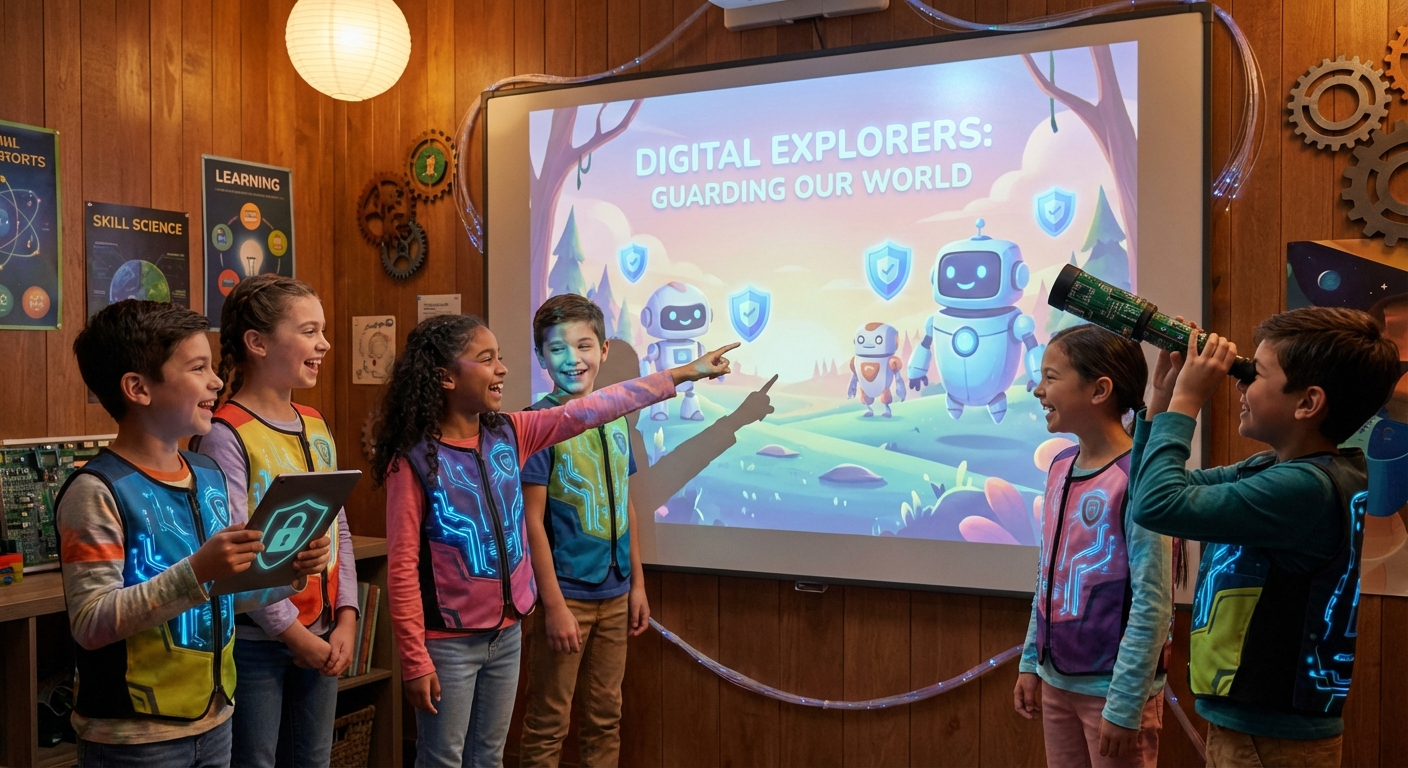
️ Cybersecurity Basics: Guarding Your Digital World
Every day you use a tablet, a laptop, or a game console. Behind the fun screens lies a hidden world of data—your photos, messages, and scores. Cybersecurity is the set of tools and habits that keep that data safe from sneaky intruders called hackers. Let’s explore how you can become a digital detective and protect your online treasure!
1. Passwords: Your First Line of Defense
What It Is – A password is a secret word or phrase that proves you are the real owner of an account.
Why It Matters – If someone guesses or steals your password, they can pretend to be you and read or change your information.
Good Habits
- Use at least 12 Characters mixing letters, numbers, and symbols (e.g., Sunshine!42).
- Don’t Reuse the same password for different sites.
- Change passwords if you suspect they’ve been compromised, or if a service recommends it. Focus on making them strong and unique for each site.
Cause & Effect: A weak password → easy for a hacker to guess → your private data gets exposed.
Did You Know? The most common password in 2023 was “123456”. That’s like leaving your front door wide open!
2. Phishing: Spot the Fake
What It Is – Phishing is when a bad actor sends a message that looks real (like an email from a game company) to trick you into giving away personal info.
How To Spot It
- Check the Sender’s Address; weird domains (e.g., support@game‑fun‑123.com) are suspicious.
- Look for Urgent Language: “Your account will be closed today!”
- Do not interact with a suspicious link. Show the message to a trusted adult, who can inspect it safely without opening it.
Mini‑experiment:
- Ask a parent or teacher to create a fake example, or use a safe simulated example from a trusted cybersecurity education site.
- Identify three clues that tell you it’s fake.
- Write a short “warning poster” for your friends.
Cause & Effect: A phishing link may lead to a fake sign-in page, a harmful download, or another scam. Do not click; report the message to a trusted adult or the service.
3. Encryption: Scrambling Secrets
What It Is – Encryption is a method that turns readable data into a scrambled code that only the right key can decode.
Everyday Example: Many services encrypt data while it travels. Some messaging apps also use end-to-end encryption, designed so only the participants’ devices can read message contents.
Why It’s Important – Even if a hacker intercepts the data, they see only gibberish.
Vocabulary Boost:
- Algorithm – a step‑by‑step recipe computers follow.
- Key – a secret piece of information used to lock (encrypt) and unlock (decrypt) data.
Cause & Effect: No encryption on a Wi‑Fi network → anyone nearby can read your traffic → your passwords might be stolen.
4. Safe Browsing: Staying on the Right Path
What It Is – Using the internet in a way that avoids dangerous sites and downloads.
Tips
- Look for HTTPS (the “S” means the site is secure).
- Install a Trusted Antivirus program and keep it updated.
- Never download files from strangers or pop‑up ads.
Cause & Effect: Visiting a malicious site → malware infection → computer runs slower or crashes.
Mini Quiz & Experiment
| # | Question | Your Answer |
|---|---|---|
| 1 | What makes a strong password? | |
| 2 | Name one clue that a message might be a phishing attempt. | |
| 3 | Why is encryption useful? | |
| 4 | What does the “S” in HTTPS stand for? |
Experiment: Create a “Password Strength Test” with a parent. Write down three passwords (one weak, one