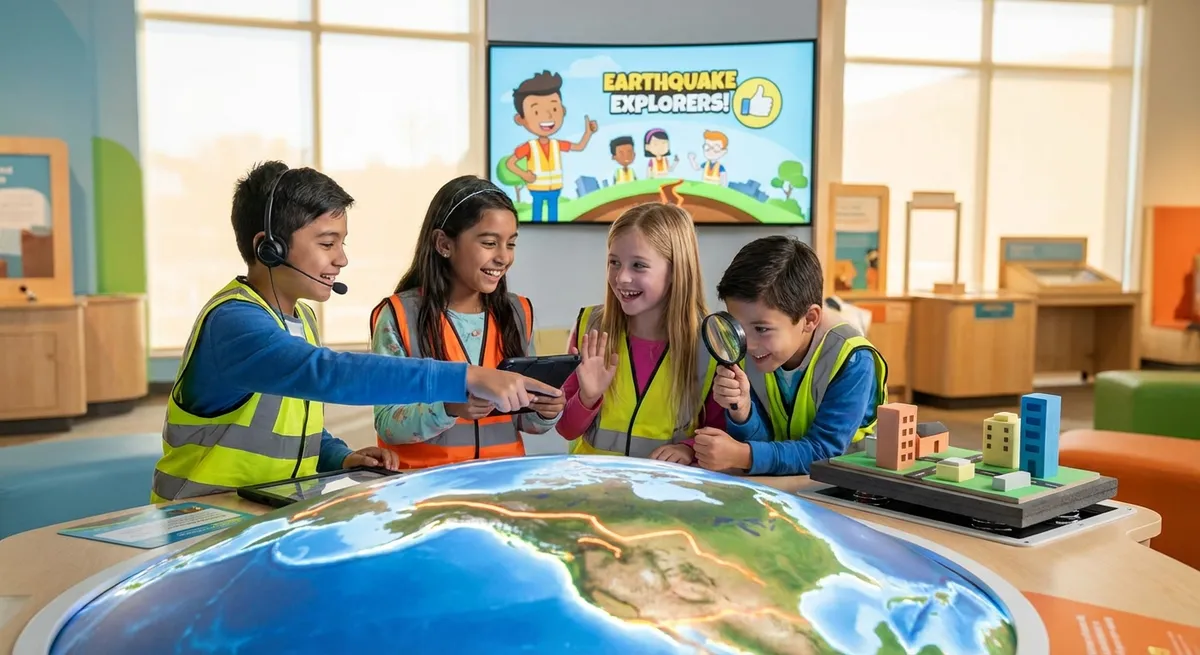
Earthquakes
What Is an Earthquake?
An earthquake is a quick shaking of the ground. It happens when rocks far below us move or break. The shaking can be tiny, like a gentle wiggle, or strong enough to tip over furniture. Scientists use a tool called a seismometer to record how strong the shaking is.
Why Do Earthquakes Happen?
The Earth’s outer layer is made of huge pieces called tectonic plates. These plates slowly slide, bump, or pull apart. When the pressure between them gets too big, the rocks snap and release energy. That energy travels through the Earth as waves, and we feel those waves as an earthquake.
Types of Plate Movements
- Sliding Past Each Other – makes side‑to‑side shaking.
- Colliding – one plate pushes under another, lifting the ground.
- Pulling Apart – creates a gap that can open up.
How We Measure Earthquakes
A seismometer records the shaking and sends the data to computers. The computer gives the quake a number called a magnitude. Bigger numbers mean stronger shaking. Scientists also note where the quake started (the epicenter) and how deep it began.
Staying Safe During a Quake
- Drop, Cover, And Hold On – crouch low, protect your head with your arms, and stay under a sturdy table or desk.
- Stay Away From Windows – glass can break and hurt you.
- After The Shaking Stops – check yourself and friends for injuries, listen for emergency instructions, and be ready for possible after‑shocks.
Remember, most earthquakes are short. Staying calm and following the safety steps helps keep you safe.