
️ Fronts and Storms: the Sky’s Amazing Dance
Introduction
When you look up, the sky isn’t just a big blue blanket – it’s a stage where invisible forces meet, clash, and create the weather we feel. In this adventure we’ll discover what fronts are, why they make clouds swirl, and how they turn a gentle breeze into a thunderstorm. Ready to become a sky‑detective?
1. What Is a Front?
A Front is the boundary where two huge air masses meet.
- Cold Air is heavy and sinks, while Warm Air is light and rises.
- When they bump into each other, the meeting line is called a front.
Types of Fronts
| Front | What Happens | Typical Weather |
|---|---|---|
| Cold Front | Cold air pushes warm air upward fast | Sudden rain, thunderstorms, cool temps |
| Warm Front | Warm air slides over cold air slowly | Light rain, fog, gradual warming |
| Stationary Front | Neither air mass wins | Long‑lasting clouds and drizzle |
| Occluded Front | Cold air catches up with warm air, squeezing it | Complex storms, heavy rain |
Did You Know? The word “front” comes from the French front, meaning “forehead” – just like a face has a front, the atmosphere has a front!
2. How Fronts Create Storms
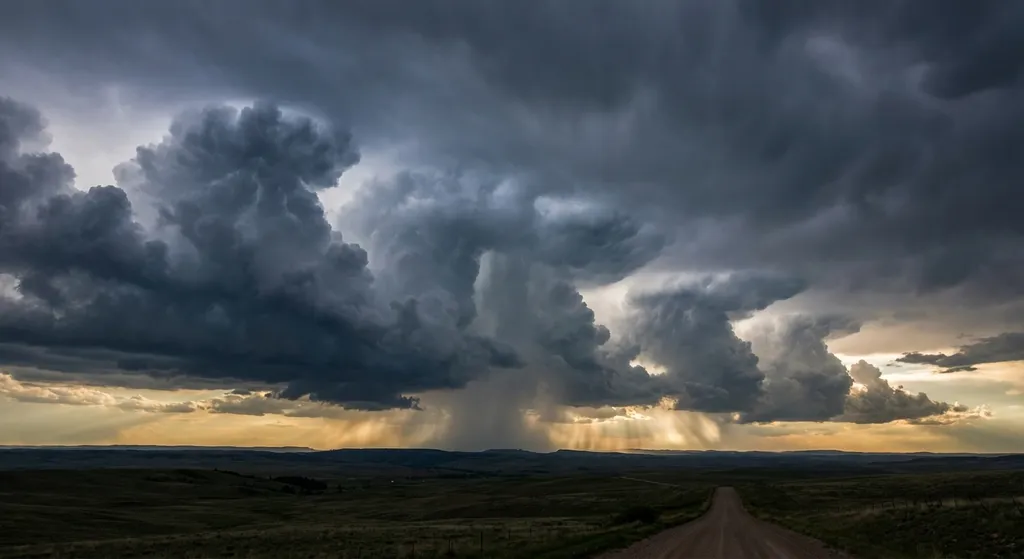
When warm air is forced upward, it cools and the water vapor inside turns into tiny droplets – clouds! If the lift is strong (as with a cold front), the droplets grow quickly and can become Cumulonimbus clouds, the tall, cauliflower‑shaped clouds that make thunder and lightning.
Cause And Effect Chain
- Cold front arrives → pushes warm air up fast.
- Warm air rises → cools → water vapor condenses → cloud forms.
- Cloud gets tall → water droplets collide → electric charge builds.
- Lightning flashes → thunder booms → rain falls.
Vocabulary Boost
- Condensation – water vapor turning into liquid droplets.
- Cumulonimbus – a big, towering cloud that produces storms.
- Electric Charge – tiny particles that make electricity; in clouds they cause lightning.
3. Spotting Fronts in Real Life
You don’t need a fancy lab to see fronts at work. Look for these clues:
- Temperature Jump: A sudden drop in temperature often means a cold front is passing.
- Wind Shift: Wind may change direction quickly (e.g., from southerly to westerly).
- Cloud Pattern: A line of big, puffy clouds across the sky can be a cold front; thin, layered clouds suggest a warm front.
Mini Experiment – Cloud In A Jar
Materials: A clear jar, hot water, ice cubes, a metal tray.
- Fill the jar with a few inches of hot water (this creates warm, moist air).
- Place the metal tray on top of the jar and cover it with ice cubes (cold surface).
- Watch as tiny clouds form inside the jar – the warm air rises, meets the cold surface, and condenses, just like a front!
4. Why Storms Matter
Storms are more than dramatic shows; they Recharge rivers, fill underground water tables, and help plants grow. Lightning even creates Nitrogen Compounds that act like natural fertilizer for soil. So, while a thunderstorm might seem scary, it’s a vital part of Earth’s water cycle.
Did You Know? A single lightning bolt can be five times hotter than the surface of the Sun! 🌞
Simple Activity – Front‑finder Journal
- Pick a week and observe the sky each morning.
- Record temperature, wind direction, and cloud type.
- Draw a simple map of your town and mark where you think a front passed (use arrows for wind).
- At the end of the week, compare notes with a weather website to see if you guessed correctly!
The sky is a living laboratory, constantly mixing warm and cold air in a graceful dance. By watching fronts and storms, you’re learning the language of the atmosphere. Grab a notebook, step outside, and let the clouds be your teachers. Who knows? You might predict the next big rainstorm before anyone else! 🌈