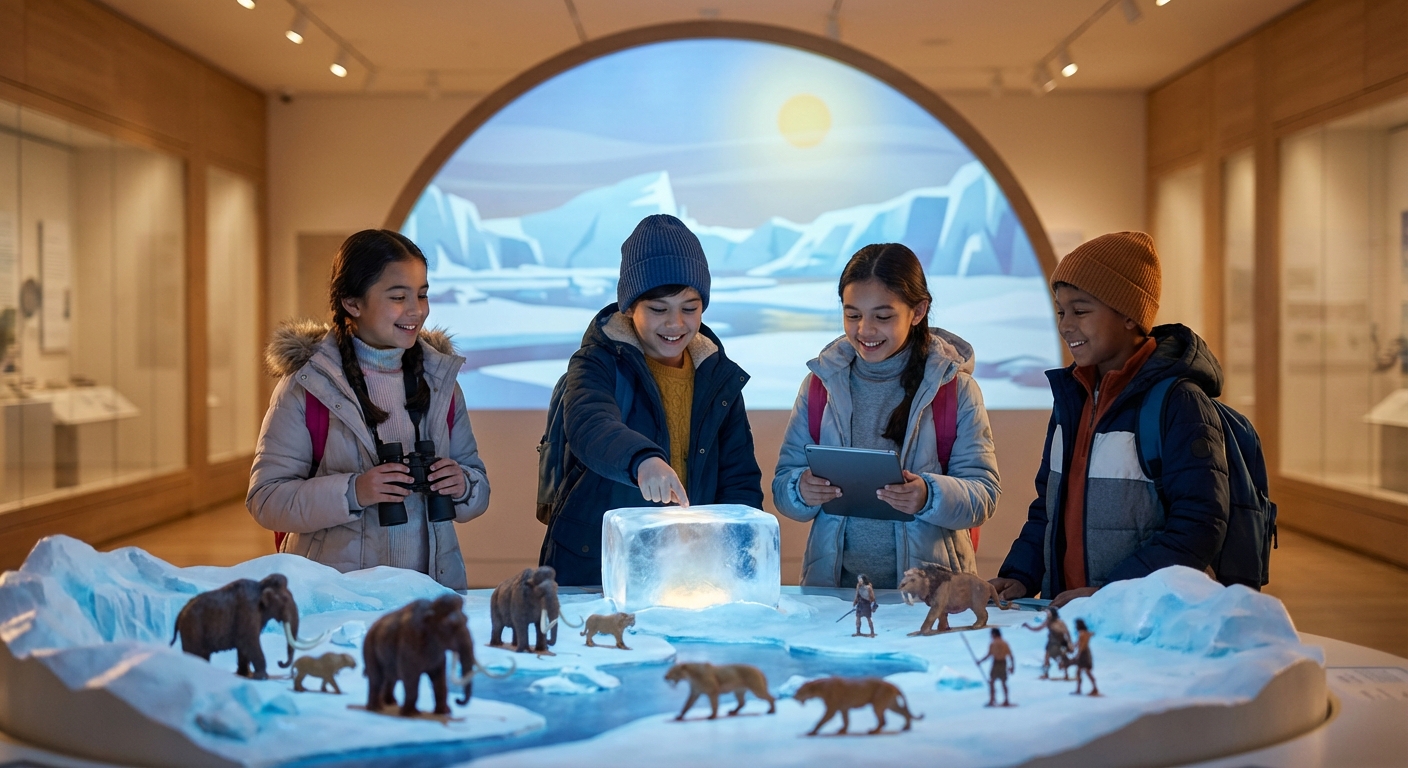
️ the Amazing Story of Ice Ages
Long before humans walked the Earth, our planet went through dramatic “cold‑spells” called Ice Ages. During these times, huge sheets of ice covered much of the land, shaping mountains, oceans, and even the animals that lived there. Let’s travel back in time and discover how ice ages work, why they happened, and what they left behind!
1. What Is an Ice Age?
An Ice Age is a long period—often millions of years—when average global temperatures are low enough for massive ice sheets to grow on continents.
- Glacier – a slow‑moving river of ice that can be many miles thick.
- Ice Sheet – a gigantic glacier that covers a whole region, like the ones that now sit over Antarctica and Greenland.
Did You Know? The most recent ice age, called the Pleistocene, began about 2.6 million years ago and ended only ~11,000 years ago. The last Ice Age ended only about 11,000 years ago—just a blink in geological time! Early human civilizations began to flourish as the ice retreated.
2. Why Did the Earth Freeze?
Scientists have identified several Causes (reasons) that can tip Earth into an ice age:
| Cause | How It Works |
|---|---|
| Changes In Earth’s Orbit (Milankovitch cycles) | Slight wobbling and tilting of Earth change how much sunlight reaches the poles. Less sun = cooler summers, allowing snow to stay year‑round. |
| Lower Greenhouse Gases (like carbon dioxide) | Fewer gases trap less heat, so the planet cools. |
| Plate Tectonics | When continents drift, they can block warm ocean currents, letting cold water flow toward the equator. |
These factors often work together, creating a Cause‑and‑effect Chain: orbital shift → cooler summers → more snow → thicker ice sheets → even cooler climate.
3. Life During an Ice Age
Even in icy times, life found clever ways to survive.
- Mammoths grew thick fur and long tusks to dig through snow for food.
- Woolly Rhinoceroses had a shaggy coat like a living blanket.
- Human Ancestors invented new tools and clothing to stay warm, and they followed herds of animals across the frozen landscape.
Example: In the famous “La Brea Tar Pits” in California, scientists have found fossils of saber‑toothed cats that lived during the Pleistocene ice age.
4. Ice Ages Shape the World We See Today
Moving glaciers scraped and carried rock, carving U-shaped valleys and deep lake basins. When the ice melted, it left piles of sediment called moraines and scattered large rocks called glacial erratics. Meltwater also reshaped rivers and raised sea levels.