Volcanoes: Earth’s Pressure Cookers (And How They Blow Their Tops!)
What do you think is happening deep down under your feet right now? Probably not much, right? Wrong! Deep, deep down, the Earth is dealing with massive amounts of pressure, and sometimes, it needs to let off some steam! That’s where volcanoes come in.
The Pressure Builds
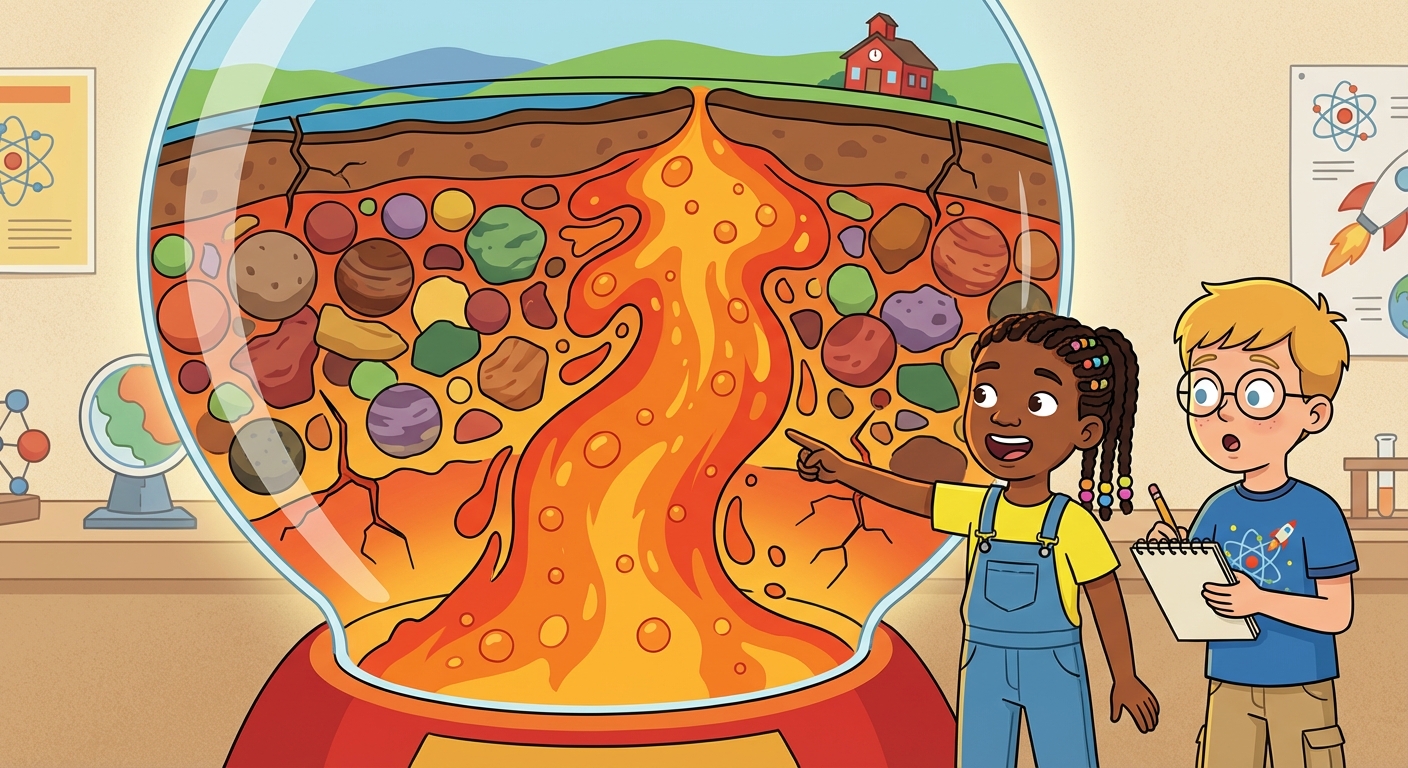
Imagine the Earth like a giant pressure cooker. Instead of water and vegetables, it’s filled with hot, melted rock called magma. This magma is created way down in the Earth’s mantle, a super hot layer below the crust. The heat comes from the Earth’s formation and from radioactive materials breaking down.
As the magma heats up, it starts to rise. It’s like bubbles in a pot of boiling water, but much, much slower. And, just like a shaken bottle of soda, the magma is full of gases that are squeezed in tight. Think of it, carbon dioxide and water vapor, all trying to escape! All that pressure is building up, just waiting for a chance to burst.
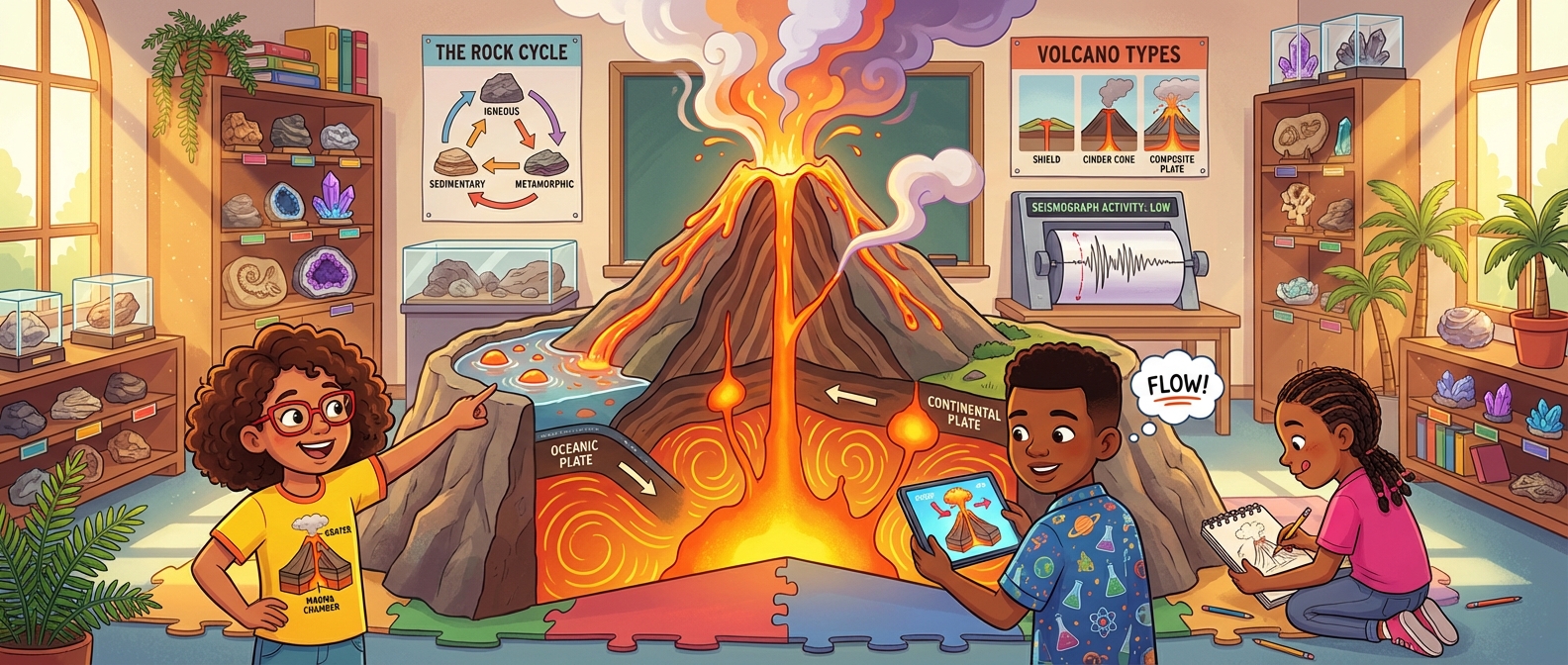
But where does all this magma come from? Well, the Earth’s crust isn’t one solid piece. It’s broken up into huge slabs called tectonic plates. Imagine the crust is like tiles on your kitchen floor. These plates are constantly moving, bumping into each other, sliding past each other, or even pushing under each other. When plates collide, one can slide under the other. The rock from that plate goes down into the Earth, where it melts and becomes magma.
You know how you need oven mitts to take a hot pot out of the oven? These plates are like oven mitts, they protect us from the Earth’s inner heat. Where they rub or bump together, though, all that pressure builds!
Finding a Weak Spot
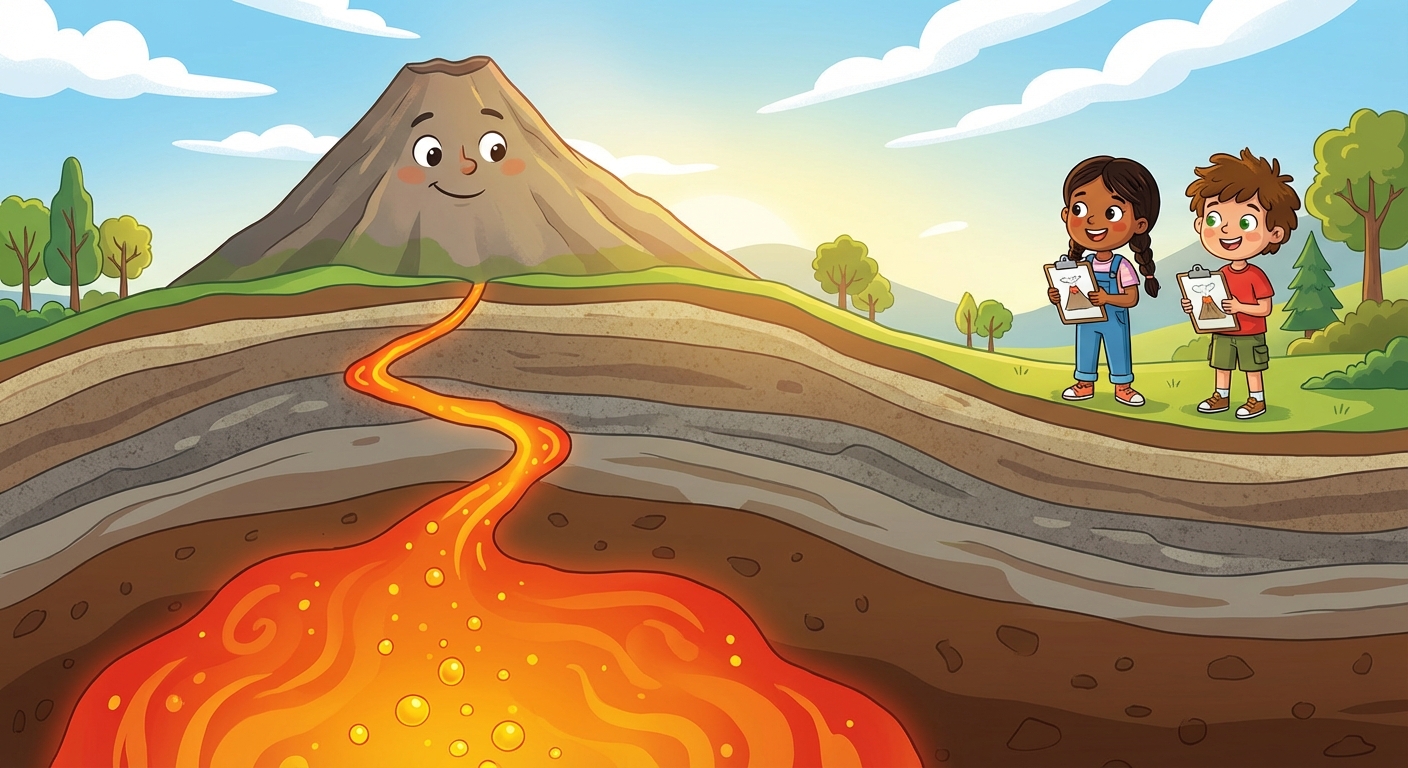
All that magma, all those gases, and all that pressure need somewhere to go. It’s like a volcano is a relief valve. The magma starts looking for any cracks or weaknesses in the Earth’s crust. These weak spots might be where two plates are moving apart, or where the crust is thin and fractured.
Think of it like this: have you ever had a pimple? It’s not the most fun thing, right? A pimple happens when oil and bacteria get trapped under your skin, creating pressure. A volcano is kind of similar, but instead of oil and bacteria, it’s magma and gases trapped under the Earth’s surface. The pressure builds until POP! Something has to give.
BLAST OFF!
When the pressure becomes too great, BOOM! The volcano erupts! This can happen in different ways. Some eruptions are gentle, with lava slowly flowing out of the volcano. This is called an effusive eruption. Other eruptions are explosive, sending ash, rocks, and gas high into the air.
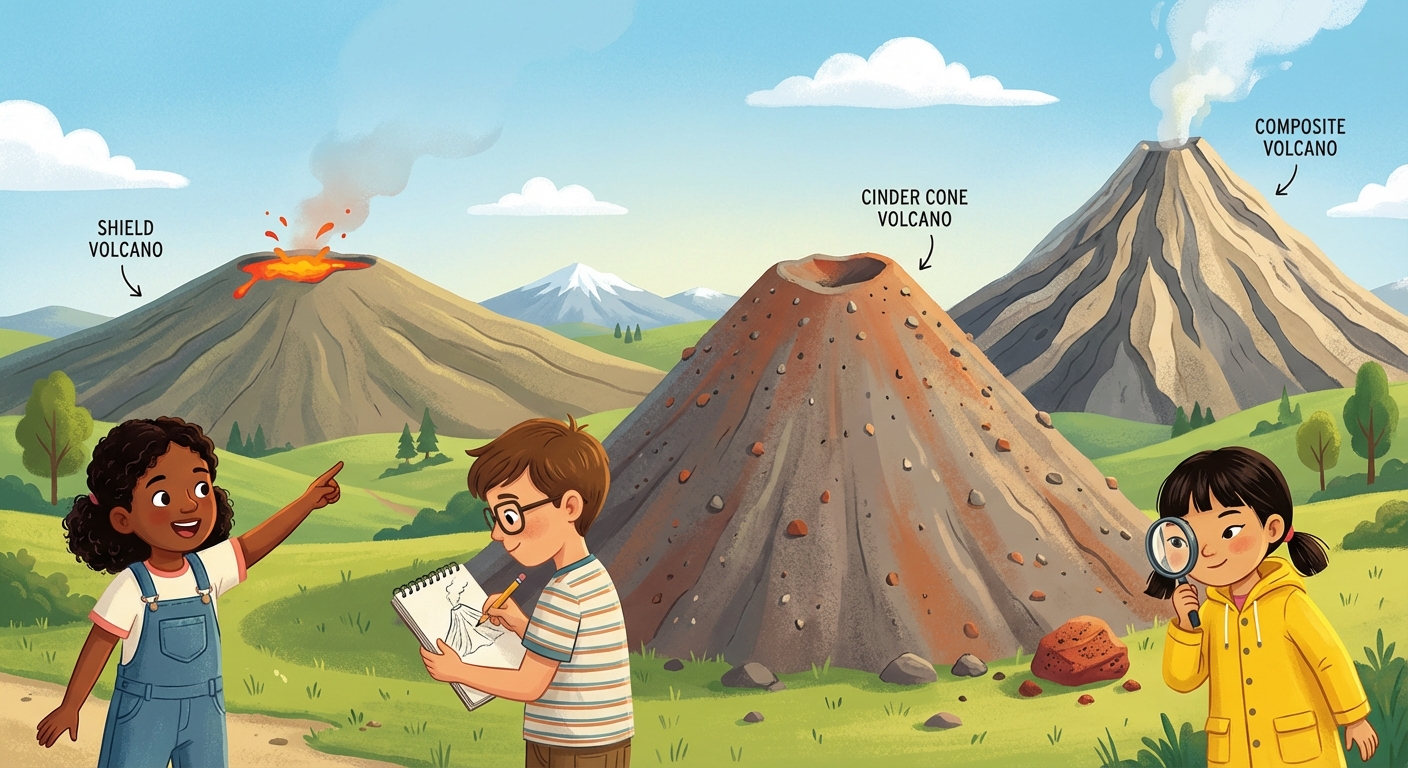
The shape of a volcano depends on how it erupts. Shield volcanoes are broad and gently sloping because they’re formed by runny lava flows. Cinder cone volcanoes are steep and cone-shaped because they’re built from ash and rock. Composite volcanoes are a mix of both, with layers of lava and ash.
Volcanoes as Builders
Volcanoes might seem scary, but they also help our planet! When volcanoes erupt, they create new land. The Hawaiian Islands were formed by volcanoes erupting under the ocean! Volcanic ash also makes the soil around volcanoes very fertile, which means plants grow really well there. And did you know we can even use the Earth’s heat near volcanoes to create electricity? This is called geothermal energy!
Earth’s Burps
So, what have we learned? Volcanoes are basically Earth’s way of letting off steam. They are like giant pressure cookers that occasionally need to burp! It might seem a little scary when they do, but volcanoes are a normal and important part of a healthy planet. And some volcanoes are under the ocean, others are on different planets! The loudest sound ever recorded was the Krakatoa eruption in 1883! People thousands of miles away heard it! Next time you see a volcano, remember it’s not just a mountain. It’s a window into the powerful forces shaping our world, a way for the Earth to manage its internal pressure.
Key Takeaways:
- Volcanoes are formed by pressure building up inside the Earth.
- Magma, gases, and plate tectonics all contribute to this pressure.
- Volcanoes can erupt in different ways, creating different landforms.
- Volcanoes can be dangerous, but they also have positive effects on our planet.