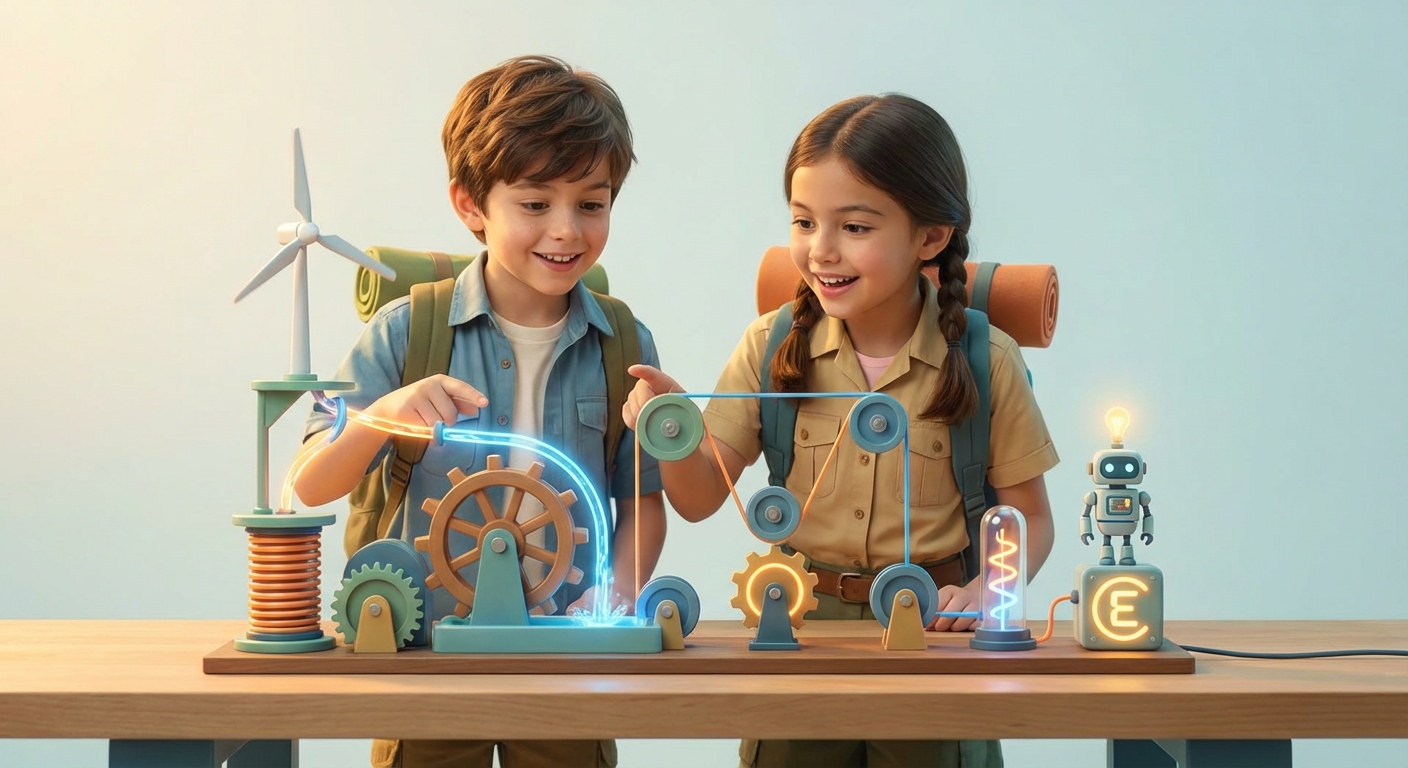
Energy Transfer: the Power Behind Machines
Energy transfer is a big concept in engineering. It helps us understand how machines work.
What Is Energy Transfer?
Energy transfer is when energy moves from one thing to another. This can happen in many ways, like when you turn a handle to lift a heavy box. The energy from your muscles is transferred to the handle, then to the box, making it move.
Fun Facts and Examples
Did you know that bicycles are a great example of energy transfer? When you pedal, your leg muscles transfer energy to the pedals, which then transfer energy to the wheels, making the bike move. Another example is a roller coaster. The energy from the climb up the big hill is transferred to the coaster as it rolls down, making it go fast.
Deeper Explanation
There are different types of energy, like kinetic energy (the energy of moving things) and potential energy (stored energy). When energy is transferred, it can change from one type to another. For example, a ball at the top of a hill has potential energy. As it rolls down, this energy transfers to kinetic energy, making the ball move faster.
Experiment Time!
Try this simple experiment:
- Fill a small bowl with water.
- Place a toy boat in the water.
- Use a straw to blow air across the water’s surface. Observe how the energy from your breath is transferred to the water, making the boat move. This is a basic example of energy transfer.
Energy transfer is all around us, from bicycles to roller coasters. Now that you’ve learned about it, try to find examples in your daily life. Remember, understanding energy transfer can help you become a great engineer one day! Keep exploring and soon you’ll be creating your own amazing machines. 🎉