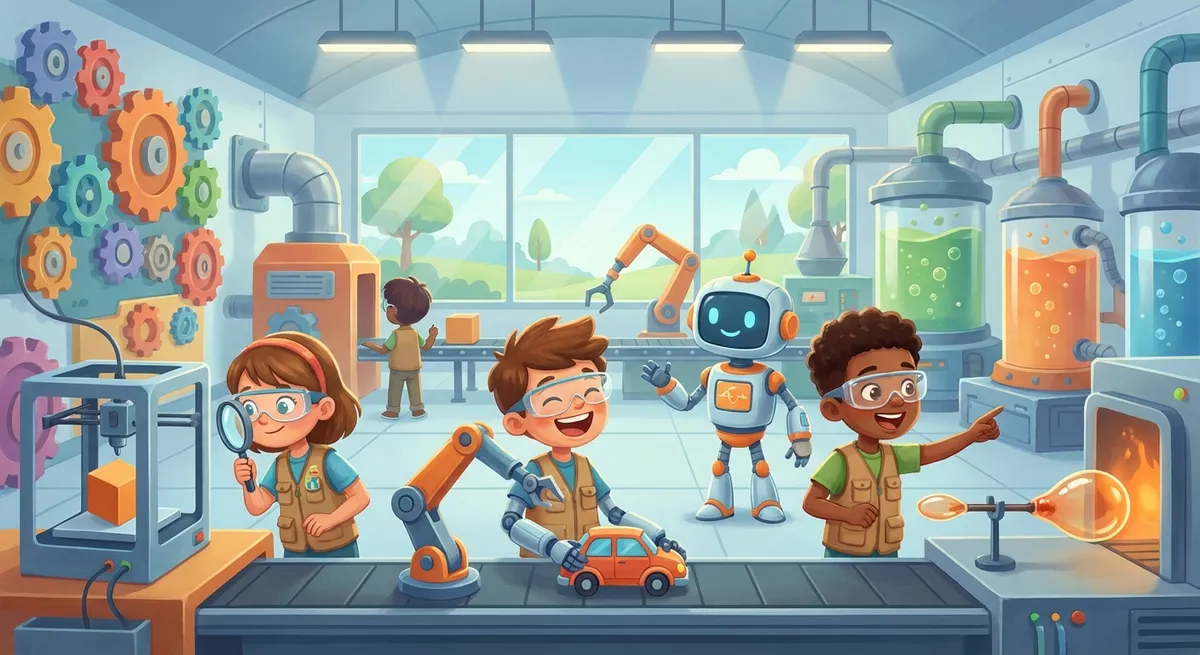
How Things Are Made: an Adventure into Manufacturing Processes
Introduction
Ever wondered how a plastic water bottle, a wooden chair, or a shiny metal bike appears in a store? All of these items start as raw Materials (the basic stuff like plastic pellets, wood logs, or metal bars) and go through a series of Manufacturing Processes—the steps engineers use to shape, join, and finish them. In this guide we’ll explore the most common processes, see why they matter, and even try a simple experiment at home!
1. From Raw Stuff to Real Things – What Is Manufacturing?
Manufacturing is the art and science of turning raw materials into useful products. Think of it like a giant kitchen where engineers are the chefs, and the recipes are called processes.
- Raw Material → Process → Product
- Each step changes the material’s Shape, Size, or Properties (like strength or flexibility).
Did you know? The word “manufacture” comes from the Latin manu (“hand”) and fabricare (“to make”). It originally meant “made by hand,” but today machines do most of the work!
2. Three Cool Manufacturing Processes
| Process | How It Works | Everyday Example |
|---|---|---|
| Casting (pouring liquid material into a mold) | Molten metal or plastic is poured into a hollow shape called a Mold. When it cools, it solidifies into the desired form. | Bronze statues, aluminum engine blocks |
| Machining (cutting away material) | A machine tool (like a drill or lathe) removes extra bits of material to reveal the final shape. | Metal gears, wooden table legs |
| Additive Manufacturing – 3‑D printing (building layer by layer) | A printer deposits thin layers of plastic, metal powder, or even chocolate, fusing each layer together to create a 3‑D object. | Custom phone cases, prosthetic limbs |
Why the Process Matters – Cause and Effect
- Casting → Cause: Liquid metal fills every nook of the mold. Effect: Complex shapes (like turbine blades) can be made in one piece.
- Machining → Cause: Precise cutting removes material. Effect: Very smooth surfaces and tight tolerances (exact dimensions) are achieved.
- 3‑d Printing → Cause: Material is added only where needed. Effect: Little waste and the ability to make unique, one‑off items quickly.
3. Vocabulary Boost (with Simple Definitions)
- Prototype – a first‑version model used to test ideas.
- Substrate – the base material on which something is built or printed.
- Extrusion – pushing material through a shaped hole to make long objects (like plastic tubing).
- Tolerance – the allowable difference between the intended size and the actual size of a part.
Try using these words in a sentence today! Example: “The engineers built a Prototype of a new toy car before mass‑producing it.”
4. Mini Experiment: Make Your Own Simple Mold
Materials
- Modeling clay (or play‑dough)
- Small plastic cup or LEGO brick (the object you’ll copy)
- Plaster of Paris (or a quick‑setting cement) – ask an adult for help!
- A shallow tray
Steps
- Press the clay flat on the tray, about 1 cm thick.
- Press your object (the LEGO brick or cup) gently into the clay to make a hollow impression, then lift it straight up.
- Mix the plaster according to the package directions and carefully pour it into the clay mold.
- Let the plaster harden (about 20–30 minutes), then peel away the clay.
- Inspect your plaster copy. Does it match the original? Notice how the mold captured the shape!