Take Action! A Kid’s Guide to Climate Action
The Earth’s climate is changing, and it’s up to all of us—big and small—to protect it. “Climate action” means the steps we take to slow down (or Mitigate) climate change and help nature stay healthy. In this guide you’ll learn new words, discover cause‑and‑effect relationships, see real‑world examples, and even try a mini experiment you can do at home!
1. What Is Climate Action?
Climate Action is any effort that reduces the amount of heat‑trapping gases (called Greenhouse Gases) that we release into the air.
- Greenhouse Gases – gases like carbon dioxide (CO₂) that act like a blanket around the Earth, keeping it warm.
- Mitigate – a fancy word meaning “make less severe.” When we mitigate climate change, we try to lower the amount of greenhouse gases.
Cause And Effect:
- Cause: Burning fossil fuels (coal, oil, gas) for electricity, cars, and factories.
- Effect: More CO₂ in the atmosphere → the “blanket” gets thicker → the planet gets warmer → glaciers melt, sea levels rise, weather becomes more extreme.
Did You Know? The world’s tallest tree, a coast redwood in California, can store as much carbon as a small car can emit in a year! 🌲
2. Why Climate Action Matters
When the climate changes, it affects everything:
| Impact | Example |
|---|---|
| Heat Waves | Kids can’t play outside as much because it’s too hot. |
| Wildlife Loss | Polar bears lose sea‑ice homes; coral reefs bleach and die. |
| Food Supply | Crops like wheat and corn may not grow as well, leading to higher food prices. |
Vocabulary Boost:
- Ecosystem – a community of plants, animals, and microbes that interact with each other and their environment.
- Resilience – the ability of an ecosystem (or a person) to bounce back after a disturbance.
When we act now, we give ecosystems more Resilience and keep the planet a safe home for all living things.
3. Ways Kids Can Be Climate Heroes
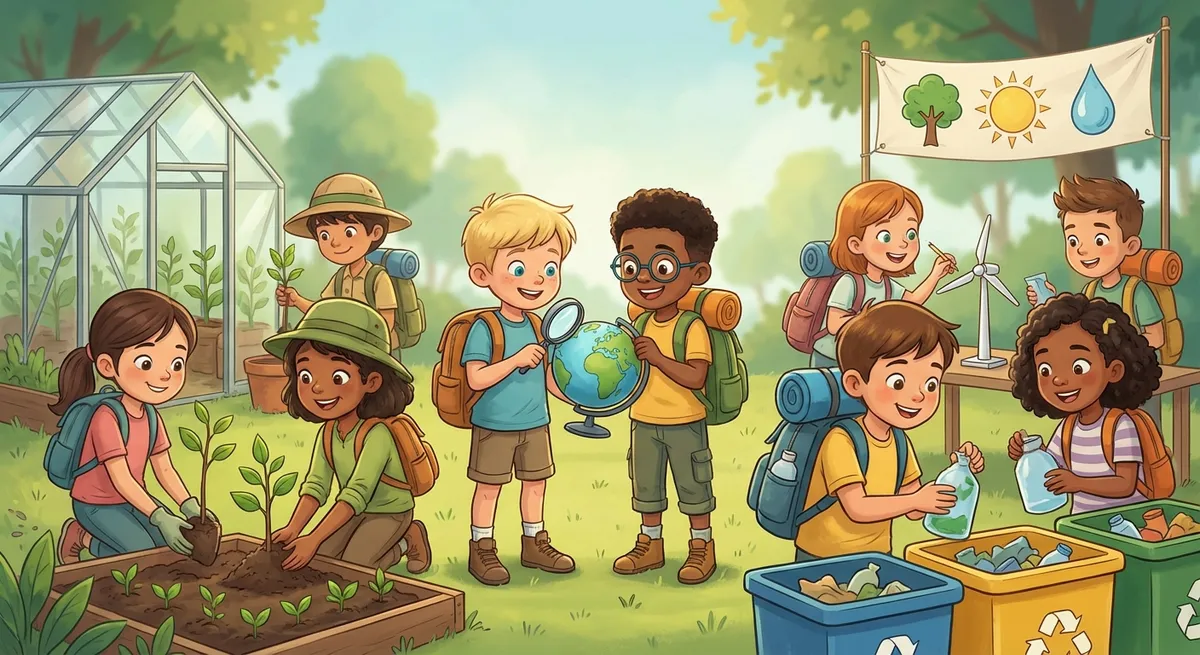
- Reduce, Reuse, Recycle – Cut down waste. Use a reusable water bottle instead of plastic.
- Save Energy – Turn off lights and devices when you’re not using them.
- Plant A Tree – Trees absorb CO₂ and give us fresh oxygen.
- Walk, Bike, Or Skate – Choose low‑carbon transportation for short trips.
- Talk About It – Share what you’ve learned with friends, family, and teachers.
Real‑world Example:
In 2022, a group of 12‑year‑olds in Kenya started a “Solar School” project, installing solar panels on their classroom roof. The panels generate clean, Renewable energy (energy that never runs out, like sunshine) and cut the school’s electricity bill by 40 %!
4. Mini Experiment: “how Much Co₂ Does Your Breath Produce?”
What You Need
- Two clear plastic bottles (500 ml)
- A small balloon
- Baking soda (½ tsp)
- Vinegar (2 tbsp)
- A marker
Steps
- Write the date on each bottle.
- Fill one bottle with 2 tbsp of vinegar.
- Put the balloon over the bottle’s opening (don’t let the baking soda fall in yet).
- Add the baking soda into the balloon, then lift the balloon so the soda falls into the vinegar.
- Watch the reaction—bubbles of CO₂ gas fill the balloon!
What’s Happening?
The chemical reaction (acid + base) creates carbon dioxide, the same gas we exhale when we breathe. By measuring how big
By measuring how big the balloon gets, you can compare the amount of CO₂ from the reaction to the amount you exhale in a single breath. A normal breath is about 0.5 L of air and contains roughly 0.04 % CO₂, so the balloon shows how much extra CO₂ can be made in just a few seconds.
Quick Quiz
-
What Does “Mitigate” Mean?
a) To make something bigger
b) To make something less severe ✓
c) To ignore a problem
d) To copy something -
Which Activity Helps Reduce Greenhouse Gases The Most?
a) Turning off lights when you leave a room ✓
b) Watching TV all day
c) Using a plastic water bottle once
d) Eating candy -
In The Mini Experiment, What Gas Fills The Balloon?
a) Oxygen
b) Nitrogen
c) Carbon dioxide ✓
d) Helium
Keep exploring, keep acting, and remember: every small step helps protect our planet!