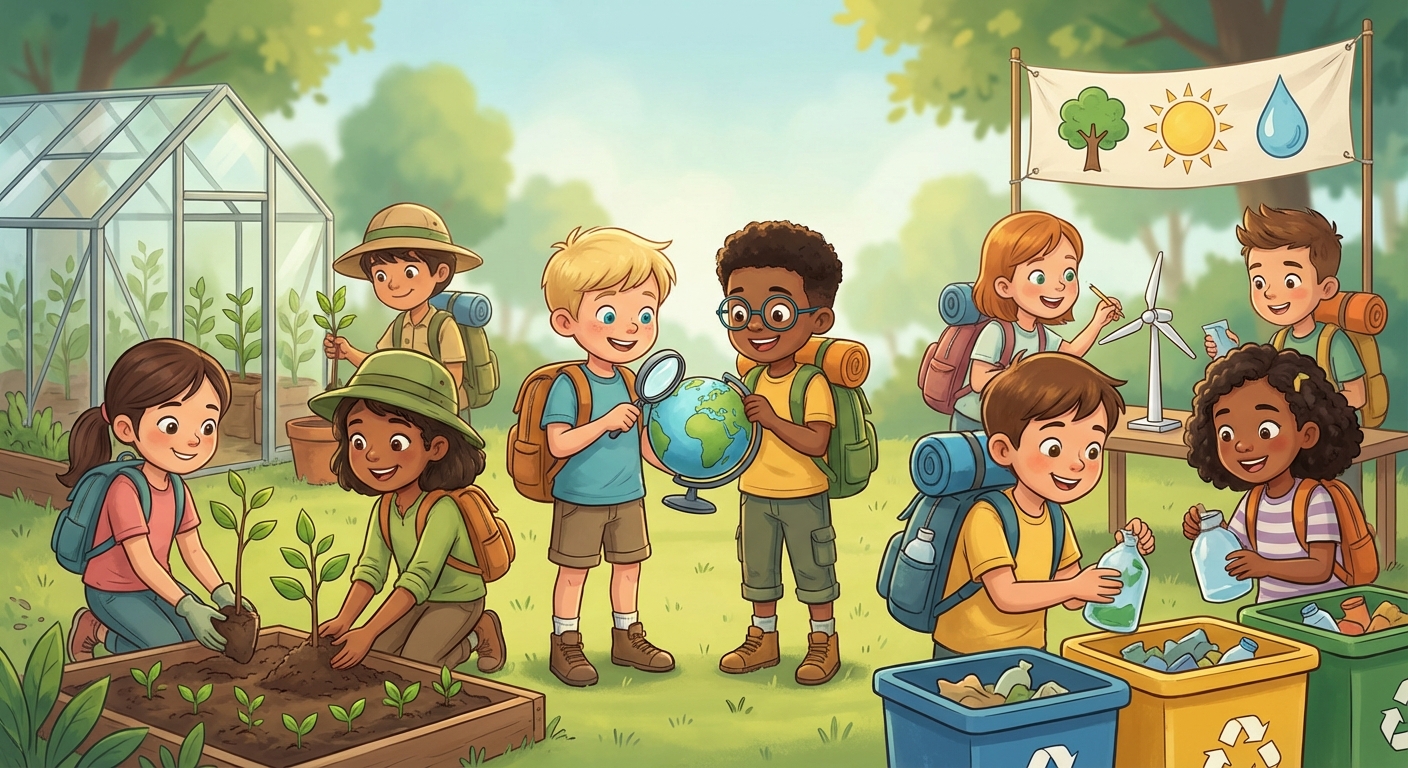
Take Action! A Kid’s Guide to Climate Action
The Earth’s climate is changing, and it’s up to all of us—big and small—to protect it. “Climate action” means the steps we take to slow down (or Mitigate) climate change and help nature stay healthy. In this guide you’ll learn new words, discover cause‑and‑effect relationships, see real‑world examples, and even try a mini experiment you can do at home!
1. What Is Climate Action?
Climate Action is any effort that reduces the amount of heat‑trapping gases (called Greenhouse Gases) that we release into the air.
- Greenhouse Gases – gases like carbon dioxide (CO₂) that act like a blanket around the Earth, keeping it warm.
- Mitigate – a fancy word meaning “make less severe.” When we mitigate climate change, we try to lower the amount of greenhouse gases.
Cause And Effect:
- Cause: Burning fossil fuels (coal, oil, gas) for electricity, cars, and factories.
- Effect: More CO₂ in the atmosphere → the “blanket” gets thicker → the planet gets warmer → glaciers melt, sea levels rise, weather becomes more extreme.
Did You Know? Trees store carbon as they grow, but the amount varies greatly by species, size, climate, and what happens to the tree later. Protecting ecosystems and reducing fossil-fuel emissions are both important. 🌲
2. Why Climate Action Matters
When the climate changes, it affects everything:
| Impact | Example |
|---|---|
| Heat Waves | Kids can’t play outside as much because it’s too hot. |
| Wildlife Loss | Polar bears lose sea‑ice homes; coral reefs bleach and die. |
| Food Supply | Crops like wheat and corn may not grow as well, leading to higher food prices. |
Vocabulary Boost:
- Ecosystem – a community of plants, animals, and microbes that interact with each other and their environment.
- Resilience – the ability of an ecosystem (or a person) to bounce back after a disturbance.
When we act now, we give ecosystems more Resilience and keep the planet a safe home for all living things.
3. Ways Kids Can Be Climate Heroes
- Reduce, Reuse, Recycle – Cut down waste. Use a reusable water bottle instead of plastic.
- Save Energy – Turn off lights and devices when you’re not using them.
- Care For Local Plants – Join a suitable planting or habitat project with adults; the right species and location matter.
- Walk, Bike, Or Skate Safely – With a grown-up, choose lower-carbon transportation when the route and weather are safe.
- Talk About It – Share what you’ve learned with friends, family, and teachers.
Real-world Example:
Schools in many countries use solar panels where sunlight, building design, cost, and local electricity rules make them practical. Solar energy is renewable, although panels still require materials, installation, maintenance, and responsible end-of-life handling.
4. Activity: Map Everyday Energy Choices
What You Need
- Paper and a pencil
- Three colored pencils
Steps
- Draw three columns: Uses Electricity, Uses Fuel Directly, and Uses No Energy While Operating.
- Sort five activities—such as turning on a lamp, riding in a gasoline car, walking, using a fan, and riding a bicycle—into the columns.
- Add a question mark beside any activity whose impact depends on where its electricity or materials came from.
- Pick one realistic action your household or school could investigate. Ask a grown-up before changing routines or equipment.
What’s Happening?
Climate impact is not visible from an object alone. Electricity sources, fuel, manufacturing, distance, durability, and how often something is used can all matter. The activity helps identify questions to research instead of pretending one simple model measures a person’s emissions.
Quick Quiz
-
What Does “Mitigate” Mean?
a) To make something bigger
b) To make something less severe ✓
c) To ignore a problem
d) To copy something -
Which Activity Helps Reduce Greenhouse Gases The Most?
a) Turning off lights when you leave a room ✓
b) Watching TV all day
c) Using a plastic water bottle once
d) Eating candy -
Why Does The Activity Put A Question Mark Beside Some Choices?
a) Their climate impact can depend on energy sources and materials ✓
b) Nobody can study them
c) They never use energy
d) They are always harmful
Keep exploring, keep acting, and remember: every small step helps protect our planet!