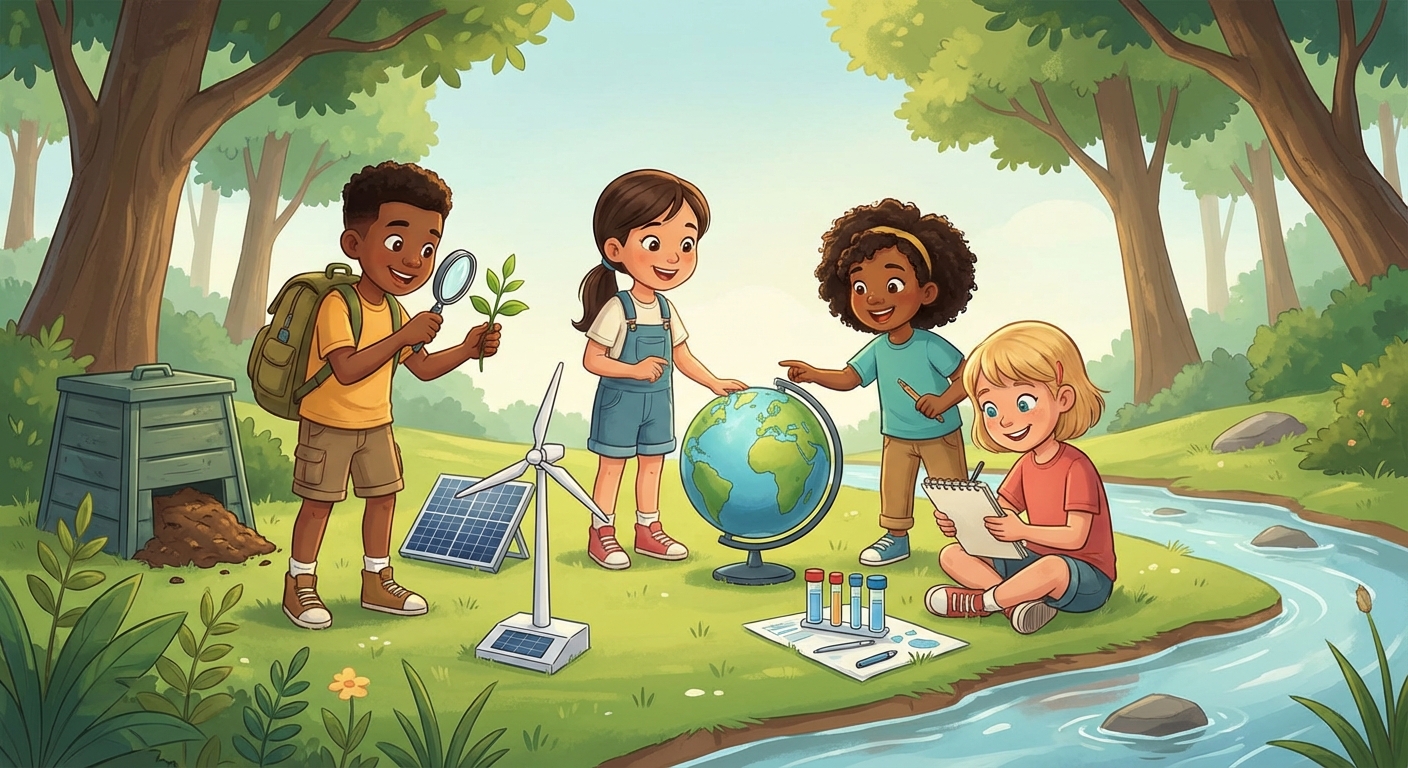
Protecting Our Planet: A Kid’s Guide to Environmental Science
Our Earth is a wonderful home for people, animals, plants, and even tiny microbes you can’t see without a microscope. But just like a house, it needs care and cleaning so everything stays healthy. This guide will help you learn new words, understand how our actions affect nature, and give you fun ideas to become an Environmental Hero!
1. What Is Environmental Protection?
Environmental Protection means looking after the natural world so it stays clean, safe, and full of life.
- Ecosystem – A community of living things (plants, animals, microbes) and the non‑living things (water, soil, air) they interact with.
- Sustainable – Using resources in a way that they won’t run out and won’t hurt future generations.
- Carbon Footprint – The amount of greenhouse gases (like carbon dioxide) that your daily activities release into the atmosphere.
Cause & Effect
-
Cause: Cutting down many trees.
-
Effect: Less oxygen is produced, and animals lose their homes.
-
Cause: Throwing plastic bottles into a river.
-
Effect: The plastic can harm fish, and the river becomes unsafe for people to drink.
2. Everyday Ways to Protect the Environment
| Action | Why It Helps | Example |
|---|---|---|
| Turn Off Lights when you leave a room | Saves electricity, which reduces the need for power plants that burn fossil fuels. | Switch off the hallway light after dinner. |
| Recycle paper, plastic, metal, and glass | Keeps waste out of landfills and gives materials a second life. | Put your used juice boxes in the blue recycling bin. |
| Walk, Bike, Or Use Public Transport | Lowers your carbon footprint by using less gasoline. | Ride your bike to school once a week. |
| Plant A Tree Or A Garden | Trees absorb carbon dioxide and provide food and shelter for wildlife. | Plant a sunflower in a pot on your balcony. |
Did You Know?
- A single mature tree can absorb about 48 Pounds (≈22 kg) of carbon dioxide each year! 🌳
3. Mini Experiments: See Science in Action
Experiment 1 – Make A Simple Water Filter
Materials
- Two clean plastic bottles (ask an adult to cut the bottom off one)
- Coffee filter or cotton ball
- Sand, small pebbles, and aquarium activated carbon, handled with an adult
- Dirty water (mix tap water with a little soil)
Steps
- Invert the whole bottle (the one with the cut bottom) and place the coffee filter inside the neck.
- Layer the materials: first a few centimeters of charcoal, then sand, then pebbles.
- Slowly pour the dirty water into the top.
Observation
The water that drips out is clearer! This shows how natural materials can Filter pollutants, just like wetlands do in nature.
Experiment 2 – Track Your Household Energy Use
Materials
- Notebook or a simple spreadsheet
- A list of appliances (TV, fridge, lights, computer)
Steps
- For one week, write down how many hours each appliance is used each day.
- For each appliance, note whether it was used a lot, a little, or not at all. You can also record the approximate hours with an adult.
- Compare the notes and identify one device whose use could safely be reduced. Do not unplug or change any appliance without an adult.
Result
You’ll discover surprising “energy hogs” and can decide where to Save power.
4. Did You Know? (fun Facts)
- Plastic Lasts A Long Time: Some plastics can remain in the environment for hundreds of years, often breaking into smaller pieces instead of fully disappearing.