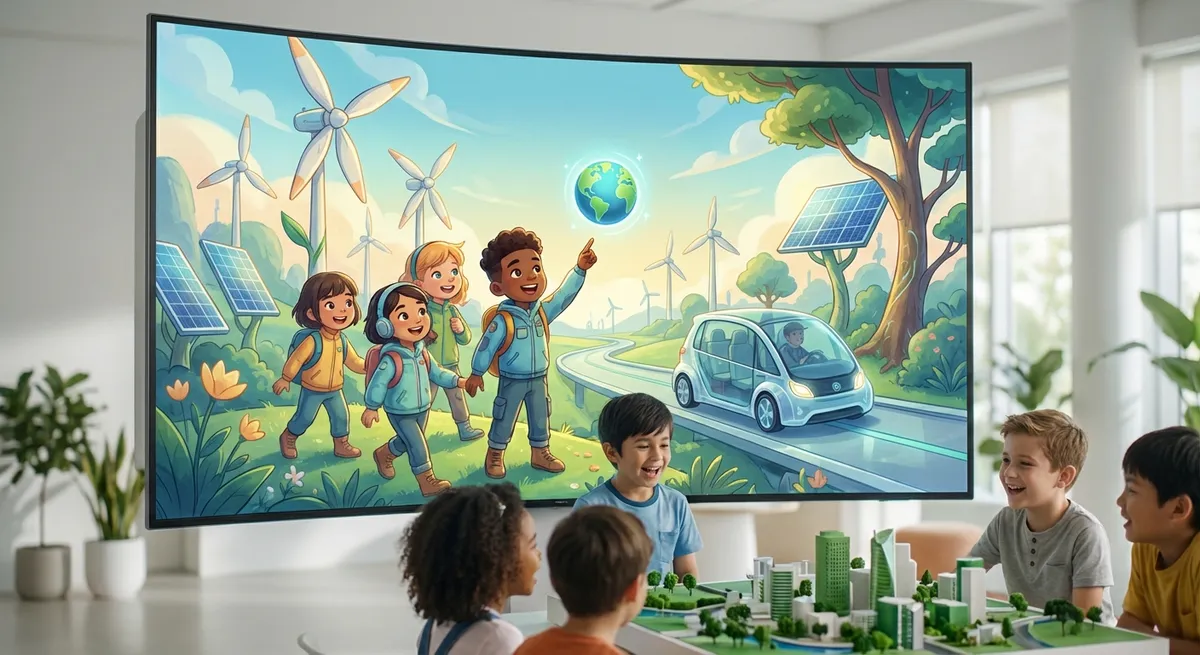
Green Technology: Powering a Cleaner Planet
Introduction
Imagine a world where the air is fresh, the oceans are sparkling, and the energy we use comes from the sun, wind, and water—not from smoky factories. Green Technology (also called clean tech) makes that possible! In this guide you’ll learn new words, see real‑life examples, discover how cause and effect shape our environment, and even try a simple experiment at home.
1. Solar Power – Catching Sunlight
What It Is – Solar panels are made of special materials that turn sunlight into electricity. The scientific term for this is Photovoltaic (photo = light, voltaic = electricity).
Cause & Effect – When the sun shines on a panel → electrons move → electricity is created → homes get power without burning coal. Less coal means Lower Carbon Dioxide (CO₂) emissions, which helps slow climate change.
Example – The school library roof in many cities now has a solar array that supplies part of the lights and computers.
Did You Know?
A single solar panel can generate enough electricity to power about 30 Led Light Bulbs for a whole day!
2. Wind Turbines – Turning Breezes into Energy
What It Is – A wind turbine looks like a giant pinwheel. When wind blows, the blades spin a generator that makes electricity.
Vocabulary Boost: Generator – a machine that changes mechanical motion into electrical energy.
Cause & Effect – Strong wind → turbine blades spin faster → more electricity is produced → less need for fossil‑fuel power plants → cleaner air.
Example – Off the coast of Denmark, floating wind farms create electricity for hundreds of thousands of homes.
Did You Know?
The tallest wind turbine in the world stands 220 Meters tall—about as high as a 70‑story building!
3. Biodegradable Materials – Friendly to the Earth
What It Is – Biodegradable items break down naturally by microbes (tiny living organisms) into harmless substances. Think of a banana peel that turns into soil.
Cause & Effect – Using biodegradable packaging → less plastic waste in oceans → marine animals stay safe → healthier ecosystems.
Example – Some snack wrappers are now made from Plant‑based Polymers that disappear in a compost heap within a few months.
Did You Know?
A single plastic bottle can take Up To 450 Years to decompose, while a biodegradable corn‑starch cup disappears in 3–6 Months.
4. Mini Experiment: Build a Pizza‑box Solar Oven
What You’ll Need
| Item | Quantity |
|---|---|
| Cardboard pizza box (clean) | 1 |
| Aluminum foil | a small sheet |
| Clear plastic wrap | 1 piece |
| Black construction paper | 1 sheet |
| Tape & scissors | – |
| Marshmallows & chocolate squares | for s’mores |
Steps
- Cut a flap on the box lid, leaving a 1‑inch border.
- Cover the inside of the flap with aluminum foil (shiny side out). Tape it securely.
- Line the bottom of the box with black paper—black absorbs heat.
- Stretch plastic wrap over the opening to create an airtight window.
- Place a marshmallow and chocolate on a small plate inside the box.
- Angle the foil flap toward the sun and seal the box.
Observation – After 20–30 minutes, the marshmallow should melt!
Why It Works – Sunlight passes through the plastic, hits the black surface, and is trapped inside (like a tiny greenhouse). The foil reflects more sunlight onto the food, raising the temperature. This