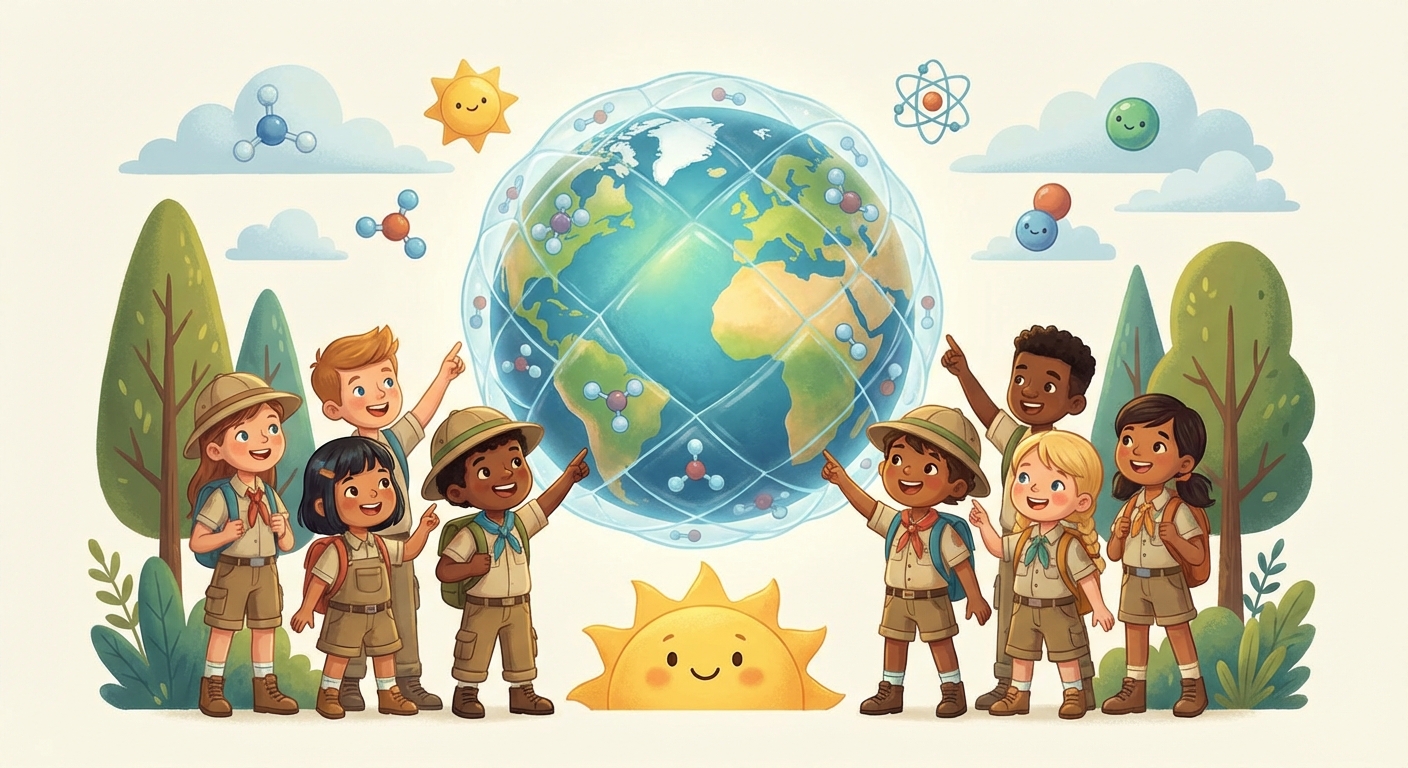
The Greenhouse Effect: Earth’s Cozy Blanket
Introduction
Ever wonder why we don’t freeze on a sunny day, even though space is super cold? The answer lies in a natural “blanket” that wraps around our planet—the Greenhouse Effect. Let’s pull back the curtain on this invisible shield, see how it works, and discover what we can do to keep it just right.
1. What Is the Greenhouse Effect?
- Sunlight (Solar Radiation) travels to Earth as short‑wave energy.
- The surface absorbs this energy, warms up, and then sends Infrared Radiation (heat) back toward space.
- Certain gases in the Atmosphere—like Water Vapor, Carbon Dioxide (CO₂), and Methane—trap some of that infrared radiation.
Think of a greenhouse for plants: glass lets sunlight in but stops heat from escaping, keeping the inside warm. In the same way, greenhouse gases keep Earth’s temperature comfortable for life.
Did You Know? Without the greenhouse effect, the average temperature on Earth would be about ‑18 °C (0 °F)—too cold for most plants, animals, and people!
Vocabulary Boost
| Word | Simple Definition |
|---|---|
| Atmosphere | The layer of gases surrounding Earth. |
| Radiation | Energy that travels as waves or particles (like sunlight). |
| Carbon Dioxide (CO₂) | A gas released when we burn things like wood, gasoline, or coal. |
| Methane | A gas released from wetlands, cows, and landfills; it’s even better at trapping heat than CO₂. |
2. Why the Greenhouse Effect Matters
- Keeps Us Warm Enough to grow food, drink water, and enjoy the outdoors.
- Regulates Climate Patterns—the rain, winds, and seasons we experience.
But like a blanket that’s too thick, too many greenhouse gases can make the Earth Overheat. This leads to Global Warming, which changes weather, melts ice, and raises sea levels.
3. How Humans Influence the Greenhouse Effect
| Human Activity | How It Adds Greenhouse Gases |
|---|---|
| Driving Cars | Burns gasoline → releases CO₂. |
| Cutting Down Forests | Trees normally soak up CO₂; fewer trees = more CO₂ in the air. |
| Using Electricity From Coal Or Gas Plants | Produces CO₂ and methane when the fuel is burned. |
These actions Increase the concentration of greenhouse gases, thickening Earth’s blanket and causing the planet to warm faster than natural cycles.
4. What Can We Do?
- Plant Trees – they act like natural vacuum cleaners for CO₂.
- Save Energy – turn off lights, use LED bulbs, and ride a bike instead of a car.
- Reduce, Reuse, Recycle – less waste means fewer methane emissions from landfills.
Even small changes add up when everyone participates!
Mini Experiment: Make a Mini Greenhouse 🌱
You’ll Need:
- A clear plastic bottle (2 L works well)
- Two small plants or a few sprouting beans
- Water
- A sunny windowsill
Steps:
- Fill the bottle about 1 cm with water and place the plants inside.
- Seal the bottle with its cap.
- Put the bottle on the windowsill where it gets direct sunlight.
Observe:
- After a few hours, you’ll see droplets forming inside the bottle—this is Condensation, just like clouds forming when warm air rises and cools.
- Compare the bottle with the room around it. Results can vary because this setup mainly demonstrates how a clear container changes heat transfer; it is not a complete model of Earth’s atmospheric greenhouse effect.