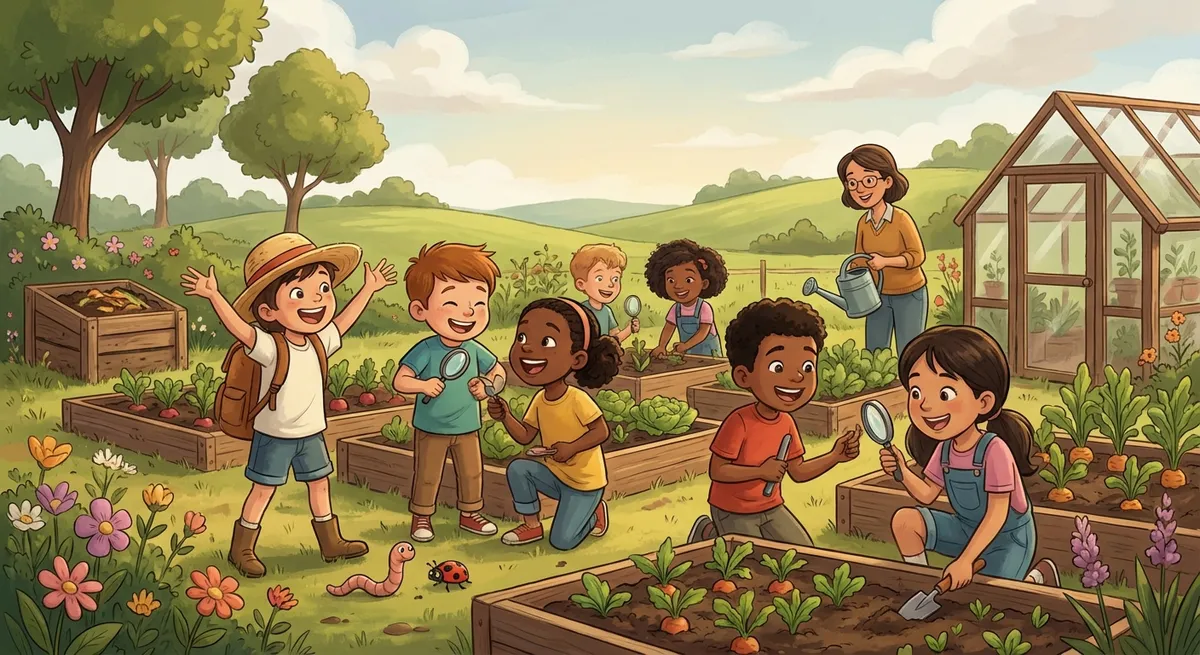
Organic Farming: Nature’s Gentle Way to Grow Food
Imagine a garden where the soil stays healthy, the insects are friends, and the vegetables are grown without harsh chemicals. That’s Organic Farming—a method that works with nature instead of fighting it. In this guide you’ll learn new words, see real‑world examples, discover cause‑and‑effect relationships, try a tiny experiment, and finish with a fun quiz!
1. What Is Organic Farming?
Organic farming means growing plants and raising animals Without Synthetic (Man‑made) Chemicals such as pesticides, herbicides, and artificial fertilizers. Instead, farmers use natural tools:
| Organic Tool | What It Does | Example |
|---|---|---|
| Compost (decomposed plant & food waste) | Adds nutrients to soil, improves its structure | A pile of kitchen scraps that turns into dark, crumbly soil |
| Crop Rotation (changing which crops grow in a field each year) | Reduces pests and keeps soil nutrients balanced | Planting corn one year, then beans the next |
| Biological Pest Control (using beneficial insects) | Keeps harmful bugs in check | Ladybugs eating aphids |
Did You Know? The word organic comes from the Greek “organikos,” meaning “of or from an organism.” It reminds us that everything in an organic farm is alive and interconnected.
2. Why Does It Matter? – Cause and Effect
| Action (Cause) | Result (Effect) |
|---|---|
| No Synthetic Pesticides | Fewer chemicals wash into rivers → healthier fish and water ecosystems |
| Adding Compost | Soil holds more water → plants need less irrigation (water saving) |
| Planting A Mix Of Flowers | Attracts pollinators like bees → more fruits and seeds are produced |
| Rotating Crops | Breaks pest life cycles → lower chance of crop loss |
When farmers protect the soil and wildlife, the whole environment benefits. Healthy soil stores carbon, which helps fight Climate Change (the long‑term rise in Earth’s temperature).
3. Real‑world Examples
- Family Farm In Iowa: Uses a compost bin made from old pallets. Every spring they spread the compost on their corn fields, and the corn grows tall without any chemical fertilizer.
- Urban Rooftop Garden In Tokyo: Grows lettuce in raised beds with a layer of Worm Castings (nutrient‑rich worm poop). The garden feeds the building’s cafeteria and reduces food miles (the distance food travels).
These stories show that organic farming can happen on a huge farm or a tiny city balcony!
4. Mini Experiment: “the Power of Compost”
What You Need
- Two small pots with the same type of soil
- 5 fast‑growing seeds (e.g., beans or radishes)
- A spoonful of kitchen‑scrap compost (no meat or dairy)
- Water
Steps
- Plant the same number of seeds in each pot, at the same depth.
- In Pot A, mix the compost into the soil. Leave Pot B plain.
- Water both pots equally every day.
- Observe for 2‑3 weeks: Which seedlings grow taller? Which have greener leaves?
What’s Happening?
The compost adds nutrients like nitrogen, phosphorus, and potassium—essential “food” for plants. You should see the seedlings in Pot A sprout faster and look healthier. This simple test shows how organic matter boosts plant growth without chemicals.
5. Quick Quiz (or You Can Make a Flash‑card Set!)
-
True Or False: Organic farms can never use any kind of pest control.
-
What does biodiversity mean? (Hint: think “many different living things”)
-
Name one benefit of crop
-
Name one benefit of crop rotation.
Answers
- False – organic farms can use natural pest control (e.g., ladybugs).
- Biodiversity means many different living things living together.
- Example answer: Crop rotation reduces pests and keeps soil nutrients balanced.
Great job learning about organic farming!