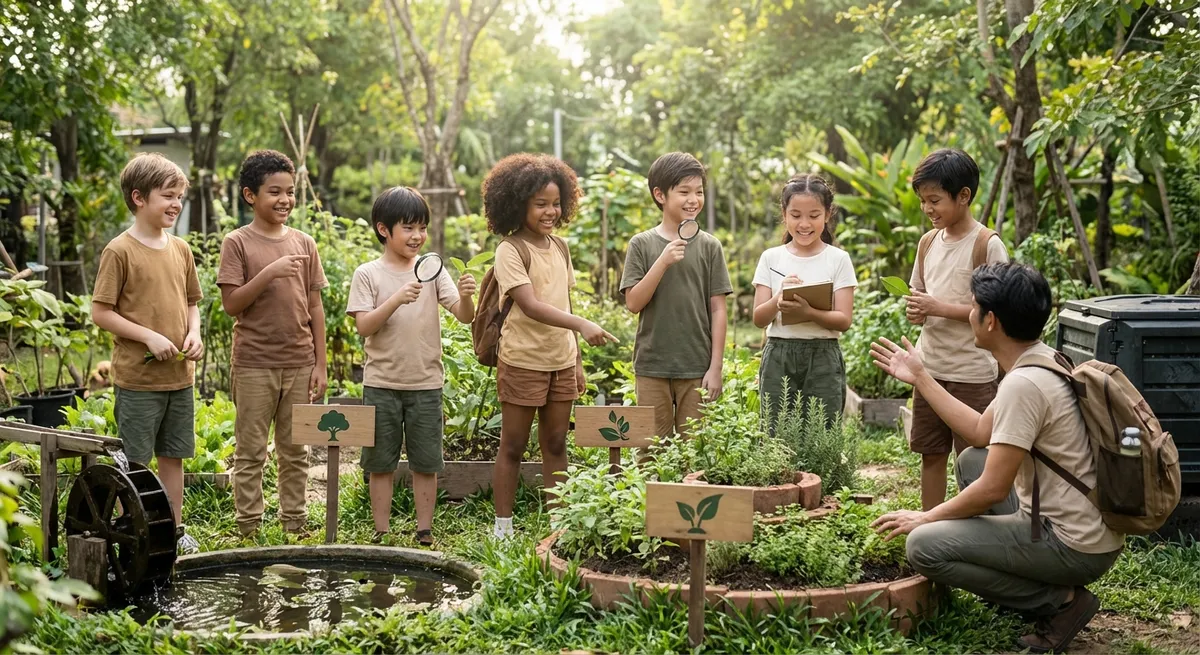
Discovering Permaculture: Nature’s Smart Design
Imagine a garden that Feeds the people who live near it, Protects the soil, and Saves water—all without using lots of chemicals or machines. That’s what permaculture is all about! It’s a way of planning farms, yards, and even whole neighborhoods so that everything works together like a well‑tuned orchestra of plants, animals, and people.
1. What Is Permaculture?
- Definition – Permaculture (short for Permanent Agriculture) is a set of design principles that help us create sustainable, self‑supporting ecosystems.
- Key Idea – Instead of forcing nature to fit our needs, we Observe how nature already solves problems and then Mimic those solutions.
Complex word: Mimic – to copy or imitate something.
Example
A farmer notices that a row of trees on a sunny hillside provides shade for the soil below, keeping it cool and moist. By planting more trees in the right spots, the farmer creates a natural “cool blanket” that reduces the need for watering.
2. The Three Core Principles
| Principle | What It Means | Real‑World Example |
|---|---|---|
| Care For The Earth | Protect soils, water, and wildlife. | Planting cover crops (like clover) that hold the soil together and give insects a home. |
| Care For People | Grow food, medicine, and shelter for communities. | Community gardens where neighbors share fresh vegetables. |
| Fair Share (also called Return Of Surplus) | Use only what you need; share the extra. | Collecting rainwater in barrels and giving the surplus to a neighbor who needs it. |
Cause and Effect: When we Care For The Earth, the soil stays healthy, which means plants grow better, which then Cares For People by providing more food.
3. Designing a Mini Permaculture Garden
- Observe The Sun – Track where sunlight hits your yard at different times of day.
- Place The “Big Helpers” First – Plant tall, leafy trees on the sunny side to give shade later.
- Layer The Garden – Use different plant heights: tall trees, medium shrubs, low herbs, and ground‑cover plants. This is called Stacking Functions (one plant doing many jobs).
Did you know? A single tree can provide Three benefits at once: food (fruit), shelter (shade), and habitat for birds that eat insects.
4. Mini Experiment: The Water‑saving Potato Tower
What You Need
- A clean 2‑liter plastic bottle
- Scissors (ask an adult to help)
- Soil, compost, and a few potato seed pieces
- A small tray to catch excess water
Steps
- Cut the bottle in half lengthwise. Keep the bottom part as a “pot.”
- Fill the pot with a mix of soil and compost (about 3 cm deep).
- Plant 2–3 potato pieces, then cover with more soil.
- Place the top half of the bottle upside‑down over the pot, leaving a small gap for air.
- Water gently until water drips into the tray.
Observation – Notice how the bottle’s shape keeps the soil moist longer, so you need to water less often.
Cause And Effect – The bottle Reduces Evaporation (water turning into vapor), which Saves Water for the potatoes.
Mini Quiz 🌟
-
What Does “Mimic” Mean?
a) To destroy
b) To copy
c) To ignore -
Which Principle Tells Us To Share Extra Resources?
a) Care for the Earth
b) Fair Share
c) Care for People -
In A Permaculture Garden, Why Do We Plant Tall Trees On The Sunny Side?
a)