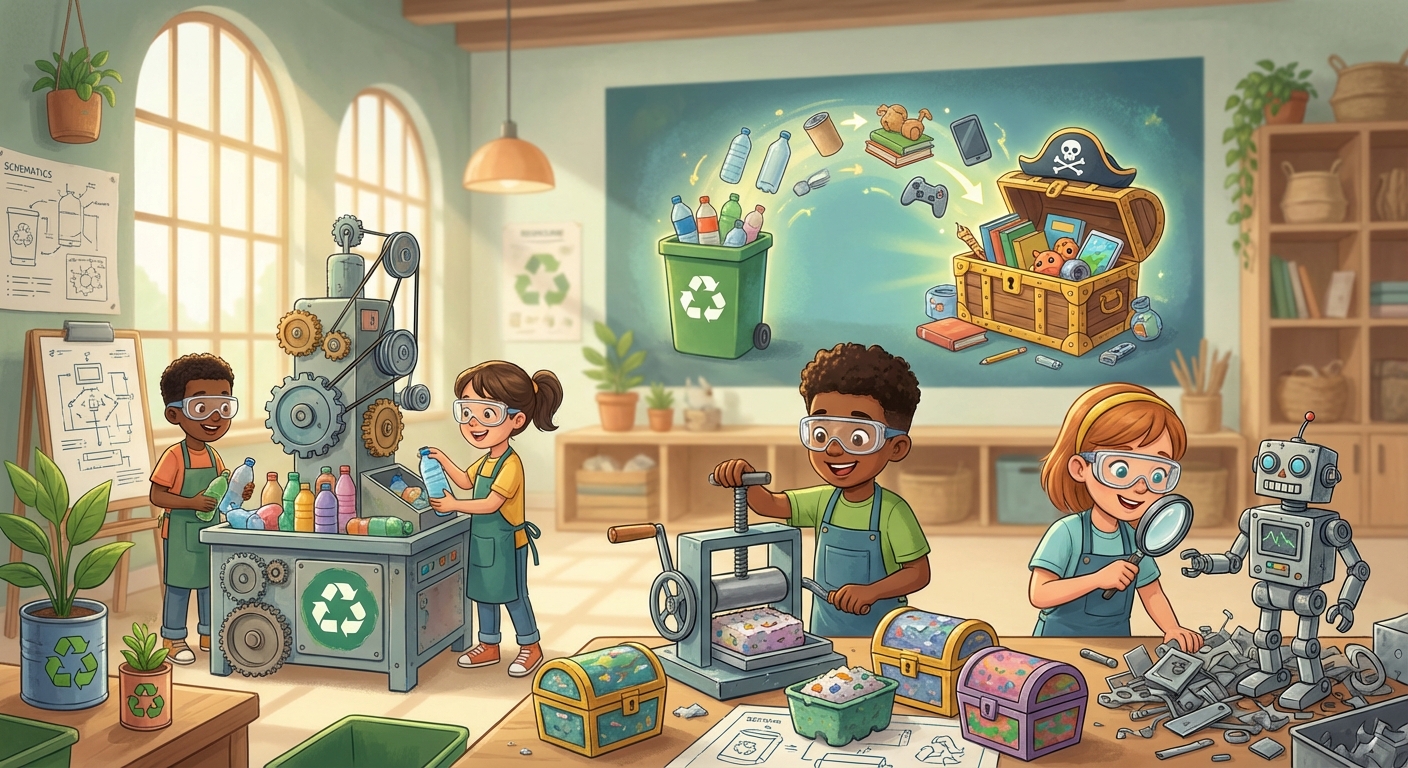
Recycling: Turning Trash into Treasure
Every day we throw away things like paper, plastic bottles, and old cans. But what happens to that waste? If we Recycle—collect and transform used items into new products—we can protect the planet, save energy, and keep wildlife safe. This guide will help you become a recycling detective, learning new words, cool facts, and even a simple experiment you can try at home!
1. How Recycling Works – from Bin to Brand‑new Item
- Collect – Your family puts paper, plastic, metal, and glass in the right recycling bins.
- Sort – At a recycling center, machines separate each material.
- Prepare – Accepted items are cleaned and processed in ways that depend on the material. Plastic may be chopped into flakes and later formed into pellets; glass may become cullet; paper is pulped.
- Make A New Material Or Product – Some plastics, metals, and glass are melted, while paper fibers are mixed into pulp. Each material follows a different industrial process.
Cause & Effect:
- Cause: Recycling aluminum cans saves the energy needed to mine new aluminum.
- Effect: It reduces electricity use, meaning fewer power plants burn fossil fuels, which cuts Greenhouse Gases (gases that warm the Earth).
Vocabulary Boost:
- Decompose – To break down naturally, like a leaf turning into soil.
- Landfill – A large site where waste is buried; items that don’t decompose can stay there for centuries.
2. What Can You Recycle? – The “three‑r” Rule
| Material | Where It Might Go—Check Local Rules | Example of New Product |
|---|---|---|
| Paper (newspapers, notebooks) | A paper or mixed-recycling bin | Recycled paper for notebooks |
| Plastic (accepted containers) | A plastics or mixed-recycling bin | New containers or park benches |
| Metal (accepted cans or foil) | A metal or mixed-recycling bin | New cans or bike frames |
| Glass (accepted jars, bottles) | A glass bin or collection point | New glass containers or tiles |
Bin colors and accepted items vary by community. Ask an adult to check the local recycling service before sorting anything.
Did You Know? Properly sorted glass bottles and jars can be cleaned, crushed into pieces called cullet, melted, and formed into new containers. The timing and exact process vary by recycling system.
3. Why Recycling Matters – The Big Picture
- Can Save Resources: Using recovered material can reduce demand for some newly extracted resources.
- Can Reduce Impacts: Benefits depend on the material, collection, contamination, transport, energy source, and recycling process.
- Works With Reduction And Reuse: Preventing unnecessary waste and safely reusing durable items can avoid impacts before recycling is needed.
Cause & Effect Chain:
- A Local Program Accepts A Plastic Bottle. →
- The Correctly Sorted Bottle May Be Cleaned And Processed. →
- Recovered Plastic May Replace Part of the New Plastic in a product. →
- This Can Reduce Some Resource Use, but it still requires transport, energy, and manufacturing.
4. Mini Investigation: What Does Your Local Program Accept?
What You’ll Need
- Three clean, dry, empty packages chosen and checked by an adult
- A notebook
- An adult and the official website or printed guide for your local recycling service
Steps
- Ask the adult to choose packages with no sharp edges, broken glass, food, chemicals, or dirt. Do not pick items out of a trash or recycling bin.
- Write each item’s material, shape, and any recycling label or number you see.
- With the adult, check the official local instructions for that exact item. A recycling symbol or number does not guarantee local acceptance.
- Record accepted, not accepted, or special drop-off, plus any preparation instructions.
Lesson: Recycling rules depend on local equipment and markets, not only on what an object is made from. Correct sorting helps reduce contamination. Let the adult return or dispose of each package safely.