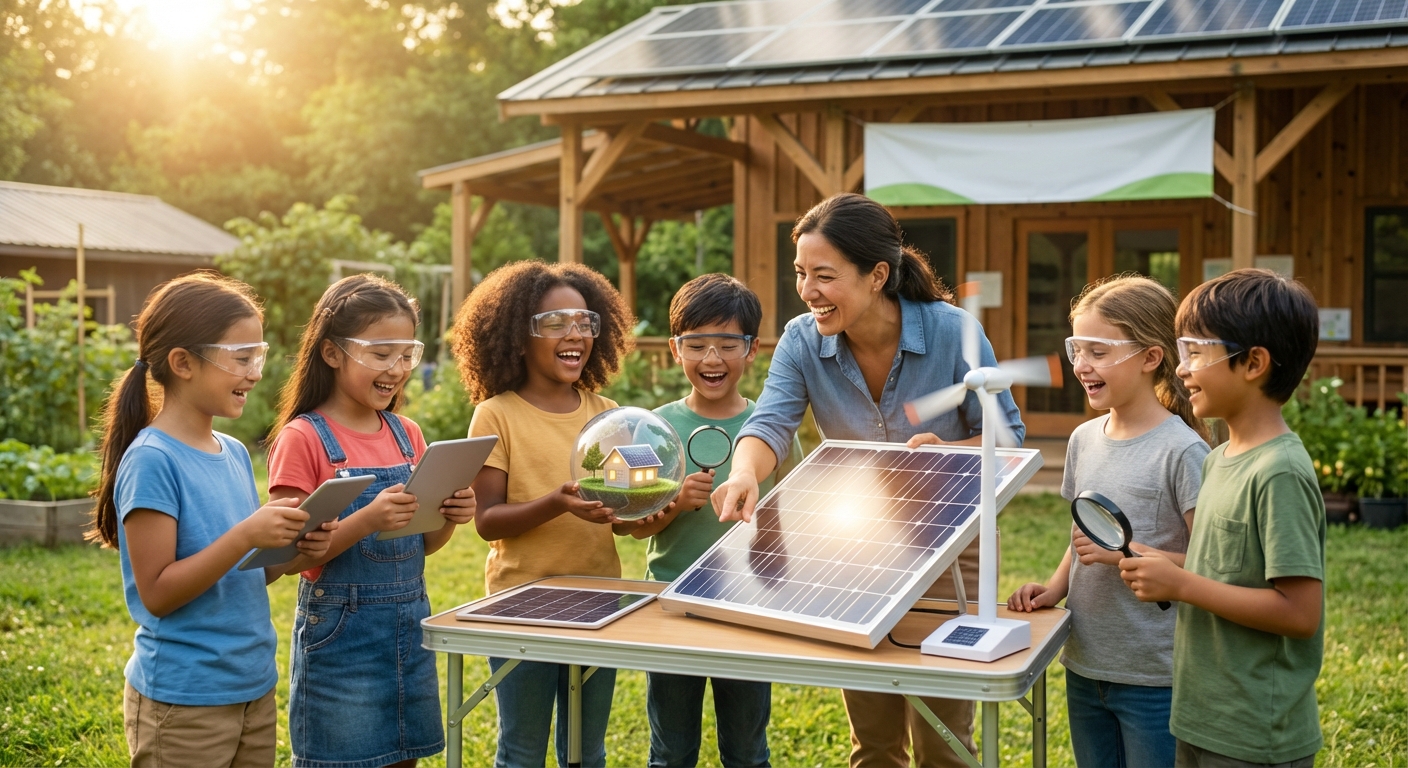
Solar Power: Turning Sunlight into Energy
Have you ever wondered how the bright sun can light up our homes, charge our toys, or power a whole city? The answer is Solar Power – a clean, quiet way to turn sunlight into electricity. In this guide we’ll explore how solar panels work, why they’re good for the Earth, and even try a tiny experiment you can do at home!
1. How Sunlight Becomes Electricity
The Basics
Solar panels are made of many tiny pieces called Photovoltaic Cells (photo‑voltaic = “light‑producing electricity”). When sunlight hits these cells, a special material inside (usually silicon) Absorbs the light energy. This energy knocks loose tiny particles called Electrons.
Cause → Effect
- Cause: Sunlight shines on a photovoltaic cell.
- Effect: Electrons are set in motion, creating an electric current that can be used to power devices.
Vocabulary Boost
- Absorb: To take in something, like a sponge soaking up water.
- Electron: A super‑tiny particle that carries electric charge.
- Current: The flow of electricity, like water moving through a pipe.
2. Why Solar Power Helps the Planet
Clean Energy
Unlike burning coal or oil, solar panels don’t release Greenhouse Gases (gases that trap heat and warm the planet). This means less Climate Change and cleaner air to breathe.
Cause → Effect Chain
- Sunlight → electricity without burning fuel.
- No Fuel Burned → no carbon dioxide (CO₂) released.
- Less CO₂ → less additional warming over time and fewer climate-related pressures on people and ecosystems.
Did You Know?
- A suitably sized rooftop solar system may produce about as much electricity as one home uses over a year, but output depends on sunlight, system size, shade, and local energy use.
- Large solar farms in sunny regions can supply electricity to many thousands of homes. Their output depends on the project and the electrical grid.
3. Everyday Solar Gadgets
| Gadget | How It Uses the Sun | Fun Fact |
|---|---|---|
| Solar‑powered Calculator | Tiny solar cells on the back turn light into enough energy to do math. | No batteries needed—just a sunny desk! |
| Solar Garden Lights | Small panels charge a battery during the day; the light glows at night. | They automatically turn on at dusk. |
| Solar‑charged Backpack | A flexible solar panel on the front can charge phones while you walk. | Great for camping trips! |
These examples show that solar power isn’t just for huge power plants; it can be part of everyday life.
4. Mini Experiment: Make a Simple Solar Oven
What You Need
- A large cardboard pizza box (clean and dry)
- Aluminum foil
- Clear plastic wrap (or a zip‑lock bag)
- Black construction paper
- Tape and scissors (ask an adult to help with cutting)
- Marshmallows and a few small cookies (or any snack you like)
Steps
- Cut A Flap on the lid of the pizza box, leaving about 1 inch of the box edge uncut.
- Cover The Flap’s Underside with aluminum foil, shiny side out, and tape it securely.
- Line The Bottom of the box with black construction paper (the black absorbs heat).
- Seal The Opening with clear plastic wrap, creating an airtight window.
- Place Your Snack on the black paper, close the lid, and angle the foil flap toward the sun.
- Observe Carefully: Depending on the sunlight, air temperature, and box design, the snack may warm or soften. The result is not guaranteed. Ask an adult before touching the inside because it may become hot.
Why It Works
- Aluminum Foil reflects more sunlight into the box.
- Black Paper absorbs much of the light and changes it into thermal energy.
- Clear Plastic slows the escape of warm air. This simple oven demonstrates solar heating, but it is not safe for cooking foods that require precise temperatures.