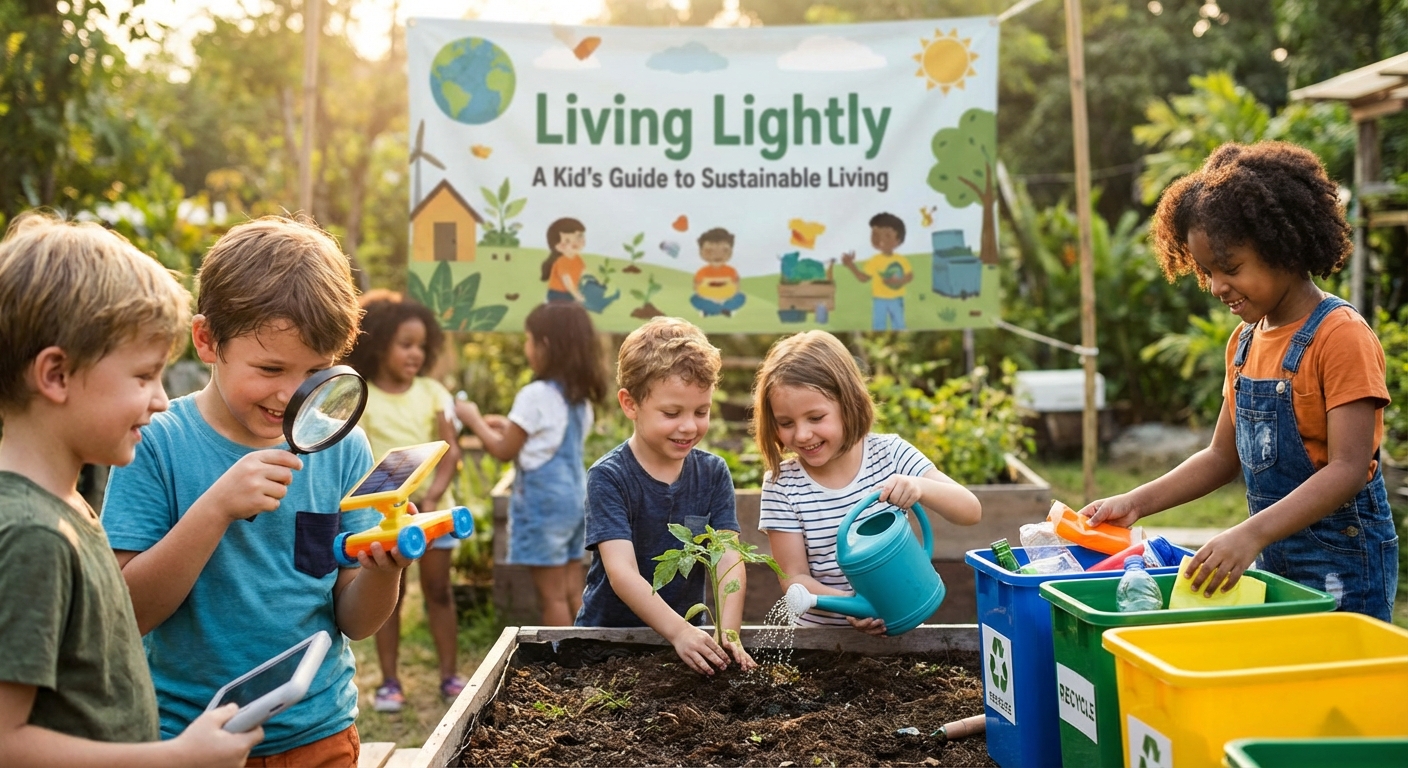
Living Lightly: A Kid’s Guide to Sustainable Living
Every day we make choices that affect the Earth—what we eat, how we travel, and what we throw away. Sustainable Living means picking habits that keep the planet healthy for us and for future generations. In this guide you’ll learn new words, see real‑world examples, discover cause‑and‑effect links, try a tiny experiment, and test your knowledge with a quick quiz. Let’s become Earth‑heroes together!
1. What Does “sustainable” Mean?
Sustainable (ad‑j.) – able to continue for a long time without using up resources or harming the environment.
- Why It Matters: If we cut down all the trees today, there will be no wood for houses, no shade for animals, and less oxygen for us to breathe.
- Everyday Example: Using a reusable water bottle instead of buying new plastic bottles each time.
Vocabulary Boost
| Word | Simple definition | Sentence |
|---|---|---|
| Renewable | Energy that won’t run out (like sunlight or wind) | “Solar panels turn sunlight, a renewable resource, into electricity.” |
| Ecosystem | A community of plants, animals, and tiny organisms that live together and depend on each other | “A forest ecosystem includes trees, birds, insects, and the soil they all share.” |
| Carbon Footprint | The amount of greenhouse gases (mainly carbon dioxide) a person or activity releases into the air | “Riding a bike instead of a car makes your carbon footprint smaller.” |
2. Reduce, Reuse, Recycle – The Triple Power
Reduce
- Cause: Buying more stuff than we need creates waste.
- Effect: Landfills fill up, and pollutants can leak into soil and water.
Tip: Before you ask for a new toy, think: Do I already have something similar?
Reuse
- Cause: Using the same item many times means fewer new products are made.
- Effect: Less energy is spent in factories, and fewer raw materials are taken from nature.
Example: Turn an old t‑shirt into a tote bag for your snacks.
Recycle
- Cause: Sorting paper, plastic, metal, and glass into the right bins.
- Effect: These materials are melted or shredded and made into new items, saving trees, oil, and minerals.
Did You Know? The aluminum can you recycle can become a new can very quickly!
3. Energy Choices: Light up the Future
-
Renewable Vs. Non‑renewable
- Renewable sources (sun, wind, water) keep coming back.
- Non‑renewable sources (coal, oil) run out and release lots of carbon dioxide.
-
Cause & Effect
- Cause: Burning coal for electricity.
- Effect: More greenhouse gases → warmer Earth → melting ice caps.
-
Simple Switch: Ask your family to turn off lights when a room isn’t being used, and use Led Bulbs (they use less electricity and last longer).
4. Mini Experiment: Grow a “zero‑waste” Garden
What You Need
- 1 plastic bottle (pre-cut in half by an adult)
- Soil
- Fast‑growing seeds (radish, beans, or lettuce)
- Water
- A sunny windowsill
Steps
- Ask an adult to help you poke a few tiny holes in the bottle’s bottom for drainage.
- Fill with soil, leaving a little space at the top.
- Plant the seeds according to the packet instructions.
- Water lightly each day.
Observe & Record
- Day 1: What does the soil look like?
- Day 2: What changes do you see?
- Day 3: Has the soil’s color or moisture changed?
- Day 7: Do you see a shoot? Some seeds need longer, so keep following the packet.
- Day 14: Measure any growth and draw the leaves.
Reuse is helpful only when the container is safe and useful. Wash your hands after handling soil, and ask an adult before eating anything you grow.