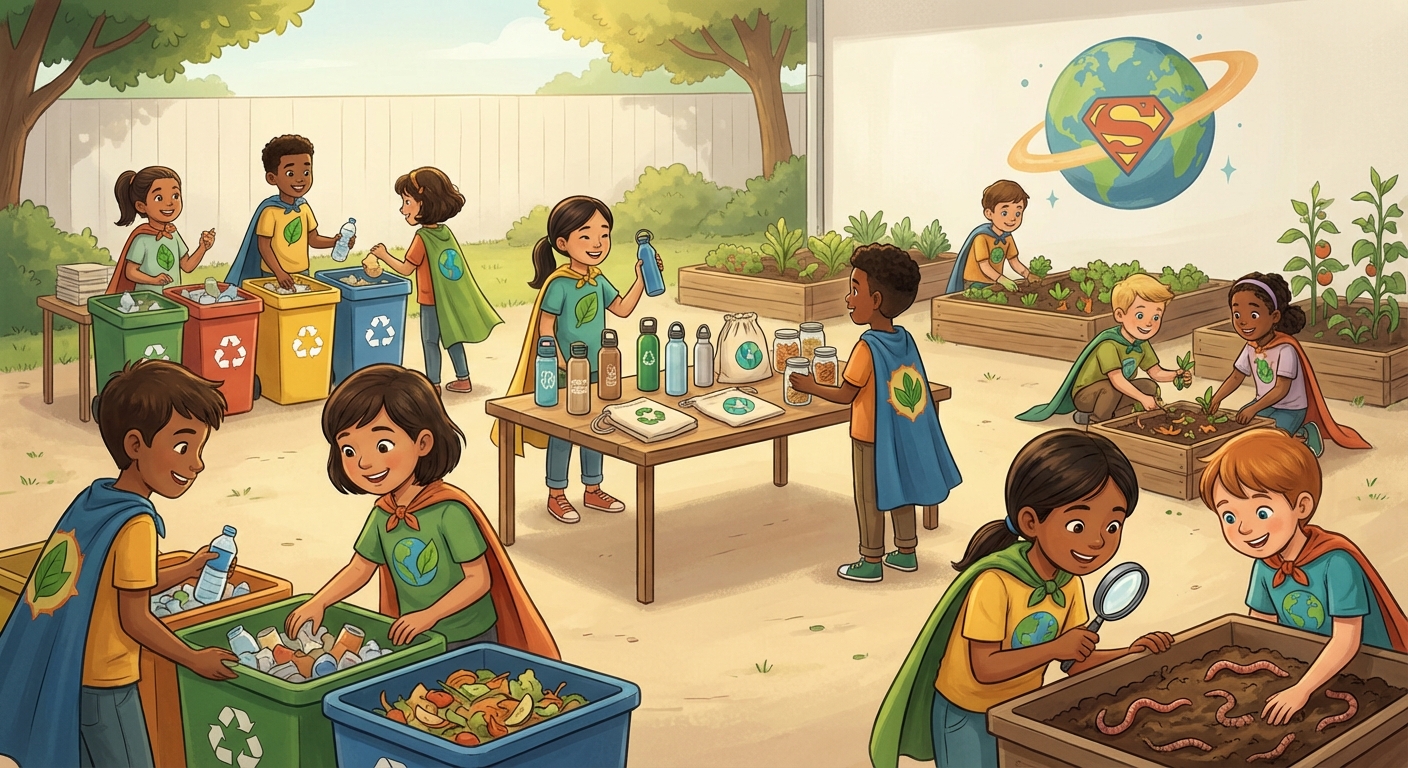
Zero‑waste Heroes: Saving the Planet One Small Step at a Time
Introduction
Every day we create things we use once and then throw away—like plastic bags, soda cans, or snack wrappers. Zero Waste means trying to make as little trash as possible by re‑using, recycling, and choosing smarter products. In this guide you’ll learn new words, see how waste affects the Earth, and become a true Zero‑Waste Hero!
1. What Is “zero Waste”?
- Zero Waste – a goal and set of practices that aim to prevent waste and send as little as possible to landfills or incinerators. It does not mean a child or family must produce literally no trash.
- Landfill – a big pit where trash is buried.
- Incinerator – a machine that burns waste, releasing gases into the air.
Why It Matters:
When trash piles up, it can pollute soil, water, and the air. Animals can get tangled in plastic, and chemicals from waste can leach into rivers, hurting fish and plants. By keeping waste low, we protect habitats and keep our planet healthy.
Did You Know? U.S. estimates of daily municipal waste per person change by year and depend on what is counted. The important comparison is your own: measuring one household’s waste for a week can reveal what could be reduced, reused, or recycled locally.
2. The 5 R’s: A Simple Checklist
| R | What It Means | Example for Kids |
|---|---|---|
| Refuse | Say “no” to things you don’t need. | Turn down a free plastic straw at a restaurant. |
| Reduce | Use less of something. | Pack a lunch in a reusable container instead of disposable bags. |
| Reuse | Use an item again in a new way. | Turn an old T‑shirt into a rag for cleaning. |
| Recycle | Turn waste into a new product. | Put clean paper in the recycling bin, not the trash. |
| Rot (Compost) | Let organic waste decompose into soil. | Put fruit peels in a compost bin instead of the trash. |
Each step helps cut down the amount of trash that ends up in landfills.
3. Real‑world Examples
A. the Plastic Bottle Challenge
- Cause: Single‑use plastic bottles are made from petroleum, a non‑renewable resource.
- Effect: They take 450 Years to decompose, releasing micro‑plastics into oceans.
What You Can Do: Carry a Reusable Water Bottle. When you finish a bottle, wash it and fill it again.
B. the Food‑scrap Compost Bin
- Cause: Throwing fruit skins and vegetable scraps into the trash wastes nutrients.
- Effect: Landfills produce methane, a greenhouse gas that warms the planet.
What You Can Do: Start a small compost bin at home or school. In a few weeks, the scraps turn into dark, crumbly Humus—great soil for plants!
4. Mini Experiment: “the Power of One Day”
Goal
See how much waste you can keep out of the trash in a single day.
Materials
- A notebook or worksheet
- Two small bags (one for Trash, one for Reusable Items)
- A reusable water bottle, lunch box, cloth napkin, and a reusable shopping bag
Steps
- Morning: Write down everything you normally would throw away (e.g., a plastic bag, a paper cup).
- Swap: Replace each item with its reusable counterpart. Put the reusable item in the “reuse” bag.
- Evening: Count how many pieces of waste you avoided. Write the number in your notebook.
Reflection Questions
- Which item was hardest to replace? Why?
- How did it feel to use your own bottle or bag?
Bonus: Share your results with family or classmates and challenge them to beat