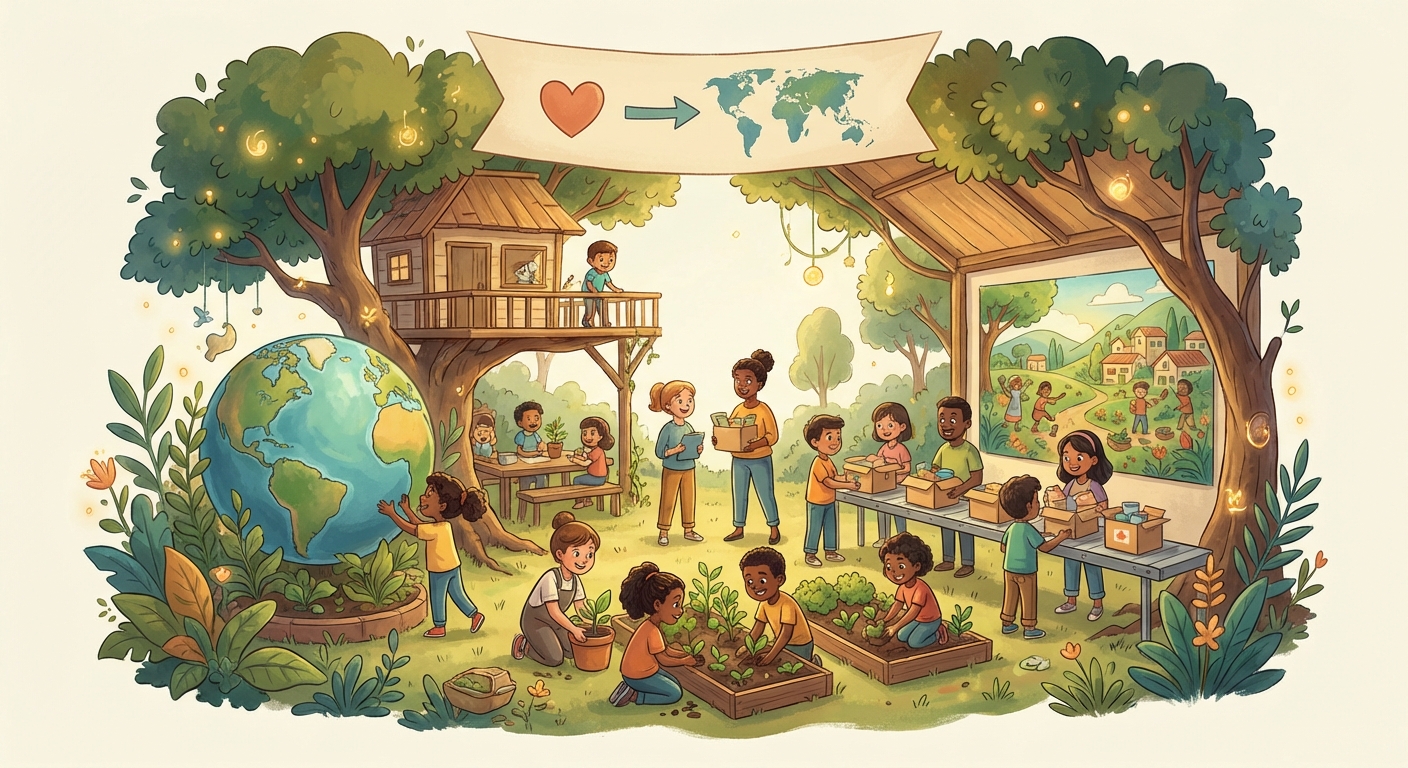
Giving & Growing: How Charity Helps You and the World
Imagine you have a treasure chest of coins. Some you keep for video games, some for snacks, and a few you decide to share. Charity means giving part of your money (or time) to help people, animals, or the planet. In this lesson we’ll explore why sharing is smart for your wallet, your heart, and the world around you.
1. Why Giving Matters – Cause & Effect
| Action (Cause) | Result (Effect) |
|---|---|
| You donate $5 to a food bank. | Families get meals they might otherwise miss. |
| You help a classmate buy a book. | They can read, learn, and maybe help someone else later. |
| You give a toy to a shelter. | A child gets a smile and feels cared for. |
Key Vocabulary
- Cause – the reason something happens.
- Effect – what happens because of the cause.
- Charity – giving money, things, or help to those in need.
Did You Know? The word charity comes from the Latin caritas, which meant “great love.”
2. How Money Grows When You Give
When you Budget (plan how to spend) a little bit for charity, you learn to manage money better.
- Saving Vs. Giving: If you set aside $1 from a $10 allowance, you still have $9 left to spend, but you also feel proud of helping.
- Multiplying Impact: One dollar can become many dollars when a charity uses it to buy supplies, which then help people earn money themselves.
Complex Word: Multiplying – making something become many times larger.
Example: A $2 donation to a community garden buys seeds. Those seeds grow vegetables that families can sell at a market, earning more money than the original $2.
3. Ways to Be Charitable (beyond Money)
- Time: Volunteer at a park clean‑up.
- Skills: Teach a younger sibling how to read.
- Things: Donate gently‑used clothes.
Giving isn’t only about cash; it’s also about sharing what you have.
Mini Experiment:
- Materials: Two jars, 10 pennies, a notebook.
- Steps:
- Put 5 pennies in each jar.
- Over a week, add any extra coins you find to the “Charity” jar.
- At the end, count the coins in both jars.
- Observation: Notice how the charity jar grows even when you’re not spending a lot. Write down how you felt each time you added a coin.
4. Smart Giving – Choosing the Right Cause
Not every charity works the same way. Look for:
- Transparency: They show where the money goes.
- Impact: They explain how your gift helps.
- Reputation: Others trust them (check reviews or ask adults).
Did You Know? Some charities spend over 90 % of donations directly on programs, while others keep a larger share for administration. Picking a high‑impact charity means your dollars do more good!
Mini Quiz – Test Your Knowledge!
- What’s the difference between cause and effect? (Answer: Cause is the reason something happens; effect is what happens because of the cause.)
- If you give $3 out of a $15 allowance, how much do you have left? (Answer: $12)
- Name one way to be charitable without using money. (Answer: Volunteer time, share skills, donate gently-used things.)
- Why is it important to check a charity’s transparency? (Answer: To make sure they show where the money goes and how your gift helps.)
Giving is a superpower that makes your money work harder, builds kindness, and helps the world grow. Start small—maybe a penny a day or a few minutes of helping a neighbor.